













Hydration thermodynamics of aliphatic alcohols
Literature Information
Publication Date
DOI
10.1039/A903082D
Impact Factor
3.676
Authors
View Original
Abstract
The hydration thermodynamics of five linear aliphatic alcohols in the temperature range 5–100°C is carefully analysed using a suitably modified version of the theoretical approach developed by Lee. The hydration Gibbs energy change is determined by the balance of three contributions: the direct alcohol–water van der Waals interaction energy, the direct alcohol–water H-bond energy, and the excluded volume effect due to solute insertion. The analysis shows that the direct alcohol–water H-bond energy is fundamental in determining the negative values of the hydration Gibbs energy over the whole temperature range investigated, whereas the excluded volume effect determines the large and negative hydration entropies. The reorganization of H-bonds in the hydration shell of aliphatic alcohols proves to be a compensating process, not affecting the Gibbs energy change, as in the case of the hydration of nonpolar molecules. However, H-bond reorganization is the main molecular origin of the large and positive hydration heat capacity change, a signature of hydrophobic hydration, determining the temperature dependence of the hydration enthalpy and entropy changes. We show that H-bond reorganization can be reliably described by means of the modified Muller's model, indicating that the hydration shell is not akin to an iceberg: hydration shell H-bonds are energetically slightly stronger but more broken than those in bulk water. This finding allows the rationalization of the puzzling experimental data on the temperature dependence of the water proton NMR chemical shift in solutions of aliphatic alcohols.
Recommended Journals
Related Literature
Novel and efficient chiral sulfideoxathiane ligands for palladium-catalyzed asymmetric allylic alkylation
Yuko Okuyama, Hiroto Nakano, Kouichi Takahashi, Hiroshi Hongo, Chizuko Kabuto
2003-01-17
Communication
DOI: 10.1039/B211031H
Fe(AsO4): A new iron(iii) arsenate synthesized from thermal treatment of (NH4)[Fe(AsO4)F]
Begoña Bazán, José L. Mesa, José L. Pizarro, Andrés T. Aguayo, María I. Arriortua, Teófilo Rojo
2003-02-06
Communication
DOI: 10.1039/B210998K
Tetranuclear nickel(ii) complexes with genuine μ3-1,1,3 and μ4-1,1,3,3 azide bridges
Franc Meyer, Peter Kircher, Hans Pritzkow
2003-02-25
Communication
DOI: 10.1039/B211486K
Synthesis, spectroscopic characterisation and structure of the first chiral heteroleptic bis(phthalocyaninato) rare earth complexes
Yongzhong Bian, Rongming Wang, Jianzhuang Jiang, Chi-Hang Lee, Jinzhi Wang, Dennis K. P. Ng
2003-04-17
Communication
DOI: 10.1039/B301139A
Systematic manipulation of surface chemical reaction on the nanoscale: a novel approach for constructing three-dimensional nanostructures
Xiuzhu Wang, Dejian Zhou, Trevor Rayment, Chris Abell
2003-01-20
Communication
DOI: 10.1039/B211906D
Control of Al distribution in ZSM-5 by conditions of zeolite synthesis
2003-04-23
Communication
DOI: 10.1039/B301634J
Synthesis and characterization of hyperbranched mesoporous silica SBA-15
Ji Zhu, Agnes Szegedi, Imre Kiricsi, Paul Alivisatos, Gabor A. Somorjai
2003-01-06
Communication
DOI: 10.1039/B210053C
Anionic triazacyclononanes: new supporting ligands in main group and transition metal organometallic chemistry
Joseph A. R. Schmidt, Garth R. Giesbrecht, Chunming Cui, John Arnold
2002-11-28
Feature Article
DOI: 10.1039/B208525A
Structural characterization of the first hydrothermally synthesized plutonium compound, PuO2(IO3)2·H2O
Wolfgang Runde, Thomas E. Albrecht-Schmitt, Brian L. Scott
2003-01-16
Communication
DOI: 10.1039/B211018K
TEM stereo-imaging of mesoporous zeolite single crystals
Iver Schmidt, Anna Carlsson, Søren Dahl, Michael Brorson, Claus J. H. Jacobsen
2003-03-14
Communication
DOI: 10.1039/B212646J
You might also like
Compound Q&A
What precautions should be taken when handling 4-(2-Furylmethyl)thiomorpholine 1,1-dioxide (CAS: 79206-94-3)?
When handling 4-(2-Furylmethyl)thiomorpholine 1,1-dioxide (CAS: 79206-94-3), it ...
79206-94-34-(2-Furylmethyl)thi...
Compound Q&A
What precautions should be taken when handling 4-Chloro-N-[2-(4-morpholinyl)ethyl]benzamide (CAS: 71320-77-9)?
When handling 4-Chloro-N-[2-(4-morpholinyl)ethyl]benzamide (CAS: 71320-77-9), it...
71320-77-94-Chloro-N-[2-(4-mor...
Compound Q&A
How should waste containing 2-[2-(2-Methoxyethoxy)ethoxy]ethyl 4-methylbenzenesulfonate (CAS: 62921-74-8) be handled?
Waste containing this compound (CAS: 62921-74-8) should be handled according to ...
62921-74-82-[2-(2-Methoxyethox...
Compound Q&A
How should waste containing (S)-Methyl 2-amino-3-cyclohexylpropanoate be handled?
Waste containing (S)-Methyl 2-amino-3-cyclohexylpropanoate should be collected i...
40056-18-6(S)-Methyl 2-amino-3...
Compound Q&A
How is 5-({4-[(2S,4R)-4-Hydroxy-2-methyltetrahydro-2H-pyran-4-yl]-2-thienyl}sulfanyl)-1-methyl-1,3-dihydro-2H-indol-2-one (CAS: 166882-70-8) typically synthesized?
This compound can be synthesized using a multi-step process involving the conjug...
166882-70-85-({4-[(2S,4R)-4-Hyd...
Compound Q&A
Are there alternatives to (2E)-3-(3,4-Dichlorophenyl)acrylic acid (CAS: 7312-27-8) in synthesis?
There are several alternatives to (2E)-3-(3,4-Dichlorophenyl)acrylic acid in syn...
7312-27-8(2E)-3-(3,4-Dichloro...
Compound Q&A
How should Ethyl 6-(2-nitrophenyl)imidazo[2,1-b][1,3]thiazole-3-carboxylate (CAS: 925437-84-9) be stored?
Ethyl 6-(2-nitrophenyl)imidazo[2,1-b][1,3]thiazole-3-carboxylate (CAS: 925437-84...
925437-84-9Ethyl 6-(2-nitrophen...
Compound Q&A
How should waste containing 2-(1,3-Thiazol-2-yl)ethanamine (CAS: 18453-07-1) be handled?
Waste containing 2-(1,3-Thiazol-2-yl)ethanamine (CAS: 18453-07-1) should be coll...
18453-07-12-(1,3-Thiazol-2-yl)...
Compound Q&A
How is Methyl 5-iodo-2-methylbenzoate (CAS: 103440-54-6) typically synthesized?
Methyl 5-iodo-2-methylbenzoate can be synthesized through the iodination of meth...
103440-54-6Methyl 5-iodo-2-meth...
Compound Q&A
How is 5-Chloro[1,2,4]triazolo[1,5-a]pyridine (CAS: 1427399-34-5) typically synthesized?
5-Chloro[1,2,4]triazolo[1,5-a]pyridine is commonly synthesized via the condensat...
1427399-34-55-Chloro[1,2,4]triaz...
Source Journal
Physical Chemistry Chemical Physics

CiteScore:
5.5
Self-citation Rate:
10.3%
Articles per Year:
3036
Physical Chemistry Chemical Physics (PCCP) is an international journal co-owned by 19 physical chemistry and physics societies from around the world. This journal publishes original, cutting-edge research in physical chemistry, chemical physics and biophysical chemistry. To be suitable for publication in PCCP, articles must include significant innovation and/or insight into physical chemistry; this is the most important criterion that reviewers and Editors will judge against when evaluating submissions. The journal has a broad scope and welcomes contributions spanning experiment, theory, computation and data science. Topical coverage includes spectroscopy, dynamics, kinetics, statistical mechanics, thermodynamics, electrochemistry, catalysis, surface science, quantum mechanics, quantum computing and machine learning. Interdisciplinary research areas such as polymers and soft matter, materials, nanoscience, energy, surfaces/interfaces, and biophysical chemistry are welcomed if they demonstrate significant innovation and/or insight into physical chemistry. Joined experimental/theoretical studies are particularly appreciated when complementary and based on up-to-date approaches.
Recommended Compounds
![[4-(Heptyloxy)phenyl]boronic acid structure](https://static.chemtradehub.com/structs/136/136370-19-9-ad33.webp "[4-(Heptyloxy)phenyl]boronic acid structure")
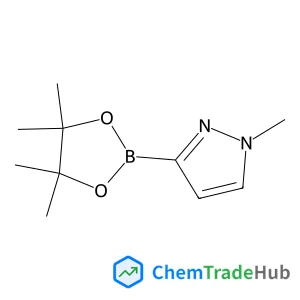
1-Methyl-3-(4,4,5,5-tetramethyl-1,3,2-dioxaborolan-2-yl)-1H-pyrazole
CAS Number:
1020174-04-2
Molecular Formula:
C10H17BN2O2
Recommended Suppliers





Disclaimer
This page provides academic journal information for reference and research purposes only. We are not affiliated with any journal publishers and do not handle publication submissions. For publication-related inquiries, please contact the respective journal publishers directly.
If you notice any inaccuracies in the information displayed, please contact us at support@chemtradehub.com. We will promptly review and address your concerns.