












European Polymer Journal
Basic Information
Brief Name:
EUR POLYM J
Impact Factor:
5.8
ISSN:
0014-3057
Research Field:
CHEMICAL
h-index:
120
Self-citation Rate:
10.3%
Articles per Year:
700
SCI Index Status:
Science Citation Index Expanded
Journal Website:
https://www.sciencedirect.com/journal/european-polymer-journal
Journal Introduction:
European Polymer Journal is dedicated to publishing work on fundamental and applied polymer chemistry and macromolecular materials. The journal covers all aspects of polymer synthesis, including polymerization mechanisms and chemical functional transformations, with a focus on novel polymers and the relationships between molecular structure and polymer properties. In addition, we welcome submissions on bio-based or renewable polymers, stimuli-responsive systems and polymer bio-hybrids. European Polymer Journal also publishes research on the biomedical application of polymers, including drug delivery and regenerative medicine. The main scope is covered but not limited to the following core research areas: Polymer synthesis and functionalization • Novel synthetic routes for polymerization, functional modification, controlled/living polymerization and precision polymers. Stimuli-responsive polymers • Including shape memory and self-healing polymers. Supramolecular polymers and self-assembly • Molecular recognition and higher order polymer structures. Renewable and sustainable polymers • Bio-based, biodegradable and anti-microbial polymers and polymeric bio-nanocomposites. Polymers at interfaces and surfaces • Chemistry and engineering of surfaces with biological relevance, including patterning, antifouling polymers and polymers for membrane applications. Biomedical applications and nanomedicine • Polymers for regenerative medicine, drug delivery molecular release and gene therapy The scope of European Polymer Journal no longer includes Polymer Physics. We would strongly recommend that authors consider submitting Polymer Physics papers to our excellent sister title Polymer https://www.journals.elsevier.com/polymer Article Types and Submission European Polymer Journal publishes the following article types: original research papers, review articles, featured articles, short communications and Research Insights. Please see our Guide for Authors for more information on article submission. If you require any further information or help, please visit our Support Center Benefits to authors We also provide many author benefits, such as free PDFs, a liberal copyright policy, special discounts on Elsevier publications and much more. Please click here for more information on our author services.
CiteScore
CiteScore
9.9
SJR
0.982
SNIP
1.065
| Subject | Rank | Percentile |
|---|---|---|
ChemistryOrganic Chemistry |
16 / 211 | 92% |
Journal Statistics
Monthly
Issues/Year
Time to first decision: 8days
Review time: 57days
Submission to acceptance: 63days
Acceptance to publication: 5days
Review Cycle
$4170
Article Processing Fee
Submission Information
Submission Website:
https://www.editorialmanager.com/EUROPOLAccepted Types:
original papers
review articles
review articles
Recommended Journals
Related Articles
Hybrid heterojunctions between a 2D transition metal dichalcogenide and metal phthalocyanines: their energy levels vis-à-vis current rectification
Arnab Banerjee, Biswajit Kundu, Amlan J. Pal
2017-10-06
Paper
DOI: 10.1039/C7CP05470J
Interaction between a water drop and holey graphene: retarded imbibition and generation of novel water–graphene wetting states
Yanbin Wang, Shayandev Sinha, Liangbing Hu, Siddhartha Das
2017-09-19
Paper
DOI: 10.1039/C7CP04411A
Towards a taxonomy of topology for polynuclear aromatic hydrocarbons: linking electronic and molecular structure
Erin M. Adkins, J. Houston Miller
2017-10-10
Paper
DOI: 10.1039/C7CP06048C
Delocalized triplet state in porphyrin J-aggregates revealed by EPR spectroscopy
Luca Bolzonello, Marco Albertini, Elisabetta Collini, Marilena Di Valentin
2017-09-18
Communication
DOI: 10.1039/C7CP02968C
A global method for handling fluorescence spectra at high concentration derived from the competition between emission and absorption of colloidal CdTe quantum dots
Thomas Noblet, Laurent Dreesen, Julie Hottechamps, Christophe Humbert
2017-09-06
Paper
DOI: 10.1039/C7CP03484A
Thermal conductivity of a h-BCN monolayer
Ying-Yan Zhang, Qing-Xiang Pei, Hong-Yuan Liu, Ning Wei
2017-09-19
Paper
DOI: 10.1039/C7CP04982J
Unravelling redox processes of Li7MnN4 upon electrochemical Li extraction–insertion using operando XAS
D. Muller-Bouvet, N. Emery, N. Tassali, E. Panabière, C. Cénac-Morthe, A. Michalowicz, J. P. Pereira-Ramos
2017-09-18
Paper
DOI: 10.1039/C7CP05207C
Laser cooling of the OH− molecular anion in a theoretical investigation
Ming-jie Wan, Duo-hui Huang, You Yu, Yun-guang Zhang
2017-09-18
Paper
DOI: 10.1039/C7CP04393G
Shallow trapping vs. deep polarons in a hybrid lead halide perovskite, CH3NH3PbI3
Byungkyun Kang, Koushik Biswas
2017-08-16
Paper
DOI: 10.1039/C7CP04417H
You might also like
Compound Q&A
What industries use (1R,3S)-1,3-Cyclopentanediol (CAS: 16326-97-9)?
(1R,3S)-1,3-Cyclopentanediol finds applications in various industries. In the ph...
16326-97-9(1R,3S)-1,3-Cyclopen...
Compound Q&A
What precautions should be taken when handling N'-[4-(Dimethylamino)phenyl]-N,N-dimethyl-1,4-benzenediamine (CAS: 637-31-0)?
When handling N'-[4-(Dimethylamino)phenyl]-N,N-dimethyl-1,4-benzenediamine, it i...
637-31-0N'-[4-(Dimethylamino...
Compound Q&A
Are there alternatives to 5-(2,4-Difluorophenyl)-2-methoxypyrimidine (CAS: 1352318-16-1) in synthesis?
There are several alternatives to 5-(2,4-Difluorophenyl)-2-methoxypyrimidine in ...
1352318-16-15-(2,4-Difluoropheny...
Compound Q&A
What regulatory guidelines apply to 1-(3-Methoxyphenoxy)propan-2-ol (CAS: 382141-68-6)?
1-(3-Methoxyphenoxy)propan-2-ol (CAS: 382141-68-6) must comply with the Globally...
382141-68-61-(3-Methoxyphenoxy)...
Compound Q&A
Is Tetrodotoxin Citrate (CAS: 18660-81-6) safe?
Tetrodotoxin Citrate is extremely dangerous and should be handled with extreme c...
18660-81-6Tetrodotoxin Citrate
Compound Q&A
What are the main uses of 2-Methyl-2-propanyl [(1R,3S)-3-hydroxycyclopentyl]carbamate (CAS: 225641-84-9)?
2-Methyl-2-propanyl [(1R,3S)-3-hydroxycyclopentyl]carbamate (CAS: 225641-84-9) i...
225641-84-92-Methyl-2-propanyl ...
Compound Q&A
How should waste containing 4-(2-Hydroxyhexafluoroisopropyl)Benzoic Acid (CAS: 16261-80-6) be handled?
Waste containing 4-(2-Hydroxyhexafluoroisopropyl)Benzoic Acid (CAS: 16261-80-6) ...
16261-80-64-(2-Hydroxyhexafluo...
Compound Q&A
How is 2-Methyl-2-proanyl {(2S)-1-[(benzyloxy)amino]-3-hydroxy-3-methyl-1-oxo-2-butanyl}carbamate (CAS: 102507-19-7) typically synthesized?
2-Methyl-2-proanyl {(2S)-1-[(benzyloxy)amino]-3-hydroxy-3-methyl-1-oxo-2-butanyl...
102507-19-72-Methyl-2-propanyl ...
Compound Q&A
What is Benzeneethanamine, α-ethyl-, hydrochloride (1:1) (CAS: 20735-15-3)?
Benzeneethanamine, α-ethyl-, hydrochloride (1:1) is an organic compound with the...
20735-15-3Benzeneethanamine, α...
Compound Q&A
Are there alternatives to 3-{(E)-[4-(Dimethylamino)phenyl]diazenyl}benzoic acid (CAS: 20691-84-3) in synthesis?
In the synthesis of compounds similar to 3-{(E)-[4-(Dimethylamino)phenyl]diazeny...
20691-84-33-{(E)-[4-(Dimethyla...
Recommended Compounds
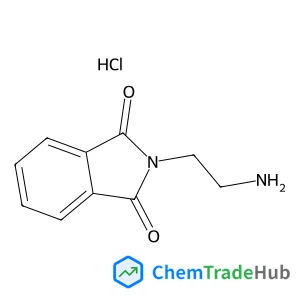
2-(2-Aminoethyl)-1H-isoindole-1,3(2H)-dione hydrochloride (1:1)
CAS Number:
30250-67-0
Molecular Formula:
C10H11ClN2O2
![N-[(1S,2R,4S)-2-Amino-4-(dimethylcarbamoyl)cyclohexyl]-N'-(5-chloro-2-pyridinyl)ethanediamide structure](https://static.chemtradehub.com/structs/480/480452-37-7-0898.webp "N-[(1S,2R,4S)-2-Amino-4-(dimethylcarbamoyl)cyclohexyl]-N'-(5-chloro-2-pyridinyl)ethanediamide structure")
N-[(1S,2R,4S)-2-Amino-4-(dimethylcarbamoyl)cyclohexyl]-N'-(5-chloro-2-pyridinyl)ethanediamide
CAS Number:
480452-37-7
Molecular Formula:
C16H22ClN5O3
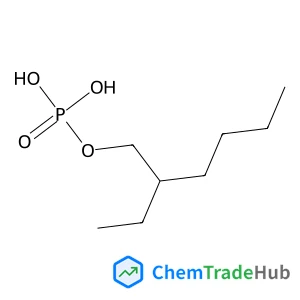
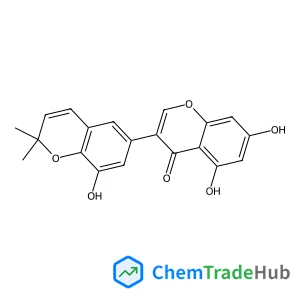
5,7,8'-Trihydroxy-2',2'-dimethyl-2'H,4H-3,6'-bichromen-4-one
CAS Number:
129280-33-7
Molecular Formula:
C20H16O6
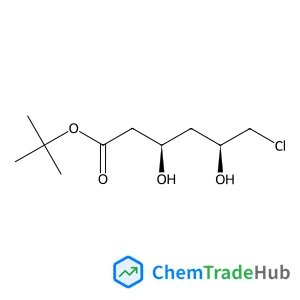
2-Methyl-2-propanyl (3R,5S)-6-chloro-3,5-dihydroxyhexanoate
CAS Number:
154026-93-4
Molecular Formula:
C10H19ClO4
Recommended Suppliers





Disclaimer
This page provides academic journal information for reference and research purposes only. We are not affiliated with any journal publishers and do not handle publication submissions. For publication-related inquiries, please contact the respective journal publishers directly.
If you notice any inaccuracies in the information displayed, please contact us at support@chemtradehub.com. We will promptly review and address your concerns.