












Thermal conductivity of a h-BCN monolayer
Literature Information
Publication Date
2017-09-19
DOI
10.1039/C7CP04982J
Impact Factor
3.676
Authors
Ying-Yan Zhang, Qing-Xiang Pei, Hong-Yuan Liu, Ning Wei
View Original
Abstract
A hexagonal graphene-like boron–carbon–nitrogen (h-BCN) monolayer, a new two-dimensional (2D) material, has been synthesized recently. Herein we investigate for the first time the thermal conductivity of this novel 2D material. Using molecular dynamics simulations based on the optimized Tersoff potential, we found that the h-BCN monolayers are isotropic in the basal plane with close thermal conductivity magnitudes. Though h-BCN has the same hexagonal lattice as graphene and hexagonal boron nitride (h-BN), it exhibits a much lower thermal conductivity than the latter two materials. In addition, the thermal conductivity of h-BCN monolayers is found to be size-dependent but less temperature-dependent. Modulation of the thermal conductivity of h-BCN monolayers can also be realized by strain engineering. Compressive strain leads to a monotonic decrease in the thermal conductivity while the tensile strain induces an up-then-down trend in the thermal conductivity. Surprisingly, the small tensile strain can facilitate the heat transport of the h-BCN monolayers.
Recommended Journals
Related Literature
Fortification of vegetable fat with natural antioxidants recovered by bergamot pomace for use as an ingredient for the production of biscuits
Amalia Piscopo, Simone Santacaterina, Elisa Imeneo, Alessandra De Bruno, Marco Poiana
2023-10-13
Paper
DOI: 10.1039/D3FB00125C
Use of machine learning for monitoring the growth stages of an agricultural crop
Shara Ahmed, Nabanita Basu, Catherine E. Nicholson, Simon R. Rutter, John R. Marshall, Justin J. Perry, John R. Dean
2023-10-26
Paper
DOI: 10.1039/D3FB00101F
Comparative study of different particle sizes of added olive leaves for the content of target polyphenols in virgin olive oil
2023-09-25
Paper
DOI: 10.1039/D3FB00108C
Extraction of cellulose from restaurant food waste
Matthew T. Garnett, Harrish Kumar Senthil Kumar, Bryan S. Beckingham, Symone L. M. Alexander
2023-11-25
Paper
DOI: 10.1039/D3SU00192J
Nanoporous oxide electrodes for energy conversion and storage devices
Jin Wook Yang, Hee Ryeong Kwon, Jin Ho Seo, Sangwoo Ryu
2023-10-09
Review Article
DOI: 10.1039/D3LF00094J
Life cycle optimisation tool development for process systems and centralised supply chain design
Xinyang Sun, Alex Durkin, Miao Guo
2023-10-16
Paper
DOI: 10.1039/D3SU00251A
N-doped graphene nanosheets-based optical nano switch for the selective detection of guanine and Pb2+
Gouri Sankar Das, Manish Srivastava, Kumud Malika Tripathi
2023-10-17
Paper
DOI: 10.1039/D3SU00328K
You might also like
Compound Q&A
What industries use (1R,3S)-1,3-Cyclopentanediol (CAS: 16326-97-9)?
(1R,3S)-1,3-Cyclopentanediol finds applications in various industries. In the ph...
16326-97-9(1R,3S)-1,3-Cyclopen...
Compound Q&A
What precautions should be taken when handling N'-[4-(Dimethylamino)phenyl]-N,N-dimethyl-1,4-benzenediamine (CAS: 637-31-0)?
When handling N'-[4-(Dimethylamino)phenyl]-N,N-dimethyl-1,4-benzenediamine, it i...
637-31-0N'-[4-(Dimethylamino...
Compound Q&A
Are there alternatives to 5-(2,4-Difluorophenyl)-2-methoxypyrimidine (CAS: 1352318-16-1) in synthesis?
There are several alternatives to 5-(2,4-Difluorophenyl)-2-methoxypyrimidine in ...
1352318-16-15-(2,4-Difluoropheny...
Compound Q&A
What regulatory guidelines apply to 1-(3-Methoxyphenoxy)propan-2-ol (CAS: 382141-68-6)?
1-(3-Methoxyphenoxy)propan-2-ol (CAS: 382141-68-6) must comply with the Globally...
382141-68-61-(3-Methoxyphenoxy)...
Compound Q&A
Is Tetrodotoxin Citrate (CAS: 18660-81-6) safe?
Tetrodotoxin Citrate is extremely dangerous and should be handled with extreme c...
18660-81-6Tetrodotoxin Citrate
Compound Q&A
What are the main uses of 2-Methyl-2-propanyl [(1R,3S)-3-hydroxycyclopentyl]carbamate (CAS: 225641-84-9)?
2-Methyl-2-propanyl [(1R,3S)-3-hydroxycyclopentyl]carbamate (CAS: 225641-84-9) i...
225641-84-92-Methyl-2-propanyl ...
Compound Q&A
How should waste containing 4-(2-Hydroxyhexafluoroisopropyl)Benzoic Acid (CAS: 16261-80-6) be handled?
Waste containing 4-(2-Hydroxyhexafluoroisopropyl)Benzoic Acid (CAS: 16261-80-6) ...
16261-80-64-(2-Hydroxyhexafluo...
Compound Q&A
How is 2-Methyl-2-proanyl {(2S)-1-[(benzyloxy)amino]-3-hydroxy-3-methyl-1-oxo-2-butanyl}carbamate (CAS: 102507-19-7) typically synthesized?
2-Methyl-2-proanyl {(2S)-1-[(benzyloxy)amino]-3-hydroxy-3-methyl-1-oxo-2-butanyl...
102507-19-72-Methyl-2-propanyl ...
Compound Q&A
What is Benzeneethanamine, α-ethyl-, hydrochloride (1:1) (CAS: 20735-15-3)?
Benzeneethanamine, α-ethyl-, hydrochloride (1:1) is an organic compound with the...
20735-15-3Benzeneethanamine, α...
Compound Q&A
Are there alternatives to 3-{(E)-[4-(Dimethylamino)phenyl]diazenyl}benzoic acid (CAS: 20691-84-3) in synthesis?
In the synthesis of compounds similar to 3-{(E)-[4-(Dimethylamino)phenyl]diazeny...
20691-84-33-{(E)-[4-(Dimethyla...
Source Journal
Physical Chemistry Chemical Physics

CiteScore:
5.5
Self-citation Rate:
10.3%
Articles per Year:
3036
Physical Chemistry Chemical Physics (PCCP) is an international journal co-owned by 19 physical chemistry and physics societies from around the world. This journal publishes original, cutting-edge research in physical chemistry, chemical physics and biophysical chemistry. To be suitable for publication in PCCP, articles must include significant innovation and/or insight into physical chemistry; this is the most important criterion that reviewers and Editors will judge against when evaluating submissions. The journal has a broad scope and welcomes contributions spanning experiment, theory, computation and data science. Topical coverage includes spectroscopy, dynamics, kinetics, statistical mechanics, thermodynamics, electrochemistry, catalysis, surface science, quantum mechanics, quantum computing and machine learning. Interdisciplinary research areas such as polymers and soft matter, materials, nanoscience, energy, surfaces/interfaces, and biophysical chemistry are welcomed if they demonstrate significant innovation and/or insight into physical chemistry. Joined experimental/theoretical studies are particularly appreciated when complementary and based on up-to-date approaches.
Recommended Compounds
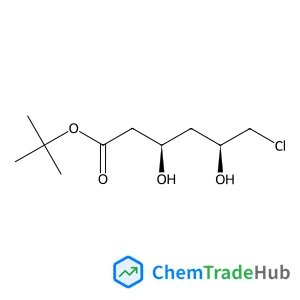
2-Methyl-2-propanyl (3R,5S)-6-chloro-3,5-dihydroxyhexanoate
CAS Number:
154026-93-4
Molecular Formula:
C10H19ClO4
Recommended Suppliers







Disclaimer
This page provides academic journal information for reference and research purposes only. We are not affiliated with any journal publishers and do not handle publication submissions. For publication-related inquiries, please contact the respective journal publishers directly.
If you notice any inaccuracies in the information displayed, please contact us at support@chemtradehub.com. We will promptly review and address your concerns.