Compound Q&A
What industries use Poly(Propylene Glycol) (CAS: 25791-96-2)?
Answer
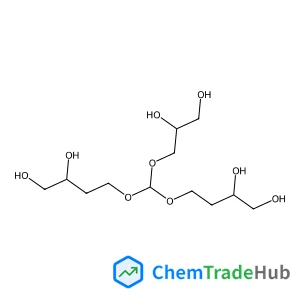
Poly(Propylene Glycol) (PPG) finds extensive use in the pharmaceutical, polymer, and cosmetic industries. It is used as a plasticizer, surfactant, emulsifier, and stabilizer. PPG is also employed in the manufacturing of biocompatible materials, lubricants, and as a carrier in drug delivery systems. Its biocompatibility and low toxicity make it a preferred choice in biomedical applications.
About
CAS No
25791-96-2
English Name
Poly(Propylene Glycol)
Molecular Formula
HO(C3H6O)nCH[CH2(OC3H6)nOH]2
Molecular Weight
314.33 g/mol
EINECS
500-044-5
SMILES
OCC(CCOC(OCC(CO)O)OCCC(CO)O)O
InChIKey
ZSKSVMDBXFSLMZ-UHFFFAOYSA-N
Last Updated: 2025-09-13 09:53