

Compound Q&A

Is Tartaric acid (CAS: 868-14-4) safe?

Answer
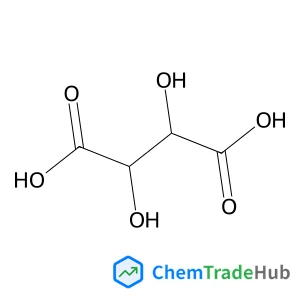
Tartaric acid
Tartaric acid (CAS: 868-14-4) is generally considered safe when used in appropriate amounts. It is approved by the FDA for use in food and is non-toxic in moderate quantities. However, high concentrations may cause irritation to the skin, eyes, or respiratory system. Proper handling, such as wearing gloves and protective eyewear, is recommended. It is important to follow safety guidelines and storage requirements to ensure safe use in laboratories and industrial settings.

About

CAS No 868-14-4
English Name Tartaric acid
Molecular Formula C4H6O6
Molecular Weight 150.08599999999998 g/mol
SMILES C(C(C(=O)O)O)(C(=O)O)O
InChIKey FEWJPZIEWOKRBE-UHFFFAOYSA-N
Last Updated: 2025-08-25 01:07

Related Q&A

Compound Q&A

What is Tartaric acid (CAS: 868-14-4)?

Tartaric acid (CAS: 868-14-4) is a dicarboxylic acid with the chemical formula C4H6O6. It is natural...

Compound Q&A

What are the main uses of Tartaric acid (CAS: 868-14-4)?

Tartaric acid (CAS: 868-14-4) is widely used in the food industry as a souring agent and antioxidant...

Compound Q&A

How should Tartaric acid (CAS: 868-14-4) be stored?

Tartaric acid (CAS: 868-14-4) should be stored in a cool, dry, and well-ventilated place, away from ...

Compound Q&A

Are there alternatives to 1-(4-Chlorophenyl)-N-hydroxymethanimine (CAS: 3848-36-0) in synthesis?

When considering alternatives to 1-(4-Chlorophenyl)-N-hydroxymethanimine (CAS: 3...

3848-36-01-(4-Chlorophenyl)-N...
Compound Q&A

How is 3-(4-Bromophenyl)-5-(2-fluorophenyl)-1,2,4-oxadiazole (CAS: 419553-16-5) typically synthesized?

3-(4-Bromophenyl)-5-(2-fluorophenyl)-1,2,4-oxadiazole is synthesized through a m...

419553-16-53-(4-Bromophenyl)-5-...
Compound Q&A

How is 5-Chloro-2-(4-chlorophenyl)-4-methyl-6-[3-(1-piperidinyl)propoxy]pyrimidine (CAS: 1639220-19-1) typically synthesized?

5-Chloro-2-(4-chlorophenyl)-4-methyl-6-[3-(1-piperidinyl)propoxy]pyrimidine (CAS...

1639220-19-15-Chloro-2-(4-chloro...