Compound Q&A
What is glycerol (CAS: 56-81-5)?
Answer
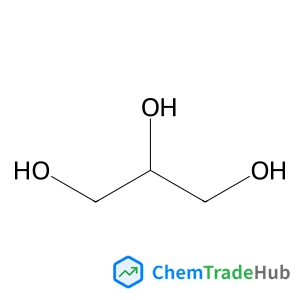
Glycerol, also known as glycerin, is a colorless, odorless, viscous liquid with the chemical formula C3H8O3. It is a trihydric alcohol, meaning it contains three hydroxyl (-OH) groups, which contribute to its unique properties. Glycerol is highly soluble in water and has a sweet taste, making it versatile for various applications. Its molecular structure allows it to act as a humectant, retaining moisture in products. Common characteristics include a high boiling point (290°C), low volatility, and hygroscopicity, which means it absorbs water from the environment. Glycerol is widely used in industries due to its non-toxic nature and ability to stabilize formulations. It is also a key component in pharmaceuticals, cosmetics, and food products. The CAS number 56-81-5 ensures accurate identification in scientific and regulatory contexts. Glycerol’s physical properties, such as its density and refractive index, make it valuable for research and manufacturing. Its chemical stability under normal conditions further enhances its utility. Overall, glycerol is a fundamental compound with broad applications, driven by its molecular structure and functional properties.
About
CAS No
56-81-5
English Name
Glycerol
Molecular Formula
C3H8O3
Molecular Weight
92.09 g/mol
SMILES
OCC(O)CO
InChIKey
PEDCQBHIVMGVHV-UHFFFAOYSA-N
Last Updated: 2025-08-25 01:07