



AD
Glycerol(CAS: 56-81-5)

Product Description
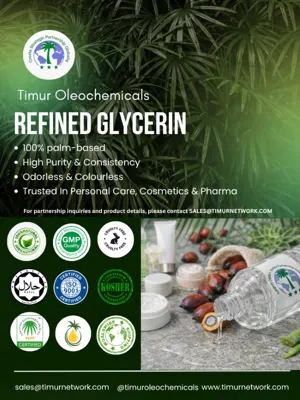
Timur Oleochemicals supplies premium refined glycerin, derived 100% from sustainable palm oil. Our glycerin is available in USP, pharmaceutical, food, and industrial grades, meeting global standards for purity and consistency. Certifications: Halal, Kosher, ISO, RSPO Supply Chain Certified.
With over 20 years of export expertise, Timur Oleochemicals ensures traceable supply, reliable quality, and competitive pricing. Partnering with us means securing a dependable source of palm‑based glycerin aligned with sustainability and international compliance.
Related Products
COCAMIDE DEA 85 (CDEA 85%)
CAS Number: 68603-42-9
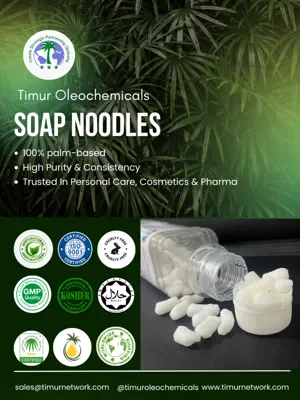
Soap Noodles
CAS Number: 57-11-4
Other Suppliers for Glycerol


Basic Information
Molecular Formula
C3H8O3
Molecular Weight
92.09 g/mol
Physical State
Oil
Physical Properties
Melting Point
20 °C (lit.)
Boiling Point
182 °C/20 mmHg(lit.)
Water Solubility
>500 g/L (20 ºC)
Chemical Identifiers
SMILES
OCC(O)CO
InChIKey
PEDCQBHIVMGVHV-UHFFFAOYSA-N
Database References
MDL Number
MFCD00004722
Beilstein Registry Number
635685
FAQ
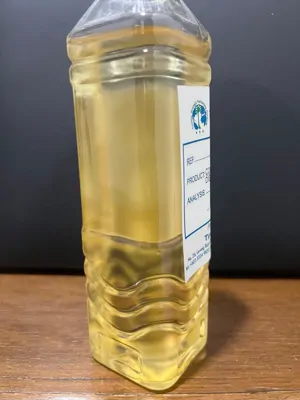
Glycerol, also known as glycerin, is a colorless, odorless, viscous liquid with the chemical formula C3H8O3. It is a trihydric alcohol, meaning it contains three hydroxyl (-OH) groups, which contribute to its unique properties. Glycerol is highly soluble in water and has a sweet taste, making it versatile for various applications. Its molecular structure allows it to act as a humectant, retaining moisture in products. Common characteristics include a high boiling point (290°C), low volatility, and hygroscopicity, which means it absorbs water from the environment. Glycerol is widely used in industries due to its non-toxic nature and ability to stabilize formulations. It is also a key component in pharmaceuticals, cosmetics, and food products. The CAS number 56-81-5 ensures accurate identification in scientific and regulatory contexts. Glycerol’s physical properties, such as its density and refractive index, make it valuable for research and manufacturing. Its chemical stability under normal conditions further enhances its utility. Overall, glycerol is a fundamental compound with broad applications, driven by its molecular structure and functional properties.
Glycerol (CAS: 56-81-5) is a multifunctional compound with diverse applications across industries. In the pharmaceutical sector, it serves as a solvent, sweetener, and excipient in drug formulations, aiding in tablet production and liquid dosage forms. It is also used as a moisturizer in skincare products and as a lubricant in medical devices. In the food industry, glycerol acts as a humectant and sweetener, commonly found in beverages, confectionery, and baked goods. It helps preserve quality and enhance texture. Industrially, glycerol is employed as an antifreeze agent in automotive and industrial systems, as well as a raw material for producing biodiesel and other chemicals. In cosmetics, it functions as a skin-conditioning agent, improving hydration and softness. Additionally, glycerol is used in research for biochemical studies and as a component in polymer synthesis. Its versatility stems from its chemical properties, such as solubility and hygroscopicity, making it a critical compound in multiple sectors. The CAS number 56-81-5 ensures its precise classification and application in scientific contexts.
Glycerol (CAS: 56-81-5) is generally recognized as safe (GRAS) for use in food, pharmaceuticals, and cosmetics when handled properly. Its low toxicity profile makes it suitable for widespread applications, though high concentrations can cause gastrointestinal discomfort or skin irritation. Safety standards, such as those set by the FDA and EPA, regulate its use to ensure compliance with health and environmental guidelines. Handling precautions include avoiding inhalation of vapors and preventing skin contact during industrial processes. Protective measures like gloves, safety goggles, and proper ventilation are recommended when working with large quantities. In food and pharmaceutical contexts, glycerol is considered non-hazardous, but it should not be ingested in excessive amounts. Its safety is further supported by its role as a food additive and its use in medical applications. The CAS number 56-81-5 is crucial for tracking safety data and regulatory compliance. Adhering to safety protocols ensures minimal risk, making glycerol a reliable compound for industrial and consumer use.
Glycerol (CAS: 56-81-5) should be stored in a cool, dry, and well-ventilated area to maintain its chemical stability. It is hygroscopic, so exposure to humidity can lead to moisture absorption, affecting quality and purity. Storage conditions should avoid direct light, as UV exposure may degrade the compound over time. Glycerol is typically kept in sealed, airtight containers made of materials like glass or plastic to prevent contamination and evaporation. The ideal temperature range is between 15°C and 25°C, with humidity levels below 60% to ensure optimal shelf life. Freezing should be avoided, as it may alter the physical properties of glycerol. When stored correctly, glycerol remains stable for extended periods. Proper storage is essential to preserve its functionality and safety, particularly in industrial and pharmaceutical settings. The CAS number 56-81-5 is important for identifying storage guidelines in chemical databases. Always check the manufacturer’s specifications for additional precautions, such as avoiding incompatible substances or ensuring proper labeling.
Safety Notice
Please verify product specifications and safety data before use. Contact the supplier for detailed safety information.
Always follow proper handling procedures

Contact Information
Contact Person
KIIRTIKKA
SALES@TIMURNETWORK.COM
Mobile
+60193554749
Visit Website
https://timurnetwork.com/s/Address
No.26 Lorong Bayu Tinggi, 1B/KS6, Batu Unjur, 41200 Klang. Selangor, Malaysia.