



AD
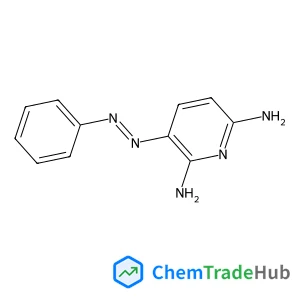
3-(2-phenyldiazen-1-yl)pyridine-2,6-diamine(CAS: 94-78-0)
CAS Number
Related Products
![[3-(2-Hydroxyethyl)phenyl]boronic acid](https://static.chemtradehub.com/structs/647/647853-32-5-c363.webp)
![N-(Butylsulfonyl)-O-[4-(4-piperidinyl)butyl]-L-tyrosine hydrochloride hydrate](https://static.chemtradehub.com/structs/150/150915-40-5-1679.webp)
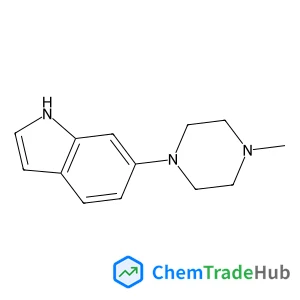
6-(4-methylpiperazin-1-yl)-1H-indole
CAS Number: 321745-04-4
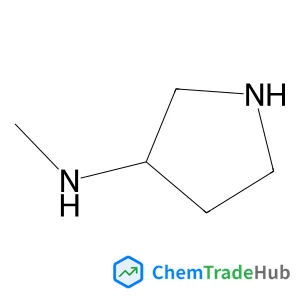
N-Methyl-3-pyrrolidinamine
CAS Number: 83030-08-4
![2-Chloro-N-[4-chloro-3-(2-pyridinyl)phenyl]-4-(methylsulfonyl)benzamide](https://static.chemtradehub.com/structs/879/879085-55-9-5abe.webp)
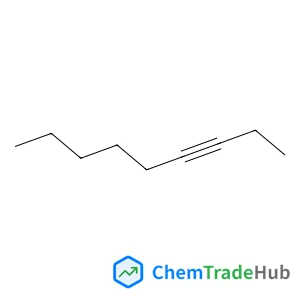
3-Nonyne
CAS Number: 20184-89-8
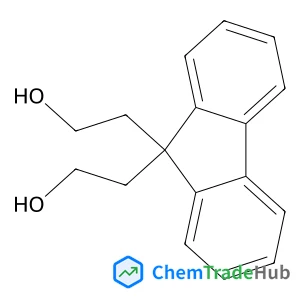
2,2'-(9H-fluorene-9,9-diyl)diethanol
CAS Number: 203070-78-4
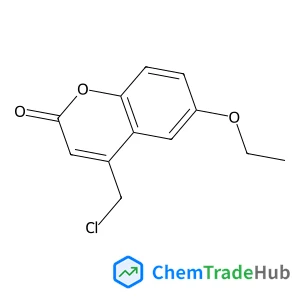
![1,4-Dioxaspiro[4.5]dec-8-ylacetic acid](https://static.chemtradehub.com/structs/134/134136-04-2-8def.webp)
Other Suppliers for 3-(2-phenyldiazen-1-yl)pyridine-2,6-diamine



Basic Information
Molecular Formula
C11H11N5
Molecular Weight
213.24 g/mol
Physical Properties
Melting Point
136-137°
Boiling Point
343.23°C (rough estimate)
Density
1.2597 (rough estimate)
Flash Point
442.3°Cat760mmHg
Chemical Identifiers
SMILES
C1=CC=C(C=C1)N=NC2=C(N=C(C=C2)N)N
InChIKey
QPFYXYFORQJZEC-UHFFFAOYSA-N
Database References
MDL Number
MFCD00091843
FAQ
3-(2-phenyldiazen-1-yl)pyridine-2,6-diamine has a crystalline form with a molecular weight of approximately 312.27 g/mol. It is slightly soluble in water and more soluble in organic solvents like ethanol and methanol. Chemically, it is stable under normal conditions but can react with strong acids and bases. It is a diazo compound, which makes it sensitive to light and air exposure.
3-(2-phenyldiazen-1-yl)pyridine-2,6-diamine is typically synthesized via the diazotization of 2-aminopyridine with phenyldiazonium salts. The reaction is carried out in an aqueous medium with acetic acid as a stabilizer. The product is obtained as a precipitate and can be isolated through filtration and drying. The yield is usually around 70-80%, and the reaction is highly selective.
3-(2-phenyldiazen-1-yl)pyridine-2,6-diamine is used in the pharmaceutical industry for the synthesis of certain pharmaceutical compounds. It is also utilized in the polymer industry for the development of functional polymers. Additionally, it has applications in the sensor industry due to its reactivity and can be used in semiconductor manufacturing for specific process steps.
When handling 3-(2-phenyldiazen-1-yl)pyridine-2,6-diamine, safety is paramount. Always wear appropriate personal protective equipment (PPE) such as gloves, safety goggles, and a lab coat. Work in a well-ventilated area or a fume hood to avoid inhalation of the compound. In case of a spill, immediately clean it up using appropriate absorbent materials and follow the safety data sheet (SDS) guidelines. Store the compound in a cool, dry place away from direct sunlight and heat sources.
Safety Notice
Please verify product specifications and safety data before use. Contact the supplier for detailed safety information.
Always follow proper handling procedures

Contact Information
Contact Person
Miss Xu
1986399151@qq.com
Mobile
15221998634
Telephone
021-59178156
Visit Website
https://www.yingxinbio.com/Address
Yugang Town Yiling Road 258 Lane C Zone