



AD
1-Amino-1-deoxy-D-glucitol(CAS: 488-43-7)
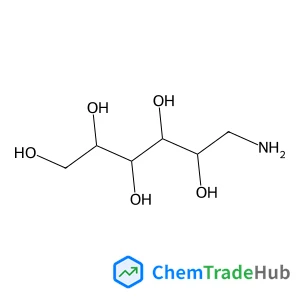
CAS Number
Related Products

methanol; trifluoro-methoxy-boron
CAS Number: 2802-68-8
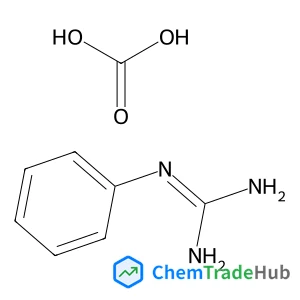
Carbonic acid - 1-phenylguanidine (1:1)
CAS Number: 6685-76-3
![1,7,7-Trimethylbicyclo[2.2.1]heptane-2,3-dione](https://static.chemtradehub.com/structs/103/10373-78-1-714c.webp)
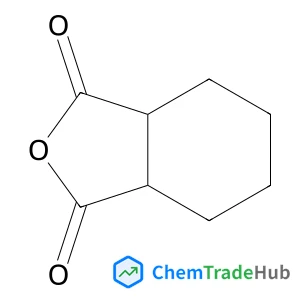
octahydro-2-benzofuran-1,3-dione
CAS Number: 85-42-7
![1-[(4xi)-beta-D-(~13~C_5_)-erythro-Pentofuranosyl]-1H-1,2,4-triazole-3-carboxamide](https://static.chemtradehub.com/structs/164/1646818-35-0-ea01.webp)
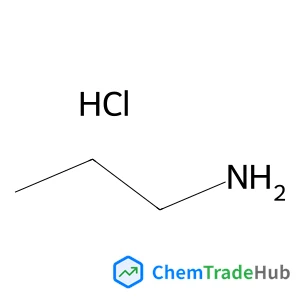
1-Propanamine hydrochloride (1:1)
CAS Number: 556-53-6
![1,1,2,2-Tetrafluoro-1-[2-(1,1,2,2-tetrafluoroethoxy)ethoxy]ethane](https://static.chemtradehub.com/structs/358/358-39-4-0089.webp)
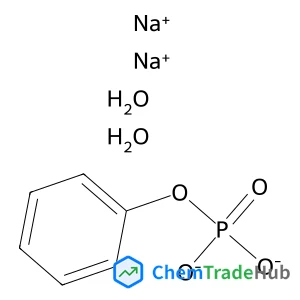
Other Suppliers for 1-Amino-1-deoxy-D-glucitol







Basic Information
Molecular Formula
C6H15NO5
Molecular Weight
181.19 g/mol
Physical Properties
Melting Point
127 ºC
Boiling Point
314.29°C (rough estimate)
Flash Point
230 ºC
Chemical Identifiers
SMILES
C(C(C(C(C(CO)O)O)O)O)N
InChIKey
SDOFMBGMRVAJNF-SLPGGIOYSA-N
Database References
MDL Number
MFCD00077776
FAQ
1-Amino-1-deoxy-D-glucitol (CAS: 488-43-7) is a crystalline solid with a molecular weight of approximately 156.16 g/mol. It is slightly soluble in water and ethanol. Chemically, it exhibits basic properties due to the amino group, which can react with acids to form salts. It is also prone to dehydration, leading to the formation of sugars. This compound is used in the synthesis of various amino sugar derivatives and in pharmaceutical applications.
1-Amino-1-deoxy-D-glucitol (CAS: 488-43-7) can be synthesized through the reduction of 1-deoxy-D-glucitol with a suitable reducing agent like sodium borohydride in the presence of a solvent such as methanol. The reaction is conducted under mild conditions to ensure high selectivity and yield. This method is commonly used in academic and industrial settings for its simplicity and efficiency.
1-Amino-1-deoxy-D-glucitol (CAS: 488-43-7) is primarily used in the pharmaceutical industry for the synthesis of amino sugar derivatives. It also finds applications in the polymer industry as a precursor for the production of biodegradable polymers. Additionally, it is used in the development of sensors and as a component in semiconductor manufacturing processes.
When handling 1-Amino-1-deoxy-D-glucitol (CAS: 488-43-7), it is essential to wear appropriate personal protective equipment (PPE) such as gloves, goggles, and a lab coat. Work should be performed in a well-ventilated area or a fume hood to minimize inhalation risks. Spills should be cleaned up immediately using appropriate absorbent materials. Always refer to the Safety Data Sheet (SDS) for detailed handling and disposal instructions.
Safety Notice
Please verify product specifications and safety data before use. Contact the supplier for detailed safety information.
Always follow proper handling procedures