



AD
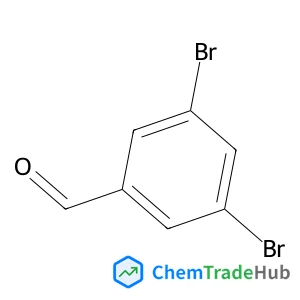
3,5-Dibromobenzaldehyde(CAS: 56990-02-4)
CAS Number
Related Products
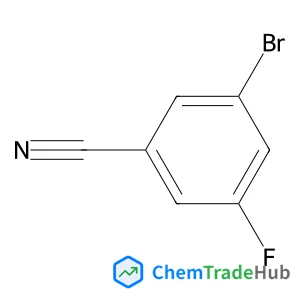
3-Bromo-5-fluorobenzonitrile
CAS Number: 179898-34-1

3-Bromo-2-fluorobenzoic acid
CAS Number: 161957-56-8

3-Fluoro-5-nitrobenzoic acid
CAS Number: 14027-75-9

3-Bromo-4-methoxyaniline
CAS Number: 19056-41-8

2,3-Difluoroaniline
CAS Number: 4519-40-8

3-Bromo-5-fluorobenzoic acid
CAS Number: 176548-70-2

Methyl 3-bromo-4-iodobenzoate
CAS Number: 249647-24-3
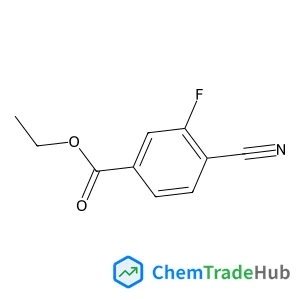
Ethyl 4-cyano-3-fluorobenzoate
CAS Number: 952183-53-8

5-Bromo-2-chloroquinazolin-4-amine
CAS Number: 1107695-10-2
Other Suppliers for 3,5-Dibromobenzaldehyde







Basic Information
Molecular Formula
C7H4Br2O
Molecular Weight
263.92 g/mol
Physical Properties
Melting Point
89.0 to 93.0 deg-C
Boiling Point
287.2℃ at 760 mmHg
Density
1.977
Flash Point
113.496℃
Chemical Identifiers
SMILES
C1=C(C=C(C=C1Br)Br)C=O
InChIKey
ZLDMZIXUGCGKMB-UHFFFAOYSA-N
Database References
MDL Number
MFCD00156887
Beilstein Registry Number
2573432
FAQ
3,5-Dibromobenzaldehyde (CAS: 56990-02-4) falls under the Hazardous Chemicals Directive in the EU and is classified under GHS as a skin and eye irritant. It is also subject to the REACH regulation, which requires manufacturers and importers to register substances if they meet certain tonnage thresholds. Additionally, the FDA and EPA have specific guidelines for the use, handling, and disposal of this compound in the United States.
Yes, there are alternatives to 3,5-Dibromobenzaldehyde, such as 4-bromobenzaldehyde and 2,5-dibromobenzaldehyde, which can be used as substitutes in certain synthetic pathways. Other common alternatives include using 3-bromobenzaldehyde or 5-bromobenzaldehyde, depending on the specific requirements of the synthesis. These alternatives can offer similar functional groups for chemical reactions.
The market for 3,5-Dibromobenzaldehyde (CAS: 56990-02-4) is driven by its applications in the synthesis of various organic compounds, particularly in pharmaceuticals and dyes. Research trends are focusing on sustainable and environmentally friendly synthetic methods. Additionally, there is growing interest in its use as a precursor for the development of novel materials and as an intermediate in the production of pesticides and other industrial chemicals.
Waste containing 3,5-Dibromobenzaldehyde (CAS: 56990-02-4) should be handled in accordance with local and international regulations. Proper waste collection methods should include the use of appropriate containers and labeling. The waste can be incinerated in a controlled environment or disposed of through a professional waste disposal service. Environmental precautions include ensuring that the waste is not released into the environment and that all safety guidelines are followed to prevent exposure and contamination.
Safety Notice
Please verify product specifications and safety data before use. Contact the supplier for detailed safety information.
Always follow proper handling procedures