



AD
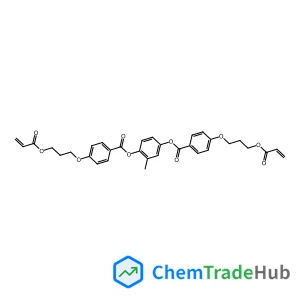
2-Methyl-1,4-phenylene bis(4-(3-(acryloyloxy)propoxy)benzoate)(CAS: 174063-87-7)
CAS Number
Related Products
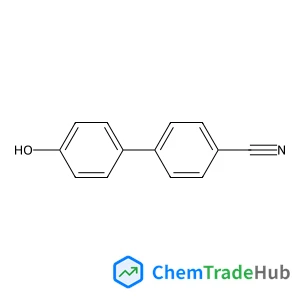
4'-Hydroxy-4-biphenylcarbonitrile
CAS Number: 19812-93-2
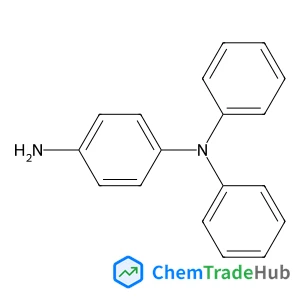
N,N-Diphenyl-1,4-benzenediamine
CAS Number: 2350-01-8

(3,4,5-Trifluorophenyl)boronic acid
CAS Number: 143418-49-9
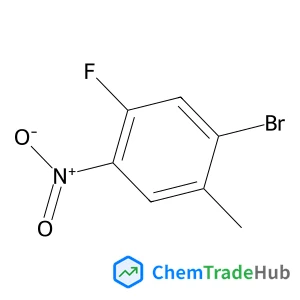
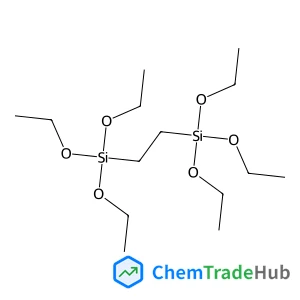
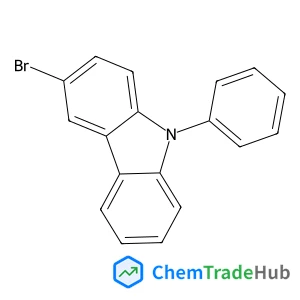
3-Bromo-9-phenyl-9H-carbazole
CAS Number: 1153-85-1
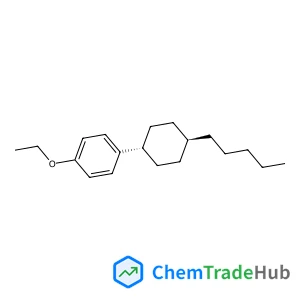
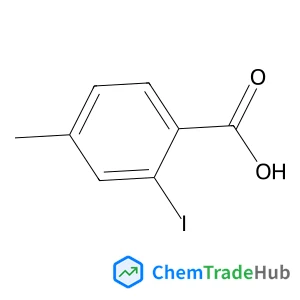
2-Iodo-4-methylbenzoic acid
CAS Number: 1829-21-6
Other Suppliers for 2-Methyl-1,4-phenylene bis(4-(3-(acryloyloxy)propoxy)benzoate)






Basic Information
Molecular Formula
C33H32O10
Molecular Weight
588.61 g/mol
Physical Properties
Boiling Point
733.5±60.0°C at 760 mmHg
Chemical Identifiers
SMILES
CC1=C(C=CC(=C1)OC(=O)C2=CC=C(C=C2)OCCCOC(=O)C=C)OC(=O)C3=CC=C(C=C3)OCCCOC(=O)C=C
InChIKey
ISSYGWIDLYOJEN-UHFFFAOYSA-N
Database References
MDL Number
MFCD09743681
FAQ
2-Methyl-1,4-phenylene bis(4-(3-(acryloyloxy)propoxy)benzoate) is a colorless or pale yellow liquid at room temperature. It has a molecular weight of approximately 485.4 g/mol and is soluble in common organic solvents like methanol and acetone. It exhibits moderate reactivity towards nucleophiles and is stable under normal conditions but susceptible to light and heat, leading to degradation.
2-Methyl-1,4-phenylene bis(4-(3-(acryloyloxy)propoxy)benzoate) is synthesized via the condensation of 4-(3-(acryloyloxy)propoxy)benzoic acid with 2-methyl-1,4-phenylene diisocyanate. The reaction is catalyzed by a tertiary amine and proceeds with high selectivity to yield the desired bis-derivative with a typical yield of 75-85%. The reaction is carried out in an inert atmosphere to prevent degradation.
2-Methyl-1,4-phenylene bis(4-(3-(acryloyloxy)propoxy)benzoate) finds applications in the polymer industry for modifying the properties of polymer matrices, enhancing their mechanical strength, and improving their adhesion. It is also used in the production of optical films, coatings, and adhesives due to its transparency and chemical resistance.
When handling 2-Methyl-1,4-phenylene bis(4-(3-(acryloyloxy)propoxy)benzoate), it is essential to wear appropriate personal protective equipment (PPE) such as gloves, safety goggles, and lab coat. Operations should be performed in a well-ventilated area or under a fume hood to minimize inhalation risk. Spills should be cleaned up immediately using appropriate absorbent materials. Always refer to the Material Safety Data Sheet (MSDS) for the latest safety information and emergency procedures.
Safety Notice
Please verify product specifications and safety data before use. Contact the supplier for detailed safety information.
Always follow proper handling procedures
Contact Information
yeshengchemical@163.com