



AD
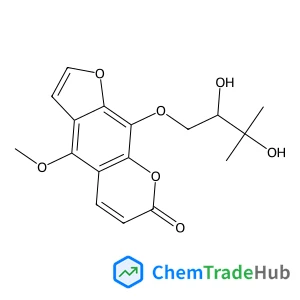
BYAKANGELICIN(CAS: 19573-01-4)
CAS Number
Related Products
![(4S)-4,11-Diethyl-4-hydroxy-1H-pyrano[3',4':6,7]indolizino[1,2-b]quinoline-3,14(4H,12H)-dione](https://static.chemtradehub.com/structs/782/78287-27-1-d631.webp)
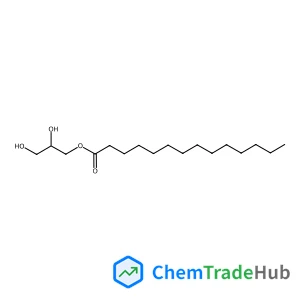
2,3-Dihydroxypropyl myristate
CAS Number: 589-68-4
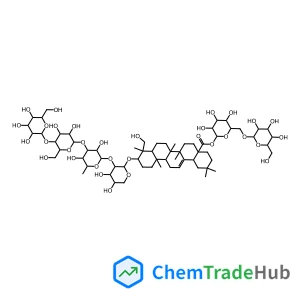
Macranthoidin B
CAS Number: 136849-88-2
![(3beta)-3-{[6-Deoxy-alpha-L-mannopyranosyl-(1->2)-beta-D-glucopyranosyl-(1->2)-alpha-L-arabinopyranosyl]oxy}olean-12-en-28-oic acid](https://static.chemtradehub.com/structs/894/89412-79-3-4812.webp)
![5,5'-(1R,3aS,4S,6aS)-Tetrahydro-1H,3H-furo[3,4-c]furan-1,4-diylbis(1,3-benzodioxole)](https://static.chemtradehub.com/structs/133/133-04-0-817b.webp)
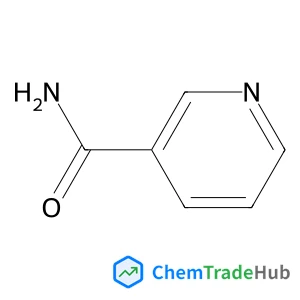
Niacinamide
CAS Number: 98-92-0
Other Suppliers for BYAKANGELICIN





Basic Information
Molecular Formula
C17H18O7
Molecular Weight
334.3 g/mol
Physical State
Powder
Chemical Identifiers
SMILES
CC(C)(C(COC1=C2C(=C(C3=C1OC(=O)C=C3)OC)C=CO2)O)O
InChIKey
PKRPFNXROFUNDE-UHFFFAOYSA-N
Database References
MDL Number
MFCD00468051
FAQ
BYAKANGELICIN (CAS: 19573-01-4) falls under the scope of the Globally Harmonized System of Classification and Labelling of Chemicals (GHS) and is regulated under REACH in the European Union. In the United States, it is subject to FDA and EPA regulations for use in pharmaceuticals and cosmetics. Manufacturers and importers are required to register the compound and ensure compliance with relevant regulations for handling, storage, and disposal.
There are various alternatives to BYAKANGELICIN (CAS: 19573-01-4) in synthesis, such as isomers like 6,7-dihydro-5H-benzimidazol-2-one and analogs like 6,7-dihydro-5H-benzimidazol-2-one. Common alternative reagents include other biologically active compounds like taxol, paclitaxel, and epigallocatechin gallate (EGCG), which can be used as substitutes depending on the specific application and desired properties.
The market for BYAKANGELICIN (CAS: 19573-01-4) is seeing increased interest due to its potential anti-inflammatory and anticancer properties. Research trends are focusing on its application in drug discovery and development for various diseases. Market demand is growing, driven by ongoing clinical trials and its potential as a natural product extract for therapeutic use. Price trends are influenced by supply chain dynamics and regulatory changes.
Waste containing BYAKANGELICIN (CAS: 19573-01-4) should be collected in dedicated containers and stored in a well-ventilated area. Incineration is a common method for disposal, but professional waste disposal services should be used for safe handling. Environmental protection precautions include ensuring no residue is released into the environment and following local regulations for hazardous waste management. Training is essential for personnel involved in waste handling and disposal.
Safety Notice
Please verify product specifications and safety data before use. Contact the supplier for detailed safety information.
Always follow proper handling procedures
Contact Information
xxiang08@126.com