



AD
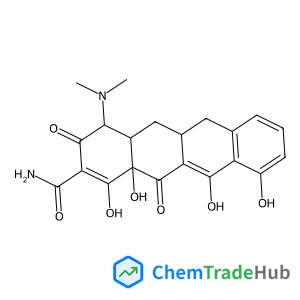
(4S,4aS,5aR,12aS)-4-(Dimethylamino)-3,10,12,12a-tetrahydroxy-1,11-dioxo-1,4,4a,5,5a,6,11,12a-octahydro-2-tetracenecarboxamide(CAS: 808-26-4)
CAS Number
Related Products
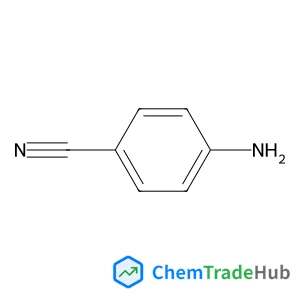
4-Aminobenzonitrile
CAS Number: 873-74-5
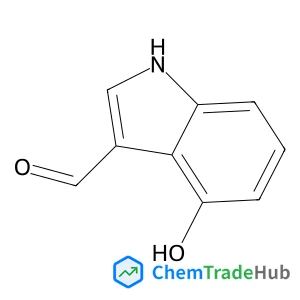
4-Hydroxy-1H-indole-3-carbaldehyde
CAS Number: 81779-27-3
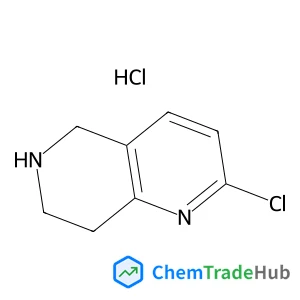
![(2R)-2-[(9Z,12Z)-9,12-Octadecadienoyloxy]-3-(palmitoyloxy)propyl 2-(trimethylammonio)ethyl phosphate](https://static.chemtradehub.com/structs/800/8002-43-5-2322.webp)
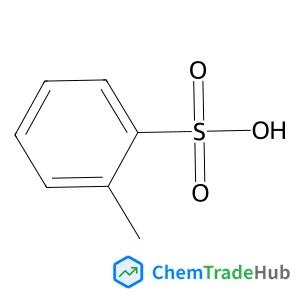
2-Toluenesulfonic acid
CAS Number: 88-20-0
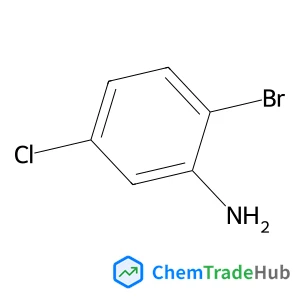
2-Bromo-5-chloroaniline
CAS Number: 823-57-4
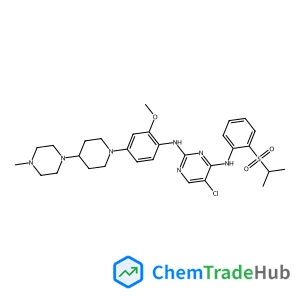
NVP-TAE 684
CAS Number: 761439-42-3
Other Suppliers for (4S,4aS,5aR,12aS)-4-(Dimethylamino)-3,10,12,12a-tetrahydroxy-1,11-dioxo-1,4,4a,5,5a,6,11,12a-octahydro-2-tetracenecarboxamide




Basic Information
Molecular Formula
C21H22N2O7
Molecular Weight
414.41 g/mol
Physical Properties
Melting Point
224-2280C (dec)
Chemical Identifiers
SMILES
CN(C)C1C2CC3CC4=C(C(=CC=C4)O)C(=C3C(=O)C2(C(=C(C1=O)C(=O)N)O)O)O
InChIKey
XDVCLKFLRAWGIT-ADOAZJKMSA-N
Database References
MDL Number
MFCD00864992
FAQ
This compound is a crystalline solid with a molecular weight of approximately 506.55 g/mol. It is moderately soluble in polar solvents like methanol and ethanol, but poorly soluble in water. Chemically, it is known for its reactivity towards nucleophiles and its ability to form hydrogen bonds. It is stable under normal conditions but may decompose upon prolonged exposure to heat or light.
The compound is typically synthesized via a multistep process involving the condensation of dimethylamine with a tetracene derivative, followed by various hydrolysis and amidation reactions. Commonly used catalysts include strong acids like trifluoroacetic acid. The synthesis is highly selective and yields up to 85% of the desired product.
This compound finds applications in the pharmaceutical industry for its potential as a therapeutic agent due to its unique chemical structure. It also has potential uses in the semiconductor industry for its electronic properties and in polymer chemistry for its ability to form stable molecules. Additionally, it can be used in the development of advanced sensors due to its reactivity and molecular structure.
When handling this compound, it is important to wear personal protective equipment (PPE) such as gloves, safety goggles, and a lab coat. Work should be conducted in a well-ventilated area or a fume hood to minimize inhalation risks. Spills should be cleaned up using appropriate absorbent materials and the area should be flushed with water. Always consult the Safety Data Sheet (SDS) for detailed handling and disposal instructions.
Safety Notice
Please verify product specifications and safety data before use. Contact the supplier for detailed safety information.
Always follow proper handling procedures
Contact Information
sale@parabiochem.com