



AD
Ruthenium (III) Acetate(CAS: 55466-76-7)
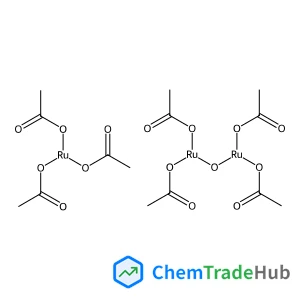
CAS Number
Related Products
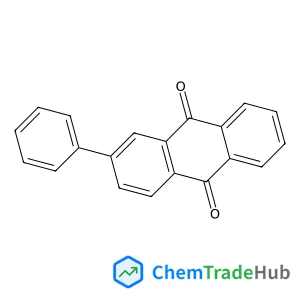
2-Phenyl-9,10-anthraquinone
CAS Number: 6485-97-8
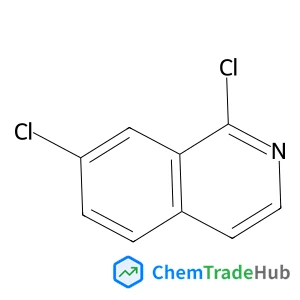
1,7-Dichloroisoquinoline
CAS Number: 70810-24-1
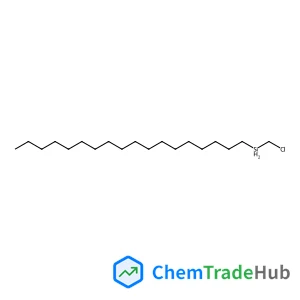
Silane, chloromethyloctadecyl-
CAS Number: 124694-97-9
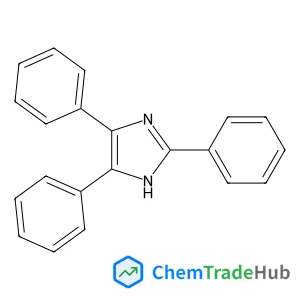
2,4,5-Triphenyl-1H-imidazole
CAS Number: 484-47-9
![[4-(Difluoromethoxy)phenyl]acetonitrile](https://static.chemtradehub.com/structs/414/41429-16-7-ae43.webp)
Other Suppliers for Ruthenium (III) Acetate






Basic Information
Molecular Formula
C14H21O15Ru3
Molecular Weight
732.52 g/mol
EINECS
259-653-7
Physical Properties
Density
2.293[at 20℃]
Water Solubility
660g/L at 20℃
Chemical Identifiers
SMILES
CC(=O)O[Ru](OC(=O)C)OC(=O)C.CC(=O)O[Ru](OC(=O)C)O[Ru](OC(=O)C)OC(=O)C
InChIKey
WJJDCTLALOISAV-UHFFFAOYSA-G
Database References
MDL Number
MFCD00064773
FAQ
Ruthenium (III) Acetate (CAS: 55466-76-7) is subject to various regulatory guidelines. It falls under the GHS classification as a hazardous chemical due to its potential to cause respiratory irritation and skin sensitization. For manufacture, import, and use, it must comply with REACH regulations in the EU, which include registration, evaluation, authorization, and restriction of chemicals. The FDA and EPA may also impose additional handling and disposal regulations for its use in pharmaceutical and environmental applications.
While Ruthenium (III) Acetate (CAS: 55466-76-7) is a useful reagent in certain syntheses, alternatives include other ruthenium complexes such as ruthenium (II) acetate and ruthenium (III) chloride, which offer similar reactivity. Isomeric forms of ruthenium complexes may also serve as alternatives depending on the reaction conditions and desired product.
The market and research trends for Ruthenium (III) Acetate (CAS: 55466-76-7) are driven by its applications in catalysis, particularly in organic synthesis and catalytic hydrogenation reactions. Recent research is focusing on developing more efficient and sustainable catalysts, which may reduce the reliance on ruthenium acetate. Additionally, there is growing demand in the pharmaceutical and fine chemical industries due to its use in developing new drugs and materials.
Waste containing Ruthenium (III) Acetate (CAS: 55466-76-7) should be collected in appropriate containers lined with acid-resistant materials. It is important to neutralize any acidic components before disposal to minimize environmental impact. Incineration or professional waste disposal services should be used to ensure safe and compliant disposal. Proper environmental protection measures, such as containment and personal protective equipment, are essential during handling and disposal to prevent contamination and exposure.
Safety Notice
Please verify product specifications and safety data before use. Contact the supplier for detailed safety information.
Always follow proper handling procedures
Contact Information
Contact Person
Li Jun
2801519207@qq.com