



AD
4-Chloro-3-methylpyridine(CAS: 1681-36-3)
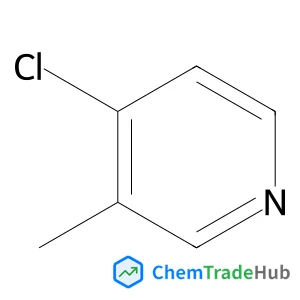
CAS Number
Related Products
![2-Methyl-2-propanyl [(2R)-1-hydroxy-2-propanyl]carbamate](https://static.chemtradehub.com/structs/106/106391-86-0-8397.webp)

3-Bromo-2,2-bis(bromomethyl)-1-propanol
CAS Number: 1522-92-5
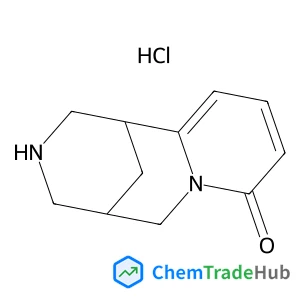
Cytisine hydrochloride
CAS Number: 6047-01-4
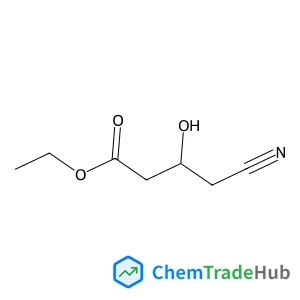
Atorvastatin Impurity 55
CAS Number: 141942-85-0

3-Hydroxy-D-tyrosine
CAS Number: 5796-17-8
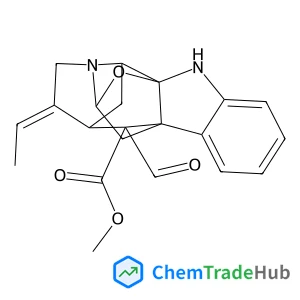
Picralinal
CAS Number: 20045-06-1

D-Arabinose
CAS Number: 9032-75-1
![(3aS,9R,9aS,9bS)-9-Hydroxy-6,9-dimethyl-3-methylene-3a,4,5,7,8,9,9a,9b-octahydroazuleno[4,5-b]furan-2(3H)-one](https://static.chemtradehub.com/structs/683/68370-47-8-daf4.webp)
Other Suppliers for 4-Chloro-3-methylpyridine




Basic Information
Molecular Formula
C6H6ClN
Molecular Weight
127.57 g/mol
EINECS
671-799-7
Physical Properties
Melting Point
165-169°C(lit.)
Boiling Point
192-193 C
Density
1,17 g/cm
Flash Point
75 ºC
Chemical Identifiers
SMILES
CC1=C(C=CN=C1)Cl
InChIKey
DZNXMHJMXLSNIR-UHFFFAOYSA-N
Database References
MDL Number
MFCD02183558
FAQ
4-Chloro-3-methylpyridine (CAS: 1681-36-3) is classified by the Globally Harmonized System of Classification and Labelling of Chemicals (GHS) as a skin and eye irritant. It is also regulated under the Registration, Evaluation, Authorization and Restriction of Chemicals (REACH) in the European Union. In the United States, the Environmental Protection Agency (EPA) and the Food and Drug Administration (FDA) have specific guidelines regarding its handling and use. Compliance with these regulations is essential to ensure safety and legal compliance.
Several alternatives to 4-Chloro-3-methylpyridine can be used in synthesis, depending on the specific requirements of the reaction. Common substitutes include 4-Methylpyridine, 3-Chloropyridine, and 2-Chloro-3-methylpyridine. These alternatives offer similar functional groups but may have different reactivity and solubility properties, making them suitable for various applications.
The market for 4-Chloro-3-methylpyridine (CAS: 1681-36-3) is driven by its use in the pharmaceutical and agrochemical industries. Recent research trends focus on the development of new synthetic methods and its application in the synthesis of biologically active compounds. Price trends are influenced by global supply and demand dynamics, with increasing demand in emerging markets driving prices upward. Emerging markets in Asia and South America are expected to see significant growth in the near future.
Waste containing 4-Chloro-3-methylpyridine (CAS: 1681-36-3) should be collected in appropriate containers and properly labeled as hazardous. Incineration is a common method for disposal, but professional waste disposal services are recommended for safety and compliance. Environmental protection precautions include ensuring proper ventilation and using personal protective equipment (PPE) during handling. Strict adherence to local regulations and guidelines is essential to prevent environmental contamination and ensure worker safety.
Safety Notice
Please verify product specifications and safety data before use. Contact the supplier for detailed safety information.
Always follow proper handling procedures
Contact Information
2423903095@qq.com