



AD
Ethyl 3-methyl-4-pyridazinecarboxylate(CAS: 98832-80-5)
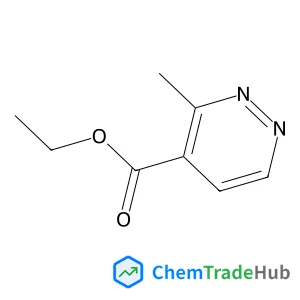
CAS Number
Related Products
![[3-(2-Hydroxyethyl)phenyl]boronic acid](https://static.chemtradehub.com/structs/647/647853-32-5-c363.webp)
![N-(Butylsulfonyl)-O-[4-(4-piperidinyl)butyl]-L-tyrosine hydrochloride hydrate](https://static.chemtradehub.com/structs/150/150915-40-5-1679.webp)
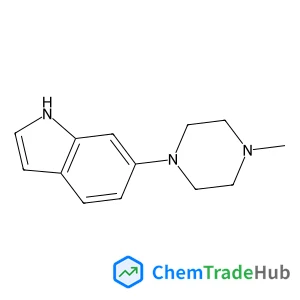
6-(4-methylpiperazin-1-yl)-1H-indole
CAS Number: 321745-04-4
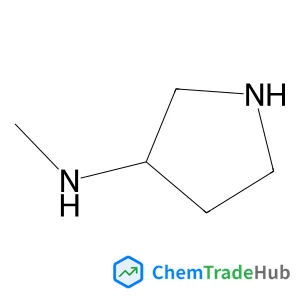
N-Methyl-3-pyrrolidinamine
CAS Number: 83030-08-4
![2-Chloro-N-[4-chloro-3-(2-pyridinyl)phenyl]-4-(methylsulfonyl)benzamide](https://static.chemtradehub.com/structs/879/879085-55-9-5abe.webp)
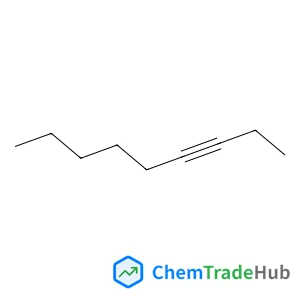
3-Nonyne
CAS Number: 20184-89-8
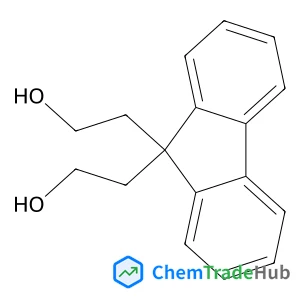
2,2'-(9H-fluorene-9,9-diyl)diethanol
CAS Number: 203070-78-4
![1,4-Dioxaspiro[4.5]dec-8-ylacetic acid](https://static.chemtradehub.com/structs/134/134136-04-2-8def.webp)
Other Suppliers for Ethyl 3-methyl-4-pyridazinecarboxylate






Basic Information
Molecular Formula
C8H10N2O2
Molecular Weight
166.18 g/mol
Physical Properties
Boiling Point
296.4±20.0℃ at 760 mmHg
Chemical Identifiers
SMILES
CCOC(=O)C1=C(N=NC=C1)C
InChIKey
TVAAFELLTHKOFM-UHFFFAOYSA-N
Database References
MDL Number
MFCD11506291
FAQ
Ethyl 3-methyl-4-pyridazinecarboxylate (CAS: 98832-80-5) is a crystalline solid with a molecular weight of approximately 196.22 g/mol. It has a characteristic odor and is poorly soluble in water but soluble in organic solvents like ethanol and acetone. This compound is relatively stable in air but reacts with strong bases and acids. It has a melting point around 85-87°C and a boiling point of about 245-247°C at 10 mmHg.
Ethyl 3-methyl-4-pyridazinecarboxylate (CAS: 98832-80-5) is typically synthesized via the reaction of 4-pyridazinecarboxylic acid with ethyl iodide in the presence of a base such as potassium carbonate. The reaction is carried out in an organic solvent like dimethylformamide (DMF). The yield is generally around 85-90%, and the product can be isolated by recrystallization from hot ethanol.
Ethyl 3-methyl-4-pyridazinecarboxylate (CAS: 98832-80-5) is used in various industries. It is a key intermediate in the synthesis of pharmaceuticals, particularly in the development of certain antipsychotic drugs. It also finds applications in the production of polymer-based materials, electronic sensors, and as a precursor for semiconductors in the electronics industry.
When handling Ethyl 3-methyl-4-pyridazinecarboxylate (CAS: 98832-80-5), it is important to wear appropriate personal protective equipment (PPE), including gloves, goggles, and a lab coat. Work should be conducted in a fume hood to minimize exposure. Spills should be handled carefully, using appropriate absorbents, and the area should be well-ventilated. Always refer to the Safety Data Sheet (SDS) for detailed information on handling and storage. This compound is not highly toxic but should be managed with care due to its potential for skin irritation and other health effects.
Safety Notice
Please verify product specifications and safety data before use. Contact the supplier for detailed safety information.
Always follow proper handling procedures

Contact Information
Contact Person
Miss Xu
1986399151@qq.com
Mobile
15221998634
Telephone
021-59178156
Visit Website
https://www.yingxinbio.com/Address
Yugang Town Yiling Road 258 Lane C Zone