



AD
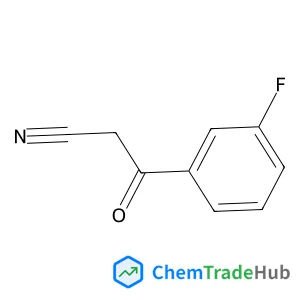
3-(3-Fluorophenyl)-3-oxopropanenitrile(CAS: 21667-61-8)
CAS Number
Related Products
![2-Chloro-10-[3-(4-methyl-1-piperazinyl)propyl]-10H-phenothiazine](https://static.chemtradehub.com/structs/58-/58-38-8-9a44.webp)
![(2S)-2-Amino-4-[(2-methyl-2-propanyl)oxy]-4-oxobutanoic acid](https://static.chemtradehub.com/structs/305/3057-74-7-60dc.webp)

Ethyl 2-acetylbenzoate
CAS Number: 103935-10-0


Butanoic acid, 2-methyl-, butyl ester
CAS Number: 15706-73-7

6,10-Dimethyl-5,9-undecadien-2-one
CAS Number: 689-67-8

Sodium chloride
CAS Number: 7647-14-5
Other Suppliers for 3-(3-Fluorophenyl)-3-oxopropanenitrile








Basic Information
Molecular Formula
C9H6FNO
Molecular Weight
152.17 g/mol
Physical Properties
Boiling Point
304.364 ℃ at 760 mmHg
Chemical Identifiers
SMILES
C1=CC(=CC(=C1)F)C(=O)CC#N
InChIKey
UNGFCWRGMBVFAS-UHFFFAOYSA-N
Database References
MDL Number
MFCD02260777
FAQ
3-(3-Fluorophenyl)-3-oxopropanenitrile is a crystalline compound with a molecular weight of approximately 188.14 g/mol. It has limited water solubility and is more soluble in organic solvents like dichloromethane and acetone. This compound is known for its reactivity, particularly in nucleophilic substitution reactions and is prone to hydrolysis under basic conditions. It is typically stored in a dry, cool place away from moisture and oxidizing agents.
3-(3-Fluorophenyl)-3-oxopropanenitrile is commonly synthesized via nucleophilic substitution reactions where a 3-fluorophenyl group is introduced onto a 3-cyanoacrylate or a similar precursor. The reaction typically requires a mild base in an appropriate solvent. The yield and selectivity can be enhanced by optimizing reaction conditions, such as temperature and solvent choice. Common catalysts include sodium hydride and triethylamine.
3-(3-Fluorophenyl)-3-oxopropanenitrile is used in various industries, particularly in pharmaceuticals, where it serves as an intermediate in the synthesis of more complex molecules. It is also used in the polymer industry for synthesizing specific types of polymers with desired properties. Additionally, it finds applications in the development of sensors and semiconductors due to its unique chemical characteristics.
When handling 3-(3-Fluorophenyl)-3-oxopropanenitrile (CAS: 21667-61-8), it is essential to wear appropriate personal protective equipment (PPE) such as gloves, goggles, and a lab coat. Work should be conducted in a well-ventilated area or a fume hood to minimize inhalation risks. Spills should be cleaned up using appropriate absorbents, and the area should be thoroughly rinsed. Always refer to the safety data sheet (SDS) for specific handling instructions and emergency procedures.
Safety Notice
Please verify product specifications and safety data before use. Contact the supplier for detailed safety information.
Always follow proper handling procedures
Contact Information
Contact Person
Hu Gebing
2369399482@qq.com