



AD
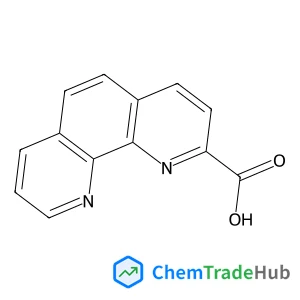
1,10-Phenanthroline-2-carboxylic acid(CAS: 1891-17-4)
CAS Number
Related Products
![1-[4-Amino-3-chloro-5-(trifluoromethyl)phenyl]-2-[(2-methyl-2-propanyl)amino]ethanol hydrochloride (1:1)](https://static.chemtradehub.com/structs/542/54240-36-7-06e4.webp)
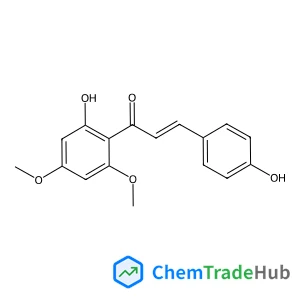
2',4-Dihydroxy-4',6'-dimethoxychalcone
CAS Number: 37308-75-1
![8-({(3R,4R,5S)-3-[(4,4-Difluorocyclohexyl)methoxy]-5-methoxy-4-piperidinyl}amino)-3-methyl-5-(5-methyl-3-pyridinyl)-1,7-naphthyridin-2(1H)-one](https://static.chemtradehub.com/structs/199/1997369-78-4-ea15.webp)
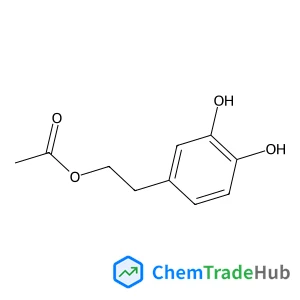
2-(3,4-Dihydroxyphenyl)ethyl acetate
CAS Number: 69039-02-7
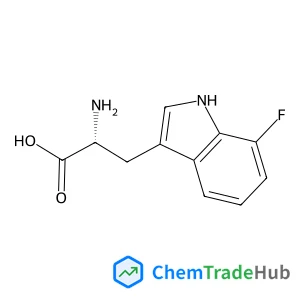
7-Fluorotryptophan
CAS Number: 138514-98-4
![5-[(1S)-1-{(1R,2R)-2-[(1R,3R)-2,2-Dimethyl-3-(3-oxobutyl)cyclopropyl]-1-methyl-3-oxocyclopentyl}-3-methylbutyl]-2,4,6-trihydroxyisophthalaldehyde](https://static.chemtradehub.com/structs/221/221899-21-4-fc5c.webp)
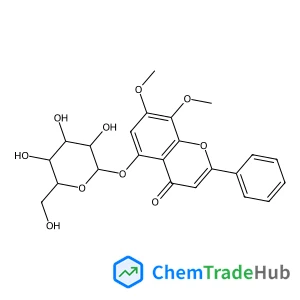
Andrographidine C
CAS Number: 113963-39-6
![(2E)-3-(6-Bromo-2-pyridinyl)-2-cyano-N-[(1S)-1-phenylethyl]acrylamide](https://static.chemtradehub.com/structs/857/857064-38-1-2c6b.webp)
Other Suppliers for 1,10-Phenanthroline-2-carboxylic acid



Basic Information
Molecular Formula
C13H8N2O2
Molecular Weight
224.22 g/mol
Chemical Identifiers
SMILES
C1=CC2=C(C3=C(C=C2)C=CC(=N3)C(=O)O)N=C1
InChIKey
MTAHTDBOMUECCQ-UHFFFAOYSA-N
Database References
MDL Number
MFCD09881313
FAQ
1,10-Phenanthroline-2-carboxylic acid (CAS: 1891-17-4) is a crystalline solid with a molecular formula of C12H8O3. It has a molecular weight of approximately 204.22 g/mol and a melting point of 239-241°C. This compound is slightly soluble in water and has a pKa value of 2.8, indicating its acidic nature. It reacts readily with transition metal ions, making it a useful ligand in coordination chemistry.
1,10-Phenanthroline-2-carboxylic acid (CAS: 1891-17-4) is commonly synthesized via the condensation of 1,10-phenanthroline with acetyl chloride or acetic anhydride. The reaction is typically carried out at room temperature, with the addition of a catalytic amount of a tertiary amine such as pyridine to enhance the reaction yield. The product is then purified by recrystallization from a suitable solvent such as ethanol.
1,10-Phenanthroline-2-carboxylic acid (CAS: 1891-17-4) is widely used in various industries, particularly in pharmaceuticals for the synthesis of metal chelates, in polymer science as a stabilizer, in sensors for metal ion detection, and in semiconductors for its role as a ligand in transition metal complexes. It is also employed in analytical chemistry for complexometric titrations and as a chelating agent.
When handling 1,10-Phenanthroline-2-carboxylic acid (CAS: 1891-17-4), it is important to wear appropriate personal protective equipment (PPE), including gloves and safety glasses. Ensure that the work is conducted in a well-ventilated area or a fume hood to minimize inhalation risks. Spills should be cleaned up using appropriate absorbent materials, and the area should be rinsed with water. Always consult the Safety Data Sheet (SDS) for detailed handling and disposal guidelines.
Safety Notice
Please verify product specifications and safety data before use. Contact the supplier for detailed safety information.
Always follow proper handling procedures
Contact Information
2851167780@qq.com
Mobile
13348961525
Fax
028-81705658
Visit Website
https://www.weikeqi-biotech.com