



AD
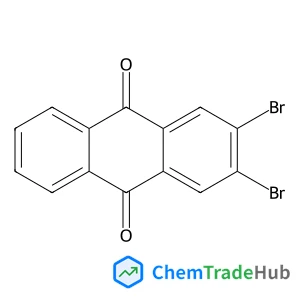
2,3-Dibromoanthracene-9,10-dione(CAS: 633-68-1)
CAS Number
Related Products
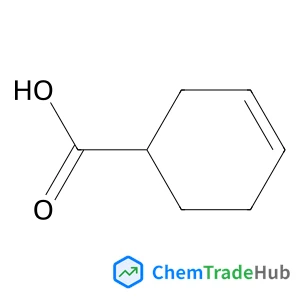
(1S)-3-Cyclohexene-1-carboxylic acid
CAS Number: 5708-19-0
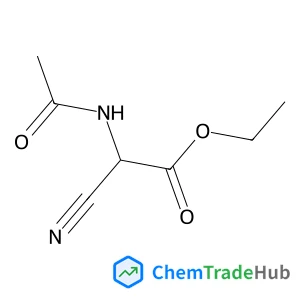
Ethyl Acetamidocyanoacetate
CAS Number: 4977-62-2
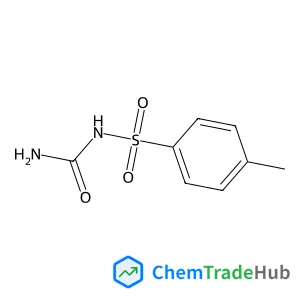
N-Carbamoyl-4-methylbenzenesulfonamide
CAS Number: 1694-06-0
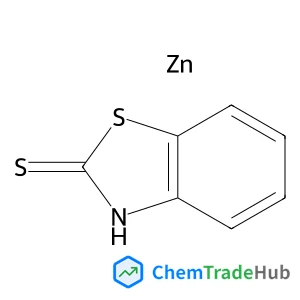
Zinc bis(1,3-benzothiazole-2-thiolate)
CAS Number: 155-04-4
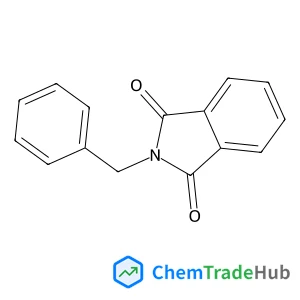
2-Benzyl-1H-isoindole-1,3(2H)-dione
CAS Number: 2142-01-0
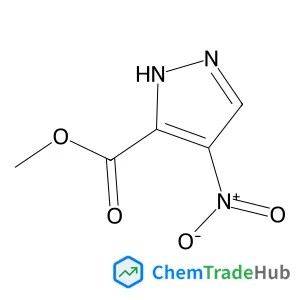
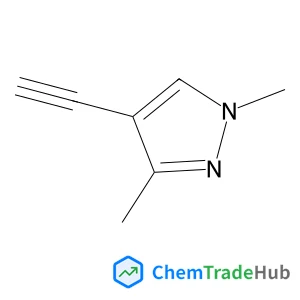
4-Ethynyl-1,3-dimethyl-1H-pyrazole
CAS Number: 61514-53-2
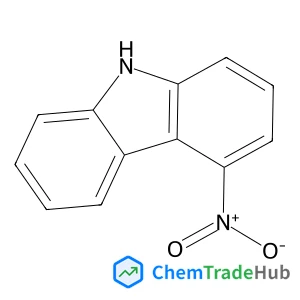
1-Nitro-9H-carbazole
CAS Number: 57905-76-7
Other Suppliers for 2,3-Dibromoanthracene-9,10-dione






Basic Information
Molecular Formula
C14H6Br2O2
Molecular Weight
366.01 g/mol
Physical Properties
Density
1.911
Chemical Identifiers
SMILES
C1=CC=C2C(=C1)C(=O)C3=CC(=C(C=C3C2=O)Br)Br
InChIKey
RECQBTCMRZKCQX-UHFFFAOYSA-N
Database References
MDL Number
MFCD16038227
FAQ
2,3-Dibromoanthracene-9,10-dione is a crystalline solid with a molecular weight of approximately 385.01 g/mol. It has a high melting point and poor water solubility. Chemically, it exhibits strong reactivity towards nucleophiles and can undergo substitution reactions. It is insoluble in water but soluble in organic solvents like methanol and acetone.
2,3-Dibromoanthracene-9,10-dione is typically synthesized by bromination of anthracene followed by condensation. Common methods include the use of phosphorous pentabromide as a brominating agent and subsequent oxidation with sodium hypochlorite or potassium permanganate. The reaction yields a high purity product with good selectivity and yield.
2,3-Dibromoanthracene-9,10-dione finds applications in the pharmaceutical industry for its use as a precursor in drug synthesis. It is also utilized in the polymer industry for the modification of polymer properties and in the sensor industry for its sensing capabilities. Additionally, it is used in semiconductor technology for dopant applications.
When handling 2,3-Dibromoanthracene-9,10-dione, appropriate personal protective equipment (PPE) is essential, including gloves, goggles, and a lab coat. Work should be conducted in a fume hood due to its potential respiratory irritancy. In case of spillage, immediately clean up using appropriate absorbents and consult the Safety Data Sheet (SDS) for further instructions. Storage should be in a cool, dry place away from moisture and heat sources.
Safety Notice
Please verify product specifications and safety data before use. Contact the supplier for detailed safety information.
Always follow proper handling procedures
Contact Information
jacschem@163.com