



AD
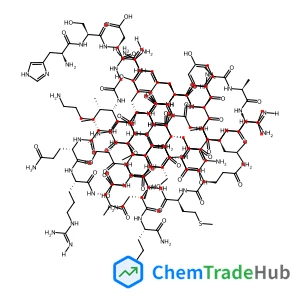
Pituitary adenylate cyclase-activating peptide(CAS: 137061-48-4)
CAS Number
Related Products
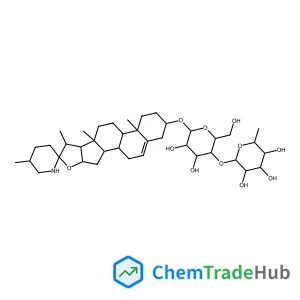
Khasianine
CAS Number: 32449-98-2
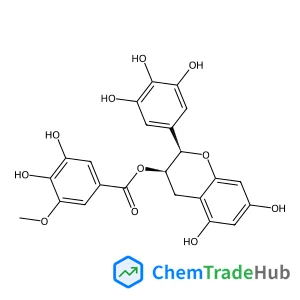
![14-Methyl-5-oxo-7,8,13,14-tetrahydro-5H-indolo[2',3':3,4]pyrido[2,1-b]quinazolin-6-ium chloride](https://static.chemtradehub.com/structs/111/111664-82-5-4f26.webp)
![5-Bromo-N~4~-[5-(dimethylphosphoryl)-6-quinoxalinyl]-N~2~-{2-methoxy-5-methyl-4-[4-(4-methyl-1-piperazinyl)-1-piperidinyl]phenyl}-2,4-pyrimidinediamine](https://static.chemtradehub.com/structs/226/2267329-76-8-d93e.webp)
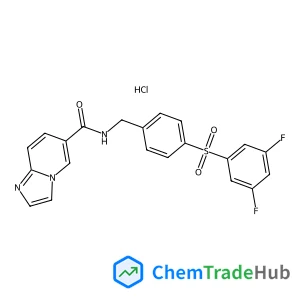
GNE-617 hydrochloride
CAS Number: 2070014-99-0
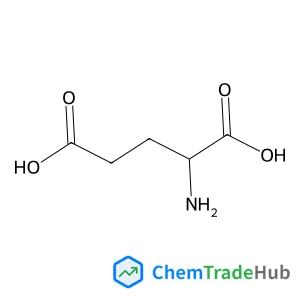
DL-Glutamic-2,4,4-D3 acid
CAS Number: 96927-56-9
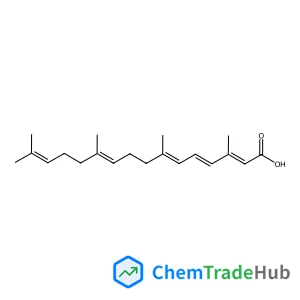

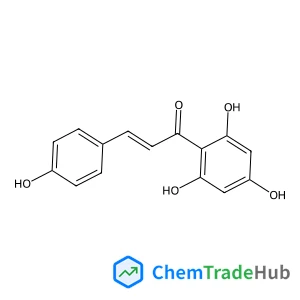
Naringenin chalcone
CAS Number: 73692-50-9
Other Suppliers for Pituitary adenylate cyclase-activating peptide




Basic Information
Molecular Formula
C203H331N63O53S1
Molecular Weight
4534.26 g/mol
Physical Properties
Water Solubility
Soluble to 0.90 mg/ml in water
Chemical Identifiers
SMILES
[H]/N=C(/NCCC[C@@H](C(N[C@H](C(N[C@H](C(N[C@H](C(N[C@H](C(N[C@H](C(N[C@H](C(N[C@H](C(N[C@H](C(=O)N)CCCCN)=O)CC(=O)N)=O)CCCCN)=O)C(C)C)=O)CCCN/C(=N/[H])/N)=O)CCC(=O)N)=O)CCCCN)=O)CC1=CC=C(O)C=C1)=O)NC([C@@H](NC(CNC([C@@H](NC([C@H](C(C)C)NC([C@@H](NC([C@@H](NC([C@@H](NC([C@@H](NC([C@@H](NC([C@@H](NC([C@H](C(C)C)NC([C@@H](NC([C@@H](NC([C@@H](NC([C@@H](NC([C@@H](NC([C@@H](NC([C@@H](NC([C@@H](NC([C@@H](NC([C@@H](NC([C@@H](NC([C@H]([C@H](O)C)NC([C@@H](NC([C@H]([C@H](CC)C)NC(CNC([C@@H](NC([C@@H](NC([C@H](CC1N=CNC=1)N)=O)CO)=O)CC(=O)O)=O)=O)=O)CC1=CC=CC=C1)=O)=O)CC(=O)O)=O)CO)=O)CC1=CC=C(O)C=C1)=O)CO)=O)CCCN/C(=N/[H])/N)=O)CC1=CC=C(O)C=C1)=O)CCCN/C(=N/[H])/N)=O)CCCCN)=O)CCC(=O)N)=O)CCSC)=O)C)=O)=O)CCCCN)=O)CCCCN)=O)CC1=CC=C(O)C=C1)=O)CC(C)C)=O)C)=O)C)=O)=O)CC(C)C)=O)=O)CCCCN)=O)\N
InChIKey
UFTCZKMBJOPXDM-XXFCQBPRSA-N
Database References
MDL Number
MFCD00081800
FAQ
Pituitary adenylate cyclase-activating peptide (PACAP, CAS: 137061-48-4) is subject to various regulatory guidelines depending on its intended use. In the EU, it falls under REACH regulations for chemical safety and environmental protection. In the USA, it is regulated by the FDA for pharmaceuticals and EPA for environmental releases. This peptide should be handled according to GHS classification for safe transport and storage.
For synthesis, alternatives to Pituitary adenylate cyclase-activating peptide (PACAP, CAS: 137061-48-4) include analogs such as PACAP-38 and PACAP-27. Isomers like PACAP-27 can be used as substitutes. Common alternative reagents like N-Methyl-L-erythrose-2-carboxylic acid and L-lysine can also be considered in synthesis processes to achieve similar biological activities.
The market for Pituitary adenylate cyclase-activating peptide (PACAP, CAS: 137061-48-4) is growing due to its potential in neuroprotection and neurotrophic effects. Research trends are focusing on its application in neurodegenerative diseases and pain management. Market analysis indicates increasing demand for this peptide in pharmaceutical and academic research, driven by positive clinical trials and emerging applications.
Waste containing Pituitary adenylate cyclase-activating peptide (PACAP, CAS: 137061-48-4) should be collected in a sealed container and stored at low temperature. It should be incinerated or disposed of through a professional waste disposal service. Environmental protection precautions include minimizing exposure and ensuring proper labeling. Disposal should comply with local regulations to avoid environmental contamination.
Safety Notice
Please verify product specifications and safety data before use. Contact the supplier for detailed safety information.
Always follow proper handling procedures

Contact Information
sales@medchemexpress.cn
Mobile
13611715263
Telephone
021-58955995
Fax
021-53700325
Visit Website
https://www.medchemexpress.cn