



AD
Tridecafluoroheptanoyl fluoride(CAS: 375-84-8)

CAS Number
Related Products
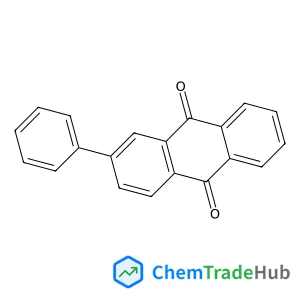
2-Phenyl-9,10-anthraquinone
CAS Number: 6485-97-8

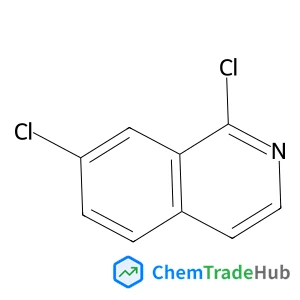
1,7-Dichloroisoquinoline
CAS Number: 70810-24-1
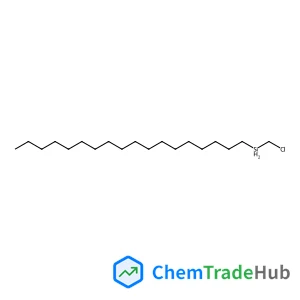
Silane, chloromethyloctadecyl-
CAS Number: 124694-97-9
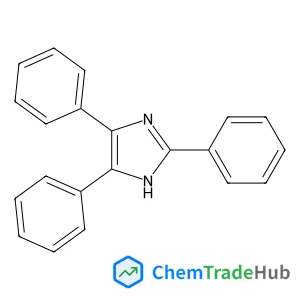
2,4,5-Triphenyl-1H-imidazole
CAS Number: 484-47-9
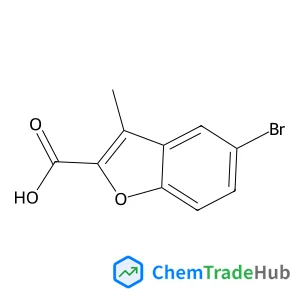
![[4-(Difluoromethoxy)phenyl]acetonitrile](https://static.chemtradehub.com/structs/414/41429-16-7-ae43.webp)
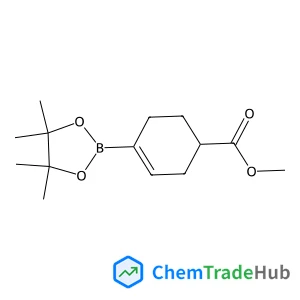
Other Suppliers for Tridecafluoroheptanoyl fluoride

Basic Information
Molecular Formula
C7F14O
Molecular Weight
366.05 g/mol
Physical Properties
Boiling Point
88-91 ºC
Flash Point
29.5±21.5 ºC,
Chemical Identifiers
SMILES
C(=O)(C(C(C(C(C(C(F)(F)F)(F)F)(F)F)(F)F)(F)F)(F)F)F
InChIKey
XLIFBQWTSCGUEB-UHFFFAOYSA-N
Database References
MDL Number
MFCD16620578
FAQ
Tridecafluoroheptanoyl fluoride (CAS: 375-84-8) is subject to various regulatory guidelines including the REACH regulations in the European Union, which requires registration for substances above a certain tonnage. It is also regulated under the Occupational Safety and Health Administration (OSHA) in the U.S. and is classified under the Globally Harmonized System of Classification and Labeling of Chemicals (GHS) as a flammable gas and corrosive. Additionally, the Environmental Protection Agency (EPA) in the U.S. may require specific handling and disposal guidelines for this substance.
There are some alternatives to Tridecafluoroheptanoyl fluoride (CAS: 375-84-8) in synthesis, such as perfluorooctanoyl fluoride, which offer similar functionalities. Other alternatives include using less fluorinated compounds or exploring green chemistry approaches that minimize the use of fluorinated gases. These alternatives can be chosen depending on the specific requirements of the synthesis and the desired environmental impact.
The market for Tridecafluoroheptanoyl fluoride (CAS: 375-84-8) is driven by its use in surface treatment and as a precursor in fluoropolymer synthesis. Research trends are focusing on its applications in coatings, adhesives, and as a raw material for the production of fluorinated polymers. There is also growing interest in the development of less environmentally harmful alternatives, reflecting the overall trend towards sustainability in the chemical industry.
Waste containing Tridecafluoroheptanoyl fluoride (CAS: 375-84-8) should be handled with care due to its flammability and corrosivity. It should be collected in appropriate containers, labeled as hazardous, and disposed of through professional waste disposal services. Incineration is a common method for waste disposal, but it must be done in facilities equipped for the proper oxidation of fluorinated compounds. Environmental protection precautions, such as containment and adherence to local regulations, are essential to prevent environmental contamination.
Safety Notice
Please verify product specifications and safety data before use. Contact the supplier for detailed safety information.
Always follow proper handling procedures
Contact Information
Contact Person
Li Jun
2801519207@qq.com