



AD
2,4,6-Trimethoxy-1,3,5-benzenetricarbaldehyde(CAS: 680575-17-1)

CAS Number
Related Products
![(2R)-2,7,8-Trimethyl-2-[(4R,8R)-4,8,12-trimethyltridecyl]-6-chromanol](https://static.chemtradehub.com/structs/54-/54-28-4-155c.webp)

N-(2-Acetylphenyl)acetamide
CAS Number: 5234-26-4
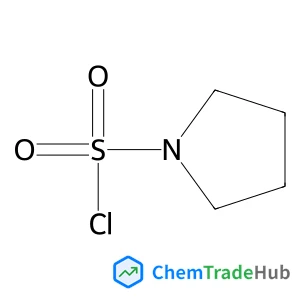
1-Pyrrolidinesulfonyl chloride
CAS Number: 1689-02-7
![3-Hexyl-2-[3-(3-hexyl-1,3-benzoxazol-2(3H)-ylidene)-1-propen-1-yl]-1,3-benzoxazol-3-ium iodide](https://static.chemtradehub.com/structs/532/53213-82-4-e483.webp)

4-Bromoaniline hydrochloride (1:1)
CAS Number: 624-19-1


4-Bromo-1-isopropyl-1H-pyrazole
CAS Number: 313735-62-5


Other Suppliers for 2,4,6-Trimethoxy-1,3,5-benzenetricarbaldehyde





Basic Information
Molecular Formula
C12H12O6
Molecular Weight
252.22 g/mol
Chemical Identifiers
SMILES
COc1c(c(c(c(c1C=O)OC)C=O)OC)C=O
InChIKey
PGHSMJSBERHVLW-UHFFFAOYSA-N
Database References
FAQ
2,4,6-Trimethoxy-1,3,5-benzenetricarbaldehyde (CAS: 680575-17-1) is a white crystalline solid with a molecular weight of approximately 252.24 g/mol. It has a slight odor and is poorly soluble in water but soluble in organic solvents. The compound is known for its reactivity, particularly in its ability to undergo electrophilic aromatic substitution reactions. It is also stable under normal conditions but requires storage in a dry place to prevent moisture absorption.
2,4,6-Trimethoxy-1,3,5-benzenetricarbaldehyde (CAS: 680575-17-1) is typically synthesized via the acetylation of m-cresol with acetic anhydride in the presence of a catalyst such as pyridine. The reaction proceeds under mild conditions, and the product is isolated by recrystallization. The synthetic route provides a yield of around 85%, and the product is highly selective for the desired aldehyde form.
2,4,6-Trimethoxy-1,3,5-benzenetricarbaldehyde (CAS: 680575-17-1) is used in various industries due to its unique chemical properties. It is primarily used in the pharmaceutical industry as a precursor for the synthesis of organic compounds. Additionally, it finds applications in the production of polymers, sensors, and semiconductors, where its reactivity and stability are advantageous.
When handling 2,4,6-Trimethoxy-1,3,5-benzenetricarbaldehyde (CAS: 680575-17-1), it is essential to take necessary precautions to ensure safety. Always wear appropriate personal protective equipment (PPE), including gloves, goggles, and a lab coat. Handle the compound in a well-ventilated area or a fume hood to avoid inhaling its vapors. In case of a spill, immediately clean it up using an absorbent material and dispose of it according to local regulations. Refer to the safety data sheet (SDS) for detailed information on handling and storage.
Safety Notice
Please verify product specifications and safety data before use. Contact the supplier for detailed safety information.
Always follow proper handling procedures
