



AD
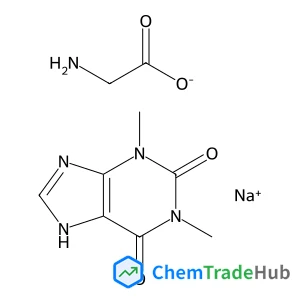
Sodium aminoacetate 1,3-dimethyl-3,7-dihydro-1H-purine-2,6-dione (1:1:1)(CAS: 8000-10-0)
CAS Number
Related Products
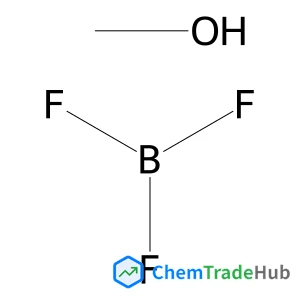
methanol; trifluoro-methoxy-boron
CAS Number: 2802-68-8
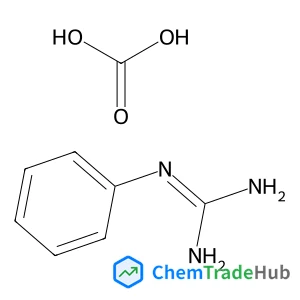
Carbonic acid - 1-phenylguanidine (1:1)
CAS Number: 6685-76-3
![1,7,7-Trimethylbicyclo[2.2.1]heptane-2,3-dione](https://static.chemtradehub.com/structs/103/10373-78-1-714c.webp)
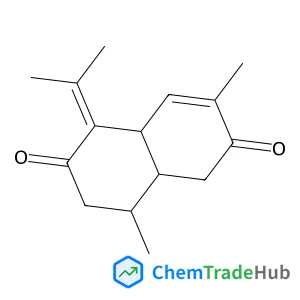
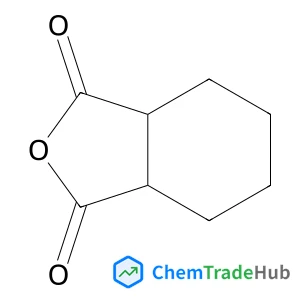
octahydro-2-benzofuran-1,3-dione
CAS Number: 85-42-7
![1-[(4xi)-beta-D-(~13~C_5_)-erythro-Pentofuranosyl]-1H-1,2,4-triazole-3-carboxamide](https://static.chemtradehub.com/structs/164/1646818-35-0-ea01.webp)
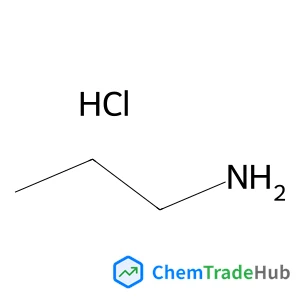
1-Propanamine hydrochloride (1:1)
CAS Number: 556-53-6
![1,1,2,2-Tetrafluoro-1-[2-(1,1,2,2-tetrafluoroethoxy)ethoxy]ethane](https://static.chemtradehub.com/structs/358/358-39-4-0089.webp)
Other Suppliers for Sodium aminoacetate 1,3-dimethyl-3,7-dihydro-1H-purine-2,6-dione (1:1:1)








Basic Information
Molecular Formula
C9H12N5NaO4
Molecular Weight
277.21 g/mol
Physical Properties
Density
d20 1.05
Chemical Identifiers
SMILES
CN1C2=C(C(=O)N(C1=O)C)NC=N2.C(C(=O)[O-])N.[Na+]
InChIKey
AIJQWRAOMFRHTQ-UHFFFAOYSA-M
Database References
FAQ
Sodium aminoacetate 1,3-dimethyl-3,7-dihydro-1H-purine-2,6-dione (1:1:1) (CAS: 8000-10-0) is a crystalline compound with a molecular weight of approximately 282.23 g/mol. It has good solubility in water and is slightly soluble in ethanol. The compound is stable in air but can decompose under strongly acidic or alkaline conditions. It is reactive towards bases and has limited reactivity with acids.
Sodium aminoacetate 1,3-dimethyl-3,7-dihydro-1H-purine-2,6-dione (1:1:1) (CAS: 8000-10-0) is typically synthesized through a condensation reaction between 1,3-dimethyl-3,7-dihydro-1H-purine-2,6-dione and sodium aminoacetate. The reaction usually occurs in a solvent such as ethanol or methanol, and is catalyzed by a strong base like sodium hydroxide. The yield is around 70-80%, and the product can be isolated by recrystallization from water.
Sodium aminoacetate 1,3-dimethyl-3,7-dihydro-1H-purine-2,6-dione (1:1:1) (CAS: 8000-10-0) is used in pharmaceuticals for the synthesis of certain drugs. It is also utilized in the production of polymers and as a component in sensors. Its unique structure makes it valuable in the development of semiconductors due to its potential electronic properties.
When handling Sodium aminoacetate 1,3-dimethyl-3,7-dihydro-1H-purine-2,6-dione (1:1:1) (CAS: 8000-10-0), safety goggles, gloves, and lab coat should be worn. Work should be conducted in a well-ventilated area or fume hood to avoid inhalation of the compound. Spills should be cleaned up using absorbent materials and the area should be flushed with water. Always refer to the Safety Data Sheet (SDS) for detailed handling and disposal procedures.
Safety Notice
Please verify product specifications and safety data before use. Contact the supplier for detailed safety information.
Always follow proper handling procedures