



AD
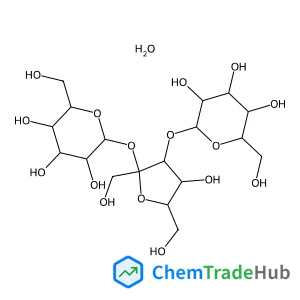
alpha-D-Glucopyranosyl-(1->3)-beta-D-fructofuranosyl alpha-D-glucopyranoside hydrate (1:1)(CAS: 10030-67-8)
CAS Number
Related Products
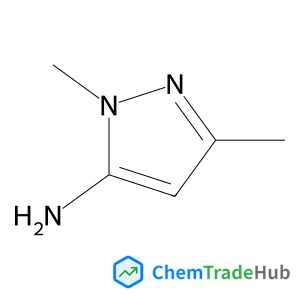
1,3-Dimethyl-1H-pyrazol-5-amine
CAS Number: 3524-32-1
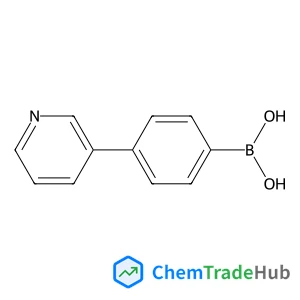
(4-(Pyridin-3-yl)phenyl)boronic acid
CAS Number: 170230-28-1
![3-Methyl-6-[(2-methyl-2-propanyl)amino]-1,3,5-triazine-2,4(1H,3H)-dione](https://static.chemtradehub.com/structs/220/2206682-85-9-c4f0.webp)
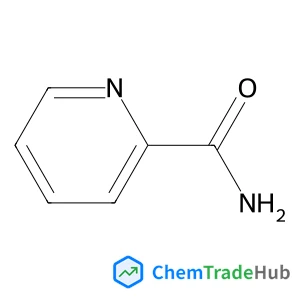
2-Pyridinecarboxamide
CAS Number: 1452-77-3
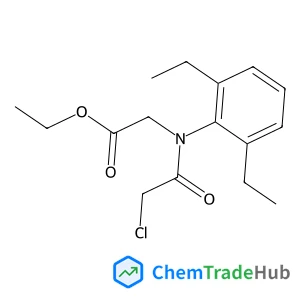
![1,4-Diazaspiro[5.5]undecan-3-one](https://static.chemtradehub.com/structs/154/1547757-91-4-19f3.webp)
1,4-Diazaspiro[5.5]undecan-3-one
CAS Number: 1547757-91-4
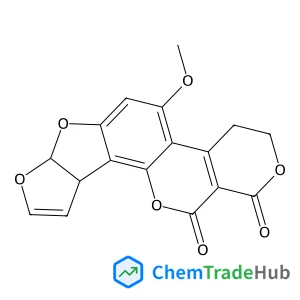
Aflatoxin G1
CAS Number: 1165-39-5
Other Suppliers for alpha-D-Glucopyranosyl-(1->3)-beta-D-fructofuranosyl alpha-D-glucopyranoside hydrate (1:1)



Basic Information
Molecular Formula
C18H34O17
Molecular Weight
540.47 g/mol
Physical Properties
Melting Point
160 °C (dec.)(lit.)
Boiling Point
937.8°Cat760mmHg
Density
g/cm3
Flash Point
520.9°C
Chemical Identifiers
SMILES
C(C1C(C(C(C(O1)OC2C(C(OC2(CO)OC3C(C(C(C(O3)CO)O)O)O)CO)O)O)O)O)O.O
InChIKey
CFXAVQUXSYFPDE-ZDVKUAOASA-N
Database References
MDL Number
MFCD00149449
Beilstein Registry Number
99539
FAQ
Alpha-D-Glucopyranosyl-(1->3)-beta-D-fructofuranosyl alpha-D-glucopyranoside hydrate (CAS: 10030-67-8) is subject to various regulatory guidelines, including GHS classification, REACH regulations, FDA, and EPA requirements. GHS classifies this compound as not hazardous. REACH requires documentation of its use, production, and import. FDA and EPA regulations focus on its use in food and environmental safety, respectively.
Alternatives to alpha-D-Glucopyranosyl-(1->3)-beta-D-fructofuranosyl alpha-D-glucopyranoside hydrate (CAS: 10030-67-8) include similar glycosides such as beta-D-Glucopyranosyl-(1->3)-alpha-D-fructofuranosyl beta-D-glucopyranoside. Other common reagents like methyl glycosides or lactose can also serve as substitutes in certain synthesis processes.
The market for alpha-D-Glucopyranosyl-(1->3)-beta-D-fructofuranosyl alpha-D-glucopyranoside hydrate (CAS: 10030-67-8) is growing due to increasing interest in natural sweeteners and functional foods. Research trends focus on its application in food technology and pharmaceuticals, exploring its potential as a novel sweetener and additive.
Waste containing alpha-D-Glucopyranosyl-(1->3)-beta-D-fructofuranosyl alpha-D-glucopyranoside hydrate (CAS: 10030-67-8) should be collected and stored in sealed, non-leaking containers. Incineration is a common method for disposal, ensuring proper incineration facilities are used to minimize environmental impact. Additional precautions include environmental protection measures and compliance with local waste disposal regulations.
Safety Notice
Please verify product specifications and safety data before use. Contact the supplier for detailed safety information.
Always follow proper handling procedures

Contact Information
Contact Person
Explore Platform
zhangsn@titansci.com
Mobile
17755063297
Telephone
400-111-6333
Visit Website
https://www.tansoole.com/Address
No. 89 Shilong Road, Xuhui District