



AD
4-(Hexadecyloxy)benzene-1,3-diamine(CAS: 137819-03-5)
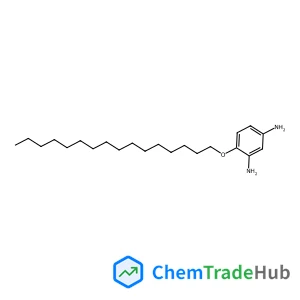
CAS Number
Related Products
![(3R)-3-(2,3-Dichlorophenyl)-3-({[(2-methyl-2-propanyl)oxy]carbonyl}amino)propanoic acid](https://static.chemtradehub.com/structs/500/500788-91-0-45b8.webp)
![Piperazine, 1-(3-phenylpropyl)-4-[2-[3-(trifluoromethyl)phenyl]ethyl]-, dihydrochloride](https://static.chemtradehub.com/structs/925/925884-84-0-df16.webp)
![3-Benzyl[1,2,4]triazolo[3,4-b][1,3,4]thiadiazole-6-thiol](https://static.chemtradehub.com/structs/790/79074-69-4-cb8e.webp)
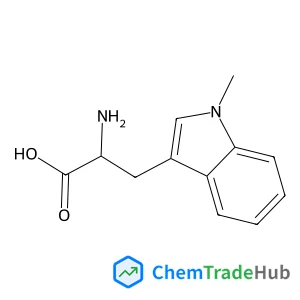
1-Methyl-L-tryptophan
CAS Number: 21339-55-9
![1-[2,6-Dimethyl-4-(2-methyl-2-propanyl)-3,5-dinitrophenyl]ethanone](https://static.chemtradehub.com/structs/81-/81-14-1-d158.webp)
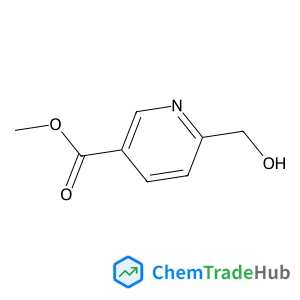
Methyl 6-(hydroxymethyl)nicotinate
CAS Number: 56026-36-9
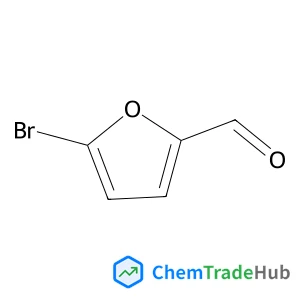
5-Bromo-2-furaldehyde
CAS Number: 1899-24-7
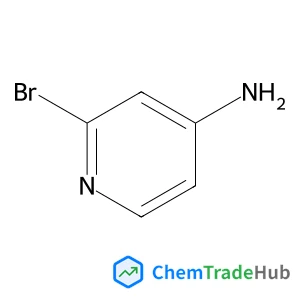
2-Bromo-4-pyridinamine
CAS Number: 7598-35-8
Other Suppliers for 4-(Hexadecyloxy)benzene-1,3-diamine

Basic Information
Molecular Formula
C22H40N2O
Molecular Weight
348.57 g/mol
Chemical Identifiers
SMILES
CCCCCCCCCCCCCCCCOc1ccc(N)cc1N
InChIKey
ZMWWYPZBEJOZDX-UHFFFAOYSA-N
FAQ
4-(Hexadecyloxy)benzene-1,3-diamine (CAS: 137819-03-5) falls under the scope of various regulatory guidelines. It must comply with the Globally Harmonized System of Classification and Labeling of Chemicals (GHS), including appropriate hazard communication labels and safety data sheets. For European manufacturers and importers, it also needs to fulfill REACH regulations, which require registration based on the substance's tonnage and potential risks. In the United States, FDA and EPA regulations may apply, particularly for its use in pharmaceuticals and consumer products.
Several alternatives to 4-(Hexadecyloxy)benzene-1,3-diamine (CAS: 137819-03-5) can be used in synthesis, depending on the desired properties. For example, hexadecylamine can serve as a similar reagent, though its physical properties and reactivity may differ. Other analogs include benzidine and its derivatives, which can offer similar functionalities but with different chemical structures.
The market for 4-(Hexadecyloxy)benzene-1,3-diamine (CAS: 137819-03-5) is currently growing due to its applications in various industries. Research trends indicate a focus on its use in surfactants, lubricants, and as a stabilizer in polymers. Recent studies are exploring its potential in pharmaceutical formulations and as a flame retardant additive. Market demand is expected to increase as more industries recognize its unique properties.
Waste containing 4-(Hexadecyloxy)benzene-1,3-diamine (CAS: 137819-03-5) should be managed according to local regulations and best practices. Waste liquid should be collected and stored in designated containers with appropriate labels. Incineration or professional waste disposal services can be used for final disposal. Environmental precautions include ensuring that waste does not contaminate soil or water, and proper waste handling procedures should be followed to prevent exposure to personnel. It is essential to consult local environmental health and safety guidelines for specific disposal methods.
Safety Notice
Please verify product specifications and safety data before use. Contact the supplier for detailed safety information.
Always follow proper handling procedures
Contact Information
Contact Person
Manager Shi
info@synzest.com