



AD
3,4-Difluorobenzoyl chloride(CAS: 76903-88-3)

CAS Number
Related Products

2-Naphthylacetonitrile
CAS Number: 7498-57-9
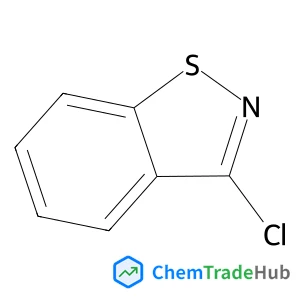
3-Chloro-1,2-benzothiazole
CAS Number: 7716-66-7

Methyl 3-bromo-2-oxopropanoate
CAS Number: 7425-63-0


![[3-(Methylcarbamoyl)phenyl]boronic acid](https://static.chemtradehub.com/structs/832/832695-88-2-bfc3.webp)
![N-[(9H-Fluoren-9-ylmethoxy)carbonyl]-L-threonine hydrate (1:1)](https://static.chemtradehub.com/structs/737/73731-37-0-8837.webp)

Diphenyl hydrogen phosphate
CAS Number: 838-85-7

Other Suppliers for 3,4-Difluorobenzoyl chloride




Basic Information
Molecular Formula
C7H3ClF2O
Molecular Weight
176.55 g/mol
Physical Properties
Boiling Point
44°C/3mmHg
Density
1.403 g/mL at 25 °C(lit.)
Chemical Identifiers
SMILES
C1=CC(=C(C=C1C(=O)Cl)F)F
InChIKey
RPQWXGVZELKOEU-UHFFFAOYSA-N
Database References
MDL Number
MFCD00009930
Beilstein Registry Number
4177619
FAQ
3,4-Difluorobenzoyl chloride (CAS: 76903-88-3) is regulated under the GHS (Globally Harmonized System of Classification and Labeling of Chemicals) as a hazardous chemical. In the EU, it falls under REACH regulations, requiring suppliers to notify the European Chemicals Agency. FDA and EPA have specific requirements for handling, storage, and disposal, especially due to its potential environmental impact and potential for inhalation hazards.
For synthesis purposes, alternatives to 3,4-Difluorobenzoyl chloride (CAS: 76903-88-3) include 2,4-difluorobenzoyl chloride and 3,4-dichlorobenzoyl chloride. These compounds are often used as equivalents in reactions due to their similar functional groups. Other substitutes might include substituted benzoyl chlorides depending on the specific synthetic requirements.
The market for 3,4-Difluorobenzoyl chloride (CAS: 76903-88-3) is driven by its use in pharmaceuticals and agrochemicals. Recent research trends focus on its applications in developing new drug candidates and as an intermediate in organic synthesis. Price trends indicate a stable market, with slight fluctuations based on supply and demand dynamics. Increasing emphasis on sustainable alternatives is also influencing research directions.
Waste containing 3,4-Difluorobenzoyl chloride (CAS: 76903-88-3) should be collected in appropriate containers, ensuring they are sealed to prevent leaks. It should then be incinerated under controlled conditions or disposed of through professional waste disposal services. Environmental precautions include ensuring no hazardous chemicals enter the water supply. Proper labeling and documentation are essential for compliance with regulatory requirements.
Safety Notice
Please verify product specifications and safety data before use. Contact the supplier for detailed safety information.
Always follow proper handling procedures
Contact Information
chemxilang@163.com