



AD
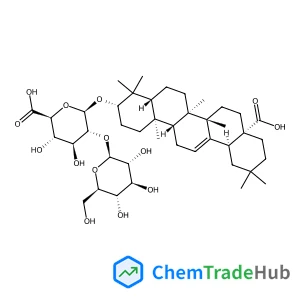
(3beta)-28-Hydroxy-28-oxoolean-12-en-3-yl 2-O-beta-D-glucopyranosyl-beta-D-glucopyranosiduronic acid(CAS: 80930-74-1)
CAS Number
Related Products
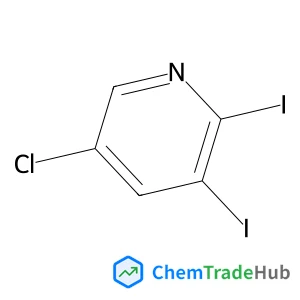
5-Chloro-2,3-diiodopyridine
CAS Number: 1261365-71-2
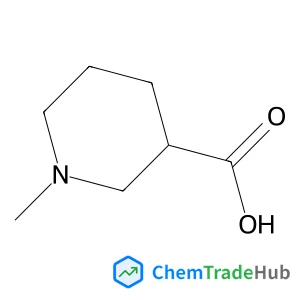
![5-Bromo-6-fluoro-1H-pyrrolo[2,3-b]pyridine](https://static.chemtradehub.com/structs/120/1207625-29-3-38b4.webp)
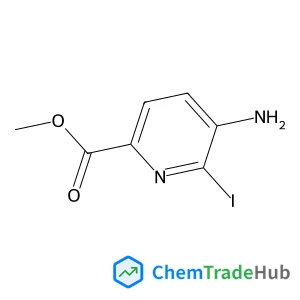
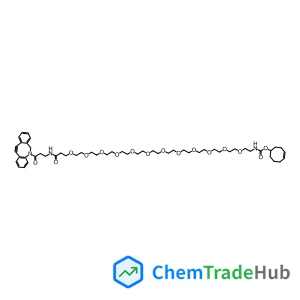
Tco-peg12-dbco
CAS Number: 2055022-06-3
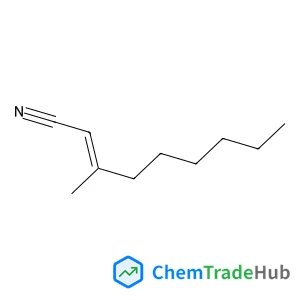
3-Methyl-2-nonenenitrile
CAS Number: 53153-66-5
![Ethyl 2-ethoxy-4-[2-({(1S)-3-methyl-1-[2-(1-piperidinyl)phenyl]butyl}amino)-2-oxoethyl]benzoate](https://static.chemtradehub.com/structs/147/147770-06-7-5fb6.webp)
![2-Methyl[1,3]oxazolo[5,4-d]pyrimidin-7(6H)-one](https://static.chemtradehub.com/structs/274/27433-55-2-83e8.webp)
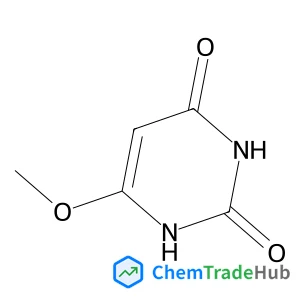
6-Methoxy-2,4(1H,3H)-pyrimidinedione
CAS Number: 29458-38-6
Other Suppliers for (3beta)-28-Hydroxy-28-oxoolean-12-en-3-yl 2-O-beta-D-glucopyranosyl-beta-D-glucopyranosiduronic acid




Basic Information
Molecular Formula
C42H66O14
Molecular Weight
794.98 g/mol
Physical State
Powder
Physical Properties
Density
1.37±0.1 g/cm3 (20 ºC 760 Torr),
Chemical Identifiers
SMILES
O=C(O)[C@@]72[C@H](/C1=C/C[C@H]6[C@](C)([C@]1(C)CC2)CC[C@@H]5[C@]6(C)CC[C@H](O[C@@H]4O[C@H](C(=O)O)[C@@H](O)[C@H](O)[C@H]4O[C@@H]3O[C@@H]([C@@H](O)[C@H](O)[C@H]3O)CO)C5(C)C)CC(C)(C)CC7
InChIKey
WJQOMUVKRDJBGZ-COUNGWPASA-N
Database References
MDL Number
MFCD32201173
FAQ
This compound is subject to various regulatory guidelines, including GHS classification for chemical hazards, REACH regulations for European manufacturers and importers, and FDA/EPA requirements for safety and environmental impact. It is important to consult the latest regulatory documents specific to the country of use or manufacture for detailed compliance information.
There are several alternatives in synthesis, such as using related triterpene derivatives or different sugar analogs. Common alternative reagents include 28-hydroxyolean-12-en-3-yl glucosides and other triterpenoid glycosides. These alternatives can provide similar functionalities while potentially offering different chemical properties and ease of synthesis.
The market and research trends for this compound are focused on its potential applications in pharmaceuticals, cosmetics, and natural products. Recent studies have explored its anti-inflammatory and anti-oxidant properties. Market trends indicate increasing demand, especially in the development of new drug candidates and cosmetic additives. However, research is also examining the environmental impact and sustainability of its production and use.
Waste containing this compound should be handled according to local and international waste disposal regulations. Typically, it should be collected in appropriate containers, labeled with the correct hazard information, and disposed of through professional waste disposal services. Incineration may be a suitable method, provided it complies with environmental regulations. Environmental protection measures include minimizing exposure to air, water, and soil during handling and disposal to prevent ecological harm.
Safety Notice
Please verify product specifications and safety data before use. Contact the supplier for detailed safety information.
Always follow proper handling procedures

Contact Information
Contact Person
Manager Yu
710378061@qq.com
Mobile
18605105771
Visit Website
https://www.sanhua-chem.com/Address
No. 688 Jiushuire Lu, Building 1, Jinshanwei Town, Jinshan District, Shanghai