



AD
6-Iodo-4-quinolinol(CAS: 342617-07-6)
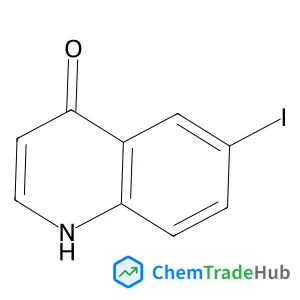
CAS Number
Related Products
![[3-(2-Hydroxyethyl)phenyl]boronic acid](https://static.chemtradehub.com/structs/647/647853-32-5-c363.webp)
![N-(Butylsulfonyl)-O-[4-(4-piperidinyl)butyl]-L-tyrosine hydrochloride hydrate](https://static.chemtradehub.com/structs/150/150915-40-5-1679.webp)
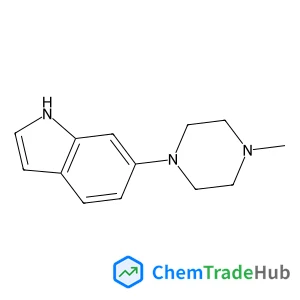
6-(4-methylpiperazin-1-yl)-1H-indole
CAS Number: 321745-04-4
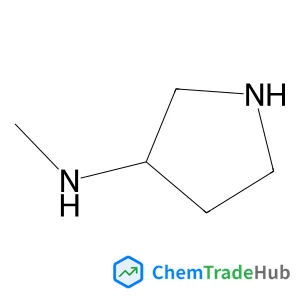
N-Methyl-3-pyrrolidinamine
CAS Number: 83030-08-4
![2-Chloro-N-[4-chloro-3-(2-pyridinyl)phenyl]-4-(methylsulfonyl)benzamide](https://static.chemtradehub.com/structs/879/879085-55-9-5abe.webp)

3-Nonyne
CAS Number: 20184-89-8
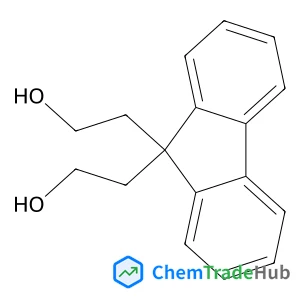
2,2'-(9H-fluorene-9,9-diyl)diethanol
CAS Number: 203070-78-4

![1,4-Dioxaspiro[4.5]dec-8-ylacetic acid](https://static.chemtradehub.com/structs/134/134136-04-2-8def.webp)
Other Suppliers for 6-Iodo-4-quinolinol






Basic Information
Molecular Formula
C9H6INO
Molecular Weight
271.06 g/mol
Physical Properties
Melting Point
>300°C
Boiling Point
394 ºC
Flash Point
192 ºC
Chemical Identifiers
SMILES
C1=CC2=C(C=C1I)C(=O)C=CN2
InChIKey
ZAZOVHUNVUSQMU-UHFFFAOYSA-N
Database References
MDL Number
MFCD06808826
FAQ
6-Iodo-4-quinolinol (CAS: 342617-07-6) falls under different regulatory guidelines depending on its intended use. For industrial and commercial applications, it must comply with REACH regulations in the EU. In the USA, it should adhere to FDA and EPA guidelines for the import, manufacture, and disposal of chemicals. It is also important to follow local safety data sheet (SDS) requirements and ensure proper labeling as per the Globally Harmonized System of Classification and Labelling of Chemicals (GHS).
Several alternatives can be used in the synthesis of 6-Iodo-4-quinolinol (CAS: 342617-07-6). For instance, 6-Bromo-4-quinolinol can be a common alternative, differing only by the halogen substituent. Other options include 6-Chloro-4-quinolinol and 4-Quinolinol itself. These alternatives can offer similar structural features and can be chosen based on the specific reaction conditions and desired product properties.
The market for 6-Iodo-4-quinolinol (CAS: 342617-07-6) is currently growing due to its potential applications in pharmaceuticals and material science. Research trends indicate increased interest in its use as an intermediate for synthesizing new drugs and as a building block for functional materials. The rising demand is also driven by the development of novel synthetic routes and the exploration of its unique properties.
Waste containing 6-Iodo-4-quinolinol (CAS: 342617-07-6) should be collected in appropriate containers and labeled with the correct hazardous waste symbol. It should be handled in a well-ventilated area and disposed of through professional waste disposal services that comply with local and international regulations. Special precautions should be taken to prevent contamination and ensure the waste is incinerated or treated in a manner that minimizes environmental impact. Proper environmental protection measures, such as the use of personal protective equipment (PPE) and spill containment, are also essential during handling and disposal.
Safety Notice
Please verify product specifications and safety data before use. Contact the supplier for detailed safety information.
Always follow proper handling procedures

Contact Information
Contact Person
Miss Xu
1986399151@qq.com
Mobile
15221998634
Telephone
021-59178156
Visit Website
https://www.yingxinbio.com/Address
Yugang Town Yiling Road 258 Lane C Zone