



AD
Heparin(CAS: 9005-49-6)
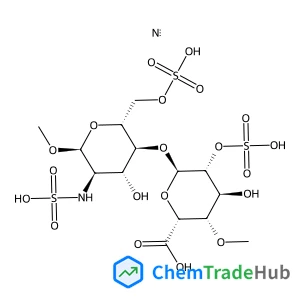
CAS Number
Related Products
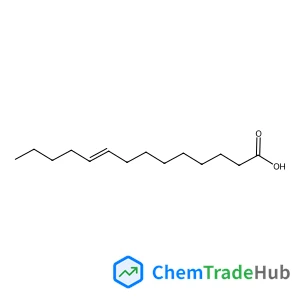
(9Z)-9-Tetradecenoic acid
CAS Number: 544-64-9
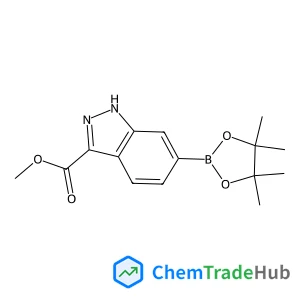
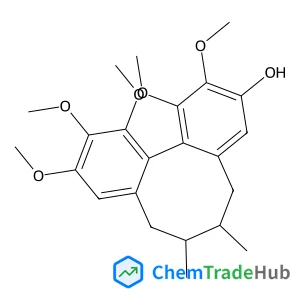
Gomisin K1
CAS Number: 75629-20-8
![2-Methyl-2-propanyl (1R,5R)-5-hydroxy-3-azabicyclo[4.1.0]heptane-3-carboxylate](https://static.chemtradehub.com/structs/230/2305079-71-2-b0dc.webp)
![2-Oxa-7-azaspiro[3.5]nonane acetate (1:1)](https://static.chemtradehub.com/structs/131/1313369-52-6-2eb1.webp)
![4-Nitrophenyl N-[(benzyloxy)carbonyl]-D-phenylalaninate](https://static.chemtradehub.com/structs/257/2578-85-0-6c76.webp)
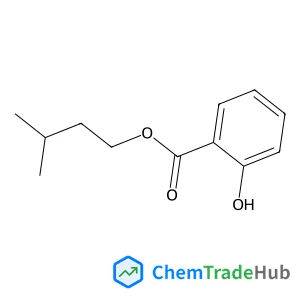
3-Methylbutyl salicylate
CAS Number: 87-20-7
![4-{[4-(4-Chlorophenyl)-1,3-thiazol-2-yl]amino}phenol hydrochloride (1:1)](https://static.chemtradehub.com/structs/117/1177741-83-1-b09e.webp)
![2-[4-(5-Amino-2-pyridinyl)-1-piperazinyl]-1-ethanol](https://static.chemtradehub.com/structs/101/1017221-34-9-ca8d.webp)
Other Suppliers for Heparin



Basic Information
Molecular Formula
C14H25N2O20S3
Molecular Weight
637.54 g/mol
EINECS
232-681-7
Physical Properties
Melting Point
250 °C (decomp)
Chemical Identifiers
SMILES
CO[C@H]1O[C@H](COS(=O)(=O)O)[C@H]([C@@H]([C@H]1NS(=O)(=O)O)O)O[C@@H]1O[C@@H](C(=O)O)[C@H]([C@@H]([C@H]1OS(=O)(=O)O)O)OC.[N]
InChIKey
CKSLBFBQMMRQLA-LBUDAAJFSA-N
FAQ
Heparin (CAS: 9005-49-6) is a naturally occurring anticoagulant with a highly charged, negatively polarized structure. It is a complex, heterogeneous mixture of highly sulfated glycosaminoglycans with a molecular weight ranging from 4,000 to 16,000 Da. Heparin is soluble in water and exhibits strong reactivity with proteins, particularly coagulation factors. It is commonly used in pharmaceutical and diagnostic applications due to its anticoagulant properties.
Heparin (CAS: 9005-49-6) is typically synthesized from porcine or bovine intestinal mucosa. The process involves extraction, purification, and depolymerization to obtain a suitable molecular weight range for clinical use. Enzymatic depolymerization using heparin lyase is a common method to achieve the desired properties. The yield and selectivity of the synthesis depend on the specific enzymatic conditions and purification steps.
Heparin (CAS: 9005-49-6) is widely used in the pharmaceutical industry for anticoagulant therapy. It is also utilized in the diagnostic industry for testing coagulation factors. Additionally, heparin-based materials are used in the biomedical industry for drug delivery systems and tissue engineering. In the research community, it is employed in cell culture and as a counterion in various biophysical assays.
When handling heparin (CAS: 9005-49-6), it is important to follow safety guidelines to avoid adverse effects. Use personal protective equipment (PPE) such as gloves and goggles. Store heparin in a cool, dry place away from direct sunlight. In case of a spill, immediately clean up using appropriate materials and ensure proper disposal. Always review the Safety Data Sheet (SDS) for detailed handling and disposal instructions.
Safety Notice
Please verify product specifications and safety data before use. Contact the supplier for detailed safety information.
Always follow proper handling procedures
Contact Information
chenling@zzstandard.com