



AD
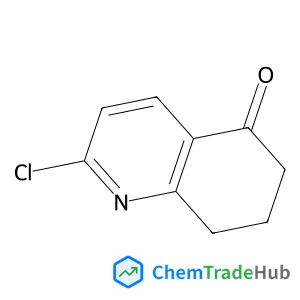
2-Chloro-7,8-dihydro-5(6H)-quinolinone(CAS: 124467-36-3)
CAS Number
Related Products
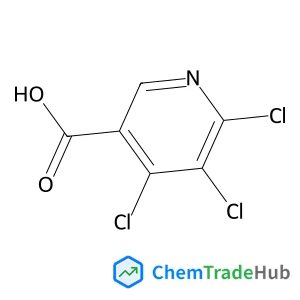
4,5,6-Trichloronicotinic acid
CAS Number: 847608-28-0
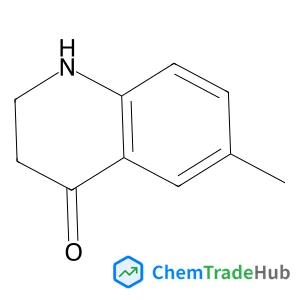
6-Methyl-2,3-dihydro-4(1H)-quinolinone
CAS Number: 36054-00-9
![Ethyl 4-chloro-5-methylpyrrolo[2,1-f][1,2,4]triazine-6-carboxylate](https://static.chemtradehub.com/structs/427/427878-41-9-86bc.webp)
![2-Phenyl-1H-pyrrolo[2,3-b]pyridine](https://static.chemtradehub.com/structs/105/10586-52-4-d098.webp)
2-Phenyl-1H-pyrrolo[2,3-b]pyridine
CAS Number: 10586-52-4
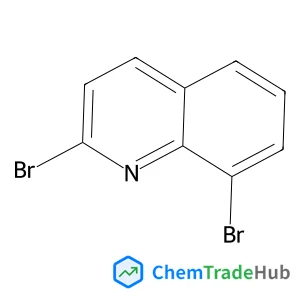
2,8-Dibromoquinoline
CAS Number: 871507-79-8
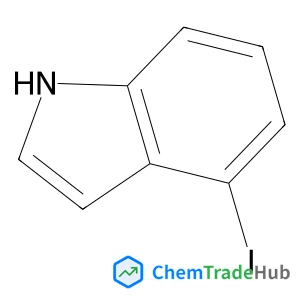
4-Iodo-1H-indole
CAS Number: 81038-38-2
![4,5-dichloro-7H-pyrrolo[2,3-d]pyrimidine](https://static.chemtradehub.com/structs/115/115093-90-8-94c8.webp)
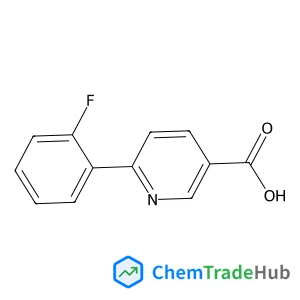
6-(2-Fluorophenyl)nicotinic acid
CAS Number: 505082-91-7
Other Suppliers for 2-Chloro-7,8-dihydro-5(6H)-quinolinone








Basic Information
Molecular Formula
C9H8ClNO
Molecular Weight
181.62 g/mol
Physical Properties
Boiling Point
275.3℃ at 760 mmHg
Density
1.316
Flash Point
150.6°C
Chemical Identifiers
SMILES
C1CC2=C(C=CC(=N2)Cl)C(=O)C1
InChIKey
GWDDFDLEOYOZLY-UHFFFAOYSA-N
Database References
MDL Number
MFCD08692066
FAQ
The compound 2-Chloro-7,8-dihydro-5(6H)-quinolinone (CAS: 124467-36-3) falls under the classification of organic compounds. Regulatory guidelines such as GHS (Global Harmonized System of Classification and Labelling of Chemicals), REACH (Registration, Evaluation, Authorisation and Restriction of Chemicals) in the EU, and FDA/EPA regulations in the US must be followed. It is advised to consult the Material Safety Data Sheet (MSDS) for detailed safety information and compliance requirements.
Several alternatives to 2-Chloro-7,8-dihydro-5(6H)-quinolinone (CAS: 124467-36-3) exist in synthesis. Common alternatives include 2-Amino-7,8-dihydro-5(6H)-quinolinone and 2-Hydroxy-7,8-dihydro-5(6H)-quinolinone. These compounds can be used as starting materials or intermediates in various chemical processes, depending on the desired properties and reactions.
The market for 2-Chloro-7,8-dihydro-5(6H)-quinolinone (CAS: 124467-36-3) is steadily growing, driven by its potential in pharmaceuticals, agrochemicals, and fine chemicals. Research trends indicate an increasing focus on its applications in medicinal chemistry, particularly as a precursor for the synthesis of bioactive compounds. Additionally, there is a growing interest in exploring its properties for use in natural product synthesis and as a chiral auxiliary.
Waste containing 2-Chloro-7,8-dihydro-5(6H)-quinolinone (CAS: 124467-36-3) should be handled according to local regulations and safety guidelines. Waste liquids should be collected in appropriate containers, labeled, and stored in a safe environment away from ignition sources. For disposal, it is recommended to consult a hazardous waste management company or a professional waste disposal service that can handle chlorinated organic compounds. Proper incineration or chemical treatment methods should be employed to ensure environmental protection and safety.
Safety Notice
Please verify product specifications and safety data before use. Contact the supplier for detailed safety information.
Always follow proper handling procedures
Contact Information
sales@gainbiotech.com