Compound Q&A
How should waste containing 2-Chloro-7,8-dihydro-5(6H)-quinolinone (CAS: 124467-36-3) be handled?
Answer
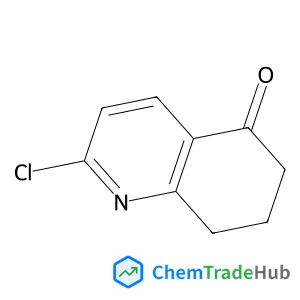
Waste containing 2-Chloro-7,8-dihydro-5(6H)-quinolinone (CAS: 124467-36-3) should be handled according to local regulations and safety guidelines. Waste liquids should be collected in appropriate containers, labeled, and stored in a safe environment away from ignition sources. For disposal, it is recommended to consult a hazardous waste management company or a professional waste disposal service that can handle chlorinated organic compounds. Proper incineration or chemical treatment methods should be employed to ensure environmental protection and safety.
About
CAS No
124467-36-3
English Name
2-Chloro-7,8-dihydro-5(6H)-quinolinone
Molecular Formula
C9H8ClNO
Molecular Weight
181.62 g/mol
SMILES
C1CC2=C(C=CC(=N2)Cl)C(=O)C1
InChIKey
GWDDFDLEOYOZLY-UHFFFAOYSA-N
Last Updated: 2025-10-20 19:48