



AD
2-bromopyridine-3-carbonitrile(CAS: 20577-26-8)

CAS Number
Related Products
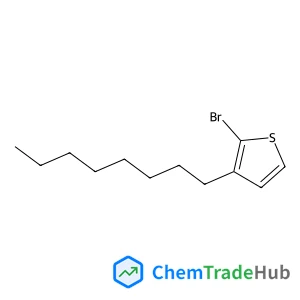
2-Bromo-3-octylthiophene
CAS Number: 145543-83-5

Diflorasone diacetate
CAS Number: 33564-31-7


4'-Methyl-2-biphenylcarboxylic acid
CAS Number: 7148-03-0

Undecylcyclohexane
CAS Number: 54105-66-7

Metam Sodium
CAS Number: 137-42-8

1-Hexen-3-ol
CAS Number: 4798-44-1

![(2S)-Amino[(5S)-3-chloro-4,5-dihydro-1,2-oxazol-5-yl]acetic acid](https://static.chemtradehub.com/structs/422/42228-92-2-8448.webp)
Other Suppliers for 2-bromopyridine-3-carbonitrile





Basic Information
Molecular Formula
C6H3BrN2
Molecular Weight
172.03 g/mol
Chemical Identifiers
SMILES
C1=CC(=C(N=C1)Br)C#N
InChIKey
PZSISEFPCYMBDL-UHFFFAOYSA-N
Database References
MDL Number
MFCD00234140
FAQ
2-Bromopyridine-3-carbonitrile (CAS: 20577-26-8) is a crystalline solid with a molecular weight of 217.04 g/mol. It is slightly soluble in water but soluble in organic solvents like ethanol and acetone. Chemically, it is relatively stable but can react under basic conditions. It has a melting point of around 122-124°C and a boiling point of approximately 285°C. It is used in various chemical syntheses and pharmaceutical applications.
2-Bromopyridine-3-carbonitrile (CAS: 20577-26-8) is typically synthesized through the reaction of 2-bromopyridine with hydrogen cyanide. Commonly, this is done using a catalytic hydrogenation process in the presence of a palladium catalyst. The reaction is carried out under pressure and at elevated temperatures to ensure high yield and selectivity. The product can also be obtained by electrophilic aromatic substitution reactions.
2-Bromopyridine-3-carbonitrile (CAS: 20577-26-8) is primarily used in the pharmaceutical industry for the synthesis of various medicinal compounds. It is also used in the polymer industry for the development of novel materials with specific properties. Additionally, it has applications in the field of sensors and as a precursor in semiconductor manufacturing processes.
When handling 2-bromopyridine-3-carbonitrile (CAS: 20577-26-8), it is important to use appropriate personal protective equipment (PPE) such as gloves, safety goggles, and a lab coat. Work in a well-ventilated area or a fume hood to minimize inhalation risks. Proper storage in a cool, dry place away from direct sunlight is recommended. In case of spills, use appropriate absorbents and follow the safety data sheet (SDS) guidelines for disposal. Always refer to the latest SDS for specific handling and storage instructions.
Safety Notice
Please verify product specifications and safety data before use. Contact the supplier for detailed safety information.
Always follow proper handling procedures
Contact Information
Contact Person
Jiang Kun
1273554466@qq.com