



AD
2,5-Dioxopyrrolidin-1-yl 4-(3-(trifluoromethyl)-3H-diazirin-3-yl)benzoate(CAS: 87736-89-8)

CAS Number
Related Products
![[3-(2-Hydroxyethyl)phenyl]boronic acid](https://static.chemtradehub.com/structs/647/647853-32-5-c363.webp)
![N-(Butylsulfonyl)-O-[4-(4-piperidinyl)butyl]-L-tyrosine hydrochloride hydrate](https://static.chemtradehub.com/structs/150/150915-40-5-1679.webp)
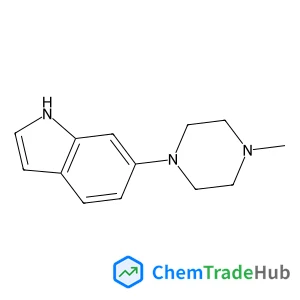
6-(4-methylpiperazin-1-yl)-1H-indole
CAS Number: 321745-04-4
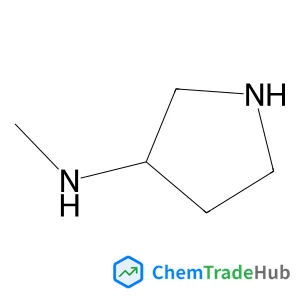
N-Methyl-3-pyrrolidinamine
CAS Number: 83030-08-4
![2-Chloro-N-[4-chloro-3-(2-pyridinyl)phenyl]-4-(methylsulfonyl)benzamide](https://static.chemtradehub.com/structs/879/879085-55-9-5abe.webp)

3-Nonyne
CAS Number: 20184-89-8
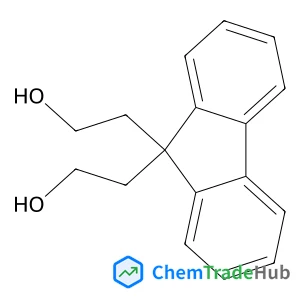
2,2'-(9H-fluorene-9,9-diyl)diethanol
CAS Number: 203070-78-4

![1,4-Dioxaspiro[4.5]dec-8-ylacetic acid](https://static.chemtradehub.com/structs/134/134136-04-2-8def.webp)
Other Suppliers for 2,5-Dioxopyrrolidin-1-yl 4-(3-(trifluoromethyl)-3H-diazirin-3-yl)benzoate




Basic Information
Molecular Formula
C13H8F3N3O4
Molecular Weight
327.22 g/mol
Physical Properties
Melting Point
92-93°C
Chemical Identifiers
SMILES
C1CC(=O)N(C1=O)OC(=O)C2=CC=C(C=C2)C3(N=N3)C(F)(F)F
InChIKey
INRPFQHJCXWTGK-UHFFFAOYSA-N
Database References
MDL Number
MFCD01075064
FAQ
The compound 2,5-Dioxopyrrolidin-1-yl 4-(3-(trifluoromethyl)-3H-diazirin-3-yl)benzoate is subject to various regulatory guidelines. It should comply with GHS classification for hazardous chemicals, REACH regulations for registration, evaluation, authorization, and restriction of chemicals in the European Union, and FDA and EPA requirements for safety and environmental protection in the United States. Proper documentation and compliance with local and international regulations are essential for its use and handling.
In synthesis, several alternatives to 2,5-Dioxopyrrolidin-1-yl 4-(3-(trifluoromethyl)-3H-diazirin-3-yl)benzoate can be used, depending on the specific requirements. These include other diazirines with different substituents, such as 3-iodo-3H-diazirin-3-yl benzoate or 4-(3-(chloromethyl)-3H-diazirin-3-yl)benzoate. Additionally, similar compounds with analogous structures, such as 2,5-dioxopyrrolidin-1-yl 4-(3-(cyanomethyl)-3H-diazirin-3-yl)benzoate, can serve as effective alternatives. Careful selection and evaluation of these alternatives are necessary to ensure optimal reactivity and selectivity in the desired synthesis.
The market and research trends for 2,5-Dioxopyrrolidin-1-yl 4-(3-(trifluoromethyl)-3H-diazirin-3-yl)benzoate indicate a growing interest in its use as a key intermediate in organic synthesis, particularly in the development of new materials and drug discovery. Recent research focuses on its application in polymer chemistry and as a reagent in various organic transformations. The trend suggests ongoing exploration and optimization of its properties and reactivity, leading to potential advancements in various fields, including pharmaceuticals and materials science.
Waste containing 2,5-Dioxopyrrolidin-1-yl 4-(3-(trifluoromethyl)-3H-diazirin-3-yl)benzoate should be managed according to strict environmental and safety regulations. Collection of waste liquids should be done in appropriate containers and stored in a secure location. Incineration or professional waste disposal services are recommended for safe disposal. Environmental protection precautions, such as the use of personal protective equipment and adherence to local waste management guidelines, are crucial to ensure that waste is handled and disposed of in an environmentally responsible manner.
Safety Notice
Please verify product specifications and safety data before use. Contact the supplier for detailed safety information.
Always follow proper handling procedures

Contact Information
Contact Person
Miss Xu
1986399151@qq.com
Mobile
15221998634
Telephone
021-59178156
Visit Website
https://www.yingxinbio.com/Address
Yugang Town Yiling Road 258 Lane C Zone