



AD
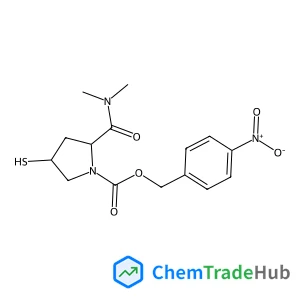
(2S,4S)-4-Nitrobenzyl 2-(Dimethylcarbamoyl)-4-Mercaptopyrrolidine-1-Carboxylate(CAS: 96034-64-9)
CAS Number
Related Products
![3-[(4-Nitrobenzyl)oxy]-3-oxopropanoic Acid](https://static.chemtradehub.com/structs/773/77359-11-6-0d04.webp)
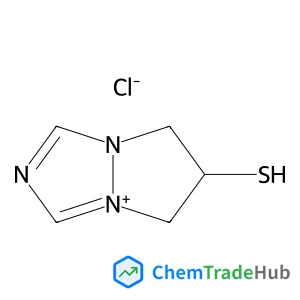
Biapenem Impurity 29
CAS Number: 153851-71-9
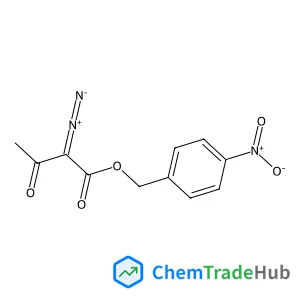
4-Nitrobenzyl 2-diazo-3-oxobutanoate
CAS Number: 82551-63-1
![(5R,6S)-6-[(1R)-1-Hydroxyethyl]-3-({2-[(iminomethyl)amino]ethyl}sulfanyl)-7-oxo-1-azabicyclo[3.2.0]hept-2-ene-2-carboxylic acid](https://static.chemtradehub.com/structs/642/64221-86-9-b331.webp)
![3-(2-Bromopropanoyl)spiro[1,3-benzoxazine-2,1'-cyclohexan]-4(3H)-one](https://static.chemtradehub.com/structs/158/158299-05-9-7f0d.webp)
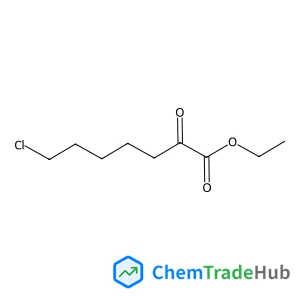
Ethyl 7-chloro-2-oxoheptanoate
CAS Number: 78834-75-0
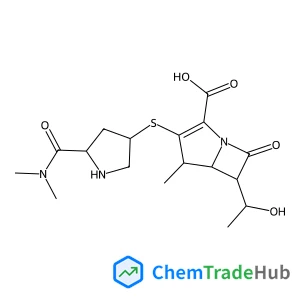
Meropenem
CAS Number: 96036-03-2
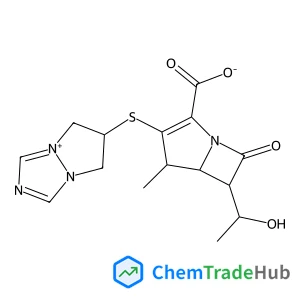
Biapenem
CAS Number: 120410-24-4
Other Suppliers for (2S,4S)-4-Nitrobenzyl 2-(Dimethylcarbamoyl)-4-Mercaptopyrrolidine-1-Carboxylate

Basic Information
Molecular Formula
C15H19N3O5S
Molecular Weight
353.39 g/mol
Physical State
No data available
Physical Properties
Melting Point
117.0 to 121.0 deg-C
Boiling Point
555.8°C at 760 mmHg
Density
1.36
Flash Point
289.9±30.1 °C
Chemical Identifiers
SMILES
CN(C)C(=O)C1CC(CN1C(=O)OCC2=CC=C(C=C2)[N+](=O)[O-])S
InChIKey
VGLBNJWGUYQZHD-STQMWFEESA-N
Database References
MDL Number
MFCD08063348
FAQ
This compound, with the CAS number 96034-64-9, is a synthetic organic molecule containing a pyrrolidine ring substituted with a 4-nitrobenzyl group and a dimethylcarbamoyl group. It also features a thiol (-SH) functional group, making it a versatile intermediate in pharmaceutical and chemical synthesis. Its molecular formula is C15H17N3O5S, and it is typically a solid at room temperature with moderate solubility in organic solvents.
This compound is primarily used as an intermediate in the synthesis of pharmaceuticals, particularly in the development of drugs targeting neurological or metabolic disorders. It also finds applications in organic chemistry research and industrial processes where functional group modifications are required. Its unique structure makes it valuable for creating bioactive molecules and derivatives with tailored properties.
Safety of (2S,4S)-4-Nitrobenzyl 2-(Dimethylcarbamoyl)-4-Mercaptopyrrolidine-1-Carboxylate (CAS: 96034-64-9) depends on handling conditions. It is generally considered low toxicity when used in controlled environments, but standard laboratory safety protocols should be followed. Protective measures such as gloves, goggles, and proper ventilation are recommended to ensure safe handling and minimize exposure risks.
This compound should be stored in a cool, dry, and well-ventilated area, away from direct light. It is best kept in a sealed container at a temperature below 25°C to maintain stability. Humidity levels should be controlled to prevent hydrolysis, and it should be stored in a chemical-resistant container to avoid degradation. Proper storage ensures its integrity and prolongs its shelf life.
Safety Notice
Please verify product specifications and safety data before use. Contact the supplier for detailed safety information.
Always follow proper handling procedures
Contact Information
Contact Person
Mr. Wang