



AD
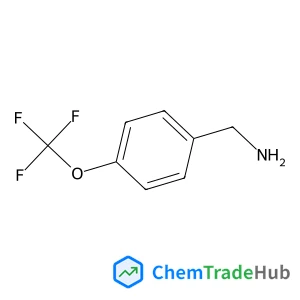
4-(Trifluoromethoxy)benzylamine(CAS: 93919-56-3)
CAS Number
Related Products
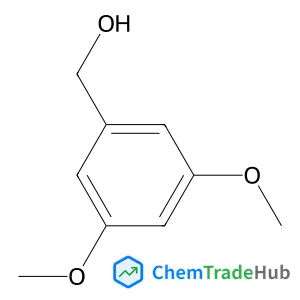
(3,5-Dimethoxyphenyl)methanol
CAS Number: 705-76-0
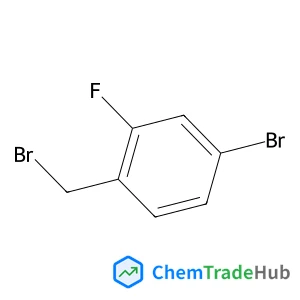
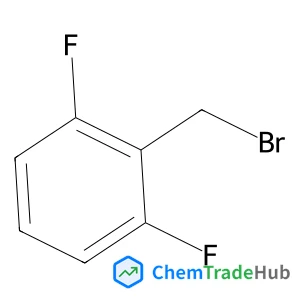
2-(Bromomethyl)-1,3-difluorobenzene
CAS Number: 85118-00-9
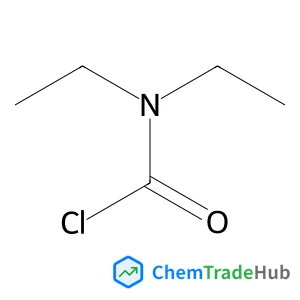
Diethylcarbamic chloride
CAS Number: 88-10-8
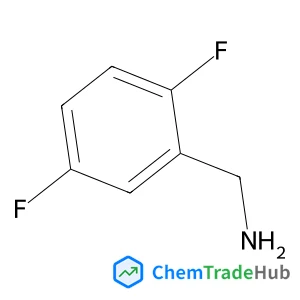
1-(2,5-Difluorophenyl)methanamine
CAS Number: 85118-06-5
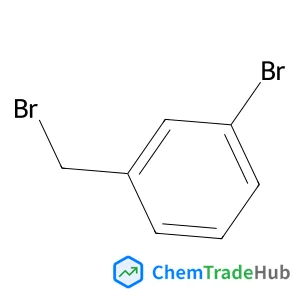
1-Bromo-3-(bromomethyl)benzene
CAS Number: 823-78-9
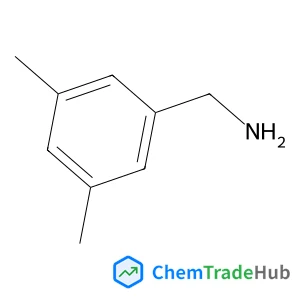
1-(3,5-Dimethylphenyl)methanamine
CAS Number: 78710-55-1
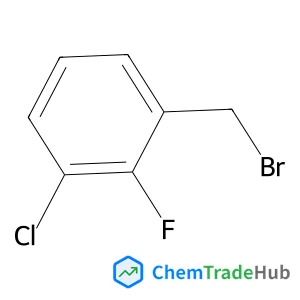
Other Suppliers for 4-(Trifluoromethoxy)benzylamine




Basic Information
Molecular Formula
C8H8F3NO
Molecular Weight
191.15 g/mol
Physical Properties
Boiling Point
57-60 °C/10 mmHg(lit.)
Density
1.252 g/mL at 25 °C(lit.)
Chemical Identifiers
SMILES
C1=CC(=CC=C1CN)OC(F)(F)F
InChIKey
DBGROTRFYBSUTR-UHFFFAOYSA-N
Database References
MDL Number
MFCD00061237
Beilstein Registry Number
8200624
FAQ
4-(Trifluoromethoxy)benzylamine is a colorless to white crystalline solid with a molecular weight of 279.15 g/mol. It has a low solubility in water but is more soluble in organic solvents like methanol and dichloromethane. It is moderately reactive, particularly towards nucleophiles. The compound is known for its stability but should be stored in a cool, dark place to prevent photodegradation.
4-(Trifluoromethoxy)benzylamine is typically synthesized via the reduction of 4-(trifluoromethoxy)benzyl nitrile using sodium borohydride or lithium aluminium hydride as a reducing agent. The reaction is performed in anhydrous solvents like tetrahydrofuran (THF) under inert atmosphere to ensure high selectivity and yield.
4-(Trifluoromethoxy)benzylamine is primarily used in the pharmaceutical industry as a precursor for the synthesis of various medicinal compounds, including certain antiviral and antifungal drugs. It also finds applications in the polymer industry for the production of novel polymers, and in the semiconductor industry for specific etching processes.
When handling 4-(Trifluoromethoxy)benzylamine, it is essential to wear appropriate personal protective equipment (PPE) including safety goggles, gloves, and a lab coat. This compound should be handled in a well-ventilated area or under a fume hood due to its potential for airborne exposure. Spills should be cleaned up immediately using appropriate absorbents, and the area should be flushed with water. Refer to the Safety Data Sheet (SDS) for detailed handling and disposal instructions.
Safety Notice
Please verify product specifications and safety data before use. Contact the supplier for detailed safety information.
Always follow proper handling procedures
Contact Information
chaochiqiang@friendchem.com