



AD
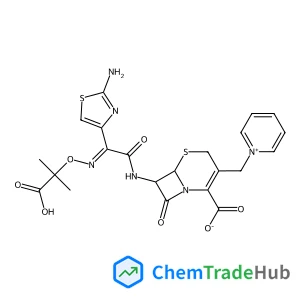
Ceftazidime(CAS: 72558-82-8)
CAS Number
Related Products
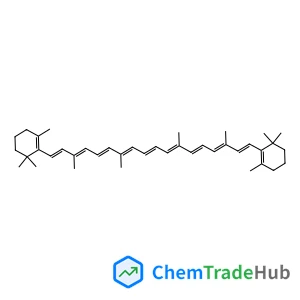
beta,beta-Carotene
CAS Number: 7235-40-7
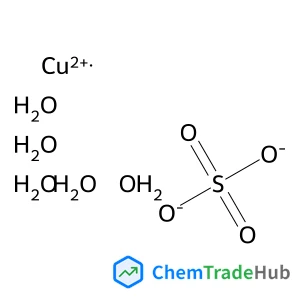
Copper sulfate pentahydrate
CAS Number: 7758-99-8
![(6R,7R)-7-{[(2Z)-2-(2-Amino-1,3-thiazol-4-yl)-2-(methoxyimino)acetyl]amino}-3-[(1-methyl-1-pyrrolidiniumyl)methyl]-8-oxo-5-thia-1-azabicyclo[4.2.0]oct-2-ene-2-carboxylate](https://static.chemtradehub.com/structs/880/88040-23-7-9d40.webp)
![Calcium di[(2E,4E)-2,4-hexadienoate]](https://static.chemtradehub.com/structs/749/7492-55-9-ddd2.webp)
Calcium di[(2E,4E)-2,4-hexadienoate]
CAS Number: 7492-55-9
![(6R,7R)-7-{[(2Z)-2-(2-Amino-1,3-thiazol-4-yl)-2-(methoxyimino)acetyl]amino}-3-(6,7-dihydro-5H-cyclopenta[b]pyridinium-1-ylmethyl)-8-oxo-5-thia-1-azabicyclo[4.2.0]oct-2-ene-2-carboxylate](https://static.chemtradehub.com/structs/849/84957-29-9-0ce7.webp)
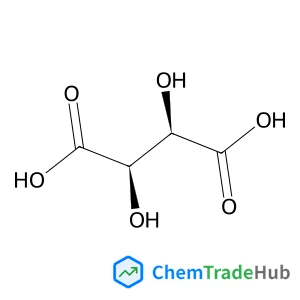
(2R,3R)-2,3-Dihydroxysuccinic acid
CAS Number: 87-69-4
![2-(Methyl{2-[4-(2-methylbenzyl)-1-piperazinyl]-2-oxoethyl}amino)-N-[2-(trifluoromethyl)phenyl]acetamide](https://static.chemtradehub.com/structs/803/8030-76-0-5c8d.webp)
Other Suppliers for Ceftazidime



Basic Information
Molecular Formula
C22H22N6O7S2
Molecular Weight
546.6 g/mol
Physical Properties
Melting Point
No data available
Boiling Point
No data available
Flash Point
No data available
Chemical Identifiers
SMILES
CC(C)(C(=O)O)ON=C(C1=CSC(=N1)N)C(=O)NC2C3N(C2=O)C(=C(CS3)C[N+]4=CC=CC=C4)C(=O)[O-]
InChIKey
ORFOPKXBNMVMKC-DWVKKRMSSA-N
Database References
MDL Number
MFCD00072034
FAQ
Ceftazidime is a third-generation cephalosporin antibiotic used to treat a wide range of bacterial infections. Its chemical formula is C16H17N5O4S2, and it exhibits broad-spectrum activity against Gram-negative and Gram-positive bacteria. It is known for its stability in the presence of beta-lactamases and is commonly used in clinical settings for severe infections.
Ceftazidime is primarily used in medicine to combat bacterial infections, including respiratory, urinary, and skin infections. It is also effective against intra-abdominal infections and sepsis. Due to its broad-spectrum activity, it is a key component in antibiotic therapy for patients with compromised immune systems or severe infections. Its use is supported by its efficacy against Pseudomonas aeruginosa and other resistant pathogens.
Ceftazidime is generally considered safe when used as directed, but it may cause side effects such as gastrointestinal discomfort, allergic reactions, or nephrotoxicity in some cases. It should be handled with care, following standard safety protocols for antibiotics. Safety standards include proper personal protective equipment (PPE) during preparation and administration to minimize exposure risks.
Ceftazidime should be stored in a cool, dry place, away from moisture and light. It is typically kept at a temperature between 2°C to 8°C (refrigerated) and should be protected from freezing. The compound should be stored in airtight containers to maintain stability and prevent degradation. Proper storage ensures its efficacy and safety for use.
Safety Notice
Please verify product specifications and safety data before use. Contact the supplier for detailed safety information.
Always follow proper handling procedures
Contact Information
lily@yxjschem.com