



AD
2-Nitro-4-(trifluoromethoxy)aniline(CAS: 2267-23-4)
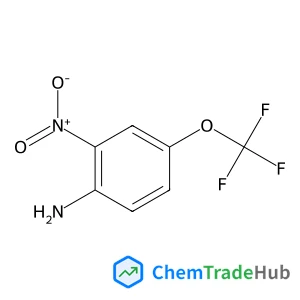
CAS Number
Related Products
![[(1alpha,6beta,14alpha,16beta)-20-Ethyl-7,8-dihydroxy-1,6,14,16-tetramethoxyaconitan-4-yl]methyl 2-[(3S)-3-methyl-2,5-dioxo-1-pyrrolidinyl]benzoate 2-hydroxy-1,2,3-propanetricarboxylate (1:1)](https://static.chemtradehub.com/structs/351/351344-10-0-4e0e.webp)
![4-[(E)-2-(4-Carbamimidoylphenyl)vinyl]-3-hydroxybenzenecarboximidamide methanesulfonate (1:2)](https://static.chemtradehub.com/structs/223/223769-64-0-1600.webp)
![(6R,7R)-3-(acetyloxymethyl)-7-[[(2Z)-2-(furan-2-yl)-2-methoxyiminoacetyl]amino]-8-oxo-5-thia-1-azabicyclo[4.2.0]oct-2-ene-2-carboxylic acid](https://static.chemtradehub.com/structs/396/39685-31-9-f1d8.webp)
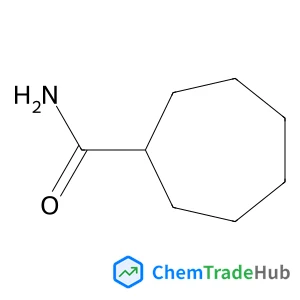
Cycloheptanecarboxamide
CAS Number: 1459-39-8
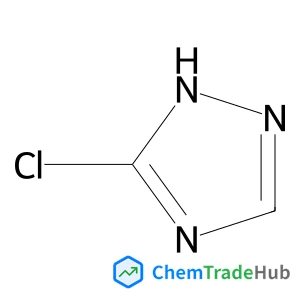
3-Chloro-1H-1,2,4-triazole
CAS Number: 6818-99-1
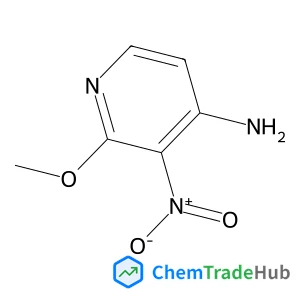
2-Methoxy-3-nitro-4-pyridinamine
CAS Number: 33623-16-4

Stanozolol
CAS Number: 10418-03-8
Other Suppliers for 2-Nitro-4-(trifluoromethoxy)aniline





Basic Information
Molecular Formula
C7H5F3N2O3
Molecular Weight
222.12 g/mol
Physical Properties
Melting Point
61.0 to 65.0 deg-C
Boiling Point
284.3℃/760mmHg
Density
1.543
Flash Point
125.7℃
Chemical Identifiers
SMILES
C1=CC(=C(C=C1OC(F)(F)F)[N+](=O)[O-])N
InChIKey
YCGFVAPIBALHRT-UHFFFAOYSA-N
Database References
MDL Number
MFCD00042326
FAQ
2-Nitro-4-(trifluoromethoxy)aniline (CAS: 2267-23-4) is subject to various regulatory guidelines, including GHS classification for hazardous substances, REACH regulations for chemical registration and safety data sheets, and FDA/EPA requirements for safety and environmental impact. It is classified as a hazardous chemical and is subject to strict handling and disposal requirements to ensure workplace and environmental safety.
There are several alternatives to 2-Nitro-4-(trifluoromethoxy)aniline (CAS: 2267-23-4) in synthesis, including other aromatic compounds such as 2-nitrophenol or 4-nitrophenol, and isomers like 2-chloro-4-(trifluoromethoxy)aniline. Common alternative reagents include sodium nitrite and trifluoromethoxybenzaldehyde, which can be used to synthesize similar compounds with different functional groups.
Market trends for 2-Nitro-4-(trifluoromethoxy)aniline (CAS: 2267-23-4) are driven by its applications in organic synthesis, pharmaceuticals, and the electronics industry. Research is focusing on developing more efficient synthesis methods and exploring new applications. The compound's unique properties make it a valuable reagent, but its high cost and strict regulations limit its broader market adoption.
Waste containing 2-Nitro-4-(trifluoromethoxy)aniline (CAS: 2267-23-4) should be handled with extreme caution to prevent environmental contamination and health risks. Proper waste collection methods should be used, and the waste should be incinerated or professionally disposed of by a licensed hazardous waste management company. Environmental protection measures should include neutralizing the waste before disposal to minimize the release of hazardous substances into the environment.
Safety Notice
Please verify product specifications and safety data before use. Contact the supplier for detailed safety information.
Always follow proper handling procedures

Contact Information
order@canspecsci.com
Mobile
15021221957
Telephone
021-59553580
Fax
021-59553580-8012
Visit Website
https://www.canspec.cn