



AD
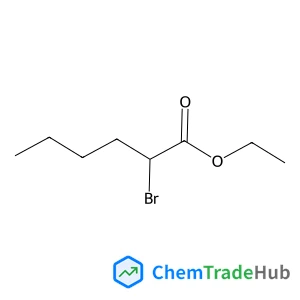
Ethyl 2-bromohexanoate(CAS: 615-96-3)
CAS Number
Related Products
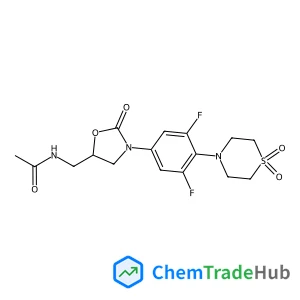
![3-Cyclopropyl-1-(2-fluoro-4-iodophenyl)-5-hydroxy-6,8-dimethylpyrido[2,3-d]pyrimidine-2,4,7(1H,3H,8H)-trione](https://static.chemtradehub.com/structs/871/871700-24-2-c5dd.webp)
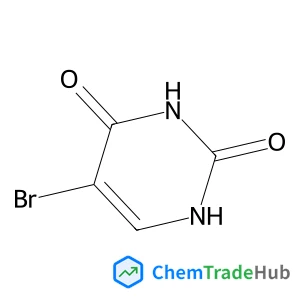
5-Bromo-2,4(1H,3H)-pyrimidinedione
CAS Number: 51-20-7
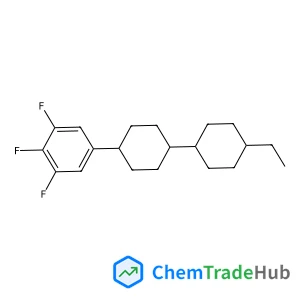
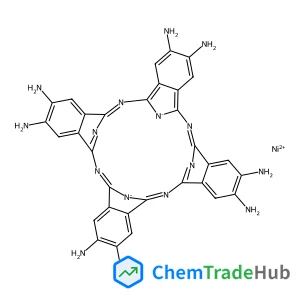
![3-Iodo-1H-pyrrolo[2,3-b]pyridine-4-carbonitrile](https://static.chemtradehub.com/structs/956/956485-59-9-1f04.webp)
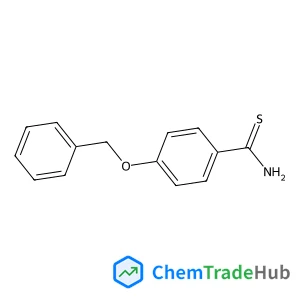
4-Benzyloxy-thiobenzamide
CAS Number: 161975-22-0
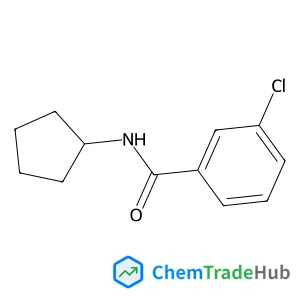
3-Chloro-N-cyclopentylbenzamide
CAS Number: 349128-33-2
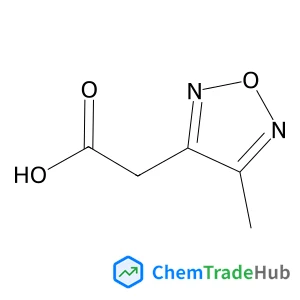
Other Suppliers for Ethyl 2-bromohexanoate





Basic Information
Molecular Formula
C8H15BrO2
Molecular Weight
223.11 g/mol
Physical Properties
Melting Point
214°C
Boiling Point
213-215 °C(lit.)
Density
1.221 g/mL at 25 °C(lit.)
Chemical Identifiers
SMILES
CCCCC(C(=O)OCC)Br
InChIKey
KOUAQOCYMAENKN-UHFFFAOYSA-N
Database References
MDL Number
MFCD00000162
FAQ
Ethyl 2-bromohexanoate (CAS: 615-96-3) falls under the classification of organic bromine compounds. It is regulated by the Globally Harmonized System of Classification and Labeling of Chemicals (GHS) under category 3 for skin and eye irritation. Additionally, it is subject to the European Union's REACH regulations for registration, evaluation, authorization, and restriction of chemicals. It is also regulated by the U.S. Food and Drug Administration (FDA) and the Environmental Protection Agency (EPA) for safety and environmental impact assessments.
Ethyl 2-bromohexanoate (CAS: 615-96-3) can be synthesized using various bromination methods. Alternatives include Ethyl 2-chlorohexanoate or Ethyl 2-iodohexanoate, which may provide similar functionalities in some applications. Other common reagents like ethyl 2-bromo-1,1,1-trifluoropropanoate can also be considered depending on the specific reaction requirements.
The market for Ethyl 2-bromohexanoate (CAS: 615-96-3) is growing due to its use in various industries such as pharmaceuticals, agrochemicals, and fine chemicals. Research trends include the development of more sustainable and environmentally friendly synthesis methods. There is also increasing interest in understanding the bromine-containing compounds' impact on the environment and human health, leading to more stringent regulatory requirements and safer handling practices.
Waste containing Ethyl 2-bromohexanoate (CAS: 615-96-3) should be collected in a sealed, leak-proof container and stored in a well-ventilated area. It is recommended to neutralize the waste with an appropriate reagent before incineration or professional disposal. Environmental protection measures should include using certified waste disposal facilities to minimize the environmental impact. Proper training and personal protective equipment (PPE) should be utilized to ensure safety during handling and disposal processes.
Safety Notice
Please verify product specifications and safety data before use. Contact the supplier for detailed safety information.
Always follow proper handling procedures
Contact Information
Contact Person
Fang Rui
wangkang@jskchem.com
Mobile
15221441005
Telephone
15221441005
Visit Website
https://www.jskchem.comAddress
No chemical compound information was provided to translate. Please provide the relevant chemical information for translation.