



AD
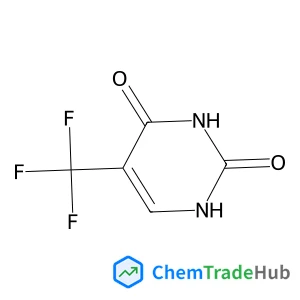
5-(Trifluoromethyl)-2,4(1H,3H)-pyrimidinedione(CAS: 54-20-6)
CAS Number
Related Products
![2-Methyl-2-propanyl [(2R)-1-hydroxy-2-propanyl]carbamate](https://static.chemtradehub.com/structs/106/106391-86-0-8397.webp)

3-Bromo-2,2-bis(bromomethyl)-1-propanol
CAS Number: 1522-92-5


Cytisine hydrochloride
CAS Number: 6047-01-4

Atorvastatin Impurity 55
CAS Number: 141942-85-0

3-Hydroxy-D-tyrosine
CAS Number: 5796-17-8
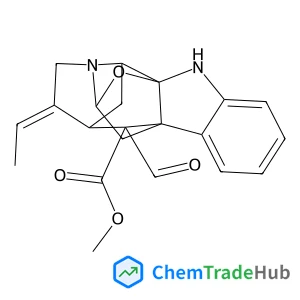
Picralinal
CAS Number: 20045-06-1

D-Arabinose
CAS Number: 9032-75-1
![(3aS,9R,9aS,9bS)-9-Hydroxy-6,9-dimethyl-3-methylene-3a,4,5,7,8,9,9a,9b-octahydroazuleno[4,5-b]furan-2(3H)-one](https://static.chemtradehub.com/structs/683/68370-47-8-daf4.webp)
Other Suppliers for 5-(Trifluoromethyl)-2,4(1H,3H)-pyrimidinedione






Basic Information
Molecular Formula
C5H3F3N2O2
Molecular Weight
180.08 g/mol
Physical Properties
Melting Point
245-246?°C(lit.)
Boiling Point
350°C
Water Solubility
INSOLUBLE
Chemical Identifiers
SMILES
C1=C(C(=O)NC(=O)N1)C(F)(F)F
InChIKey
LMNPKIOZMGYQIU-UHFFFAOYSA-N
Database References
MDL Number
MFCD00006024
Beilstein Registry Number
612694
FAQ
5-(Trifluoromethyl)-2,4(1H,3H)-pyrimidinedione (CAS: 54-20-6) is a crystalline solid with a molecular weight of approximately 238.07 g/mol. It has a low solubility in water but is more soluble in organic solvents like methanol and acetonitrile. The compound is known for its high reactivity, particularly towards nucleophilic substitution reactions. It also exhibits good thermal stability but decomposes under acidic conditions.
5-(Trifluoromethyl)-2,4(1H,3H)-pyrimidinedione (CAS: 54-20-6) can be synthesized through a variety of methods. One common approach involves the reaction of 2,4-dichloropyrimidine with trifluoroacetic anhydride. This method provides good yield and selectivity, and the use of a Lewis acid as a catalyst can enhance the reaction efficiency.
5-(Trifluoromethyl)-2,4(1H,3H)-pyrimidinedione (CAS: 54-20-6) finds applications in pharmaceuticals, where it serves as a precursor for drug synthesis. It is also used in the polymer industry for the production of advanced materials and in the electronics sector for semiconductor applications, such as in the development of thin-film transistors and other electronic devices.
When handling 5-(Trifluoromethyl)-2,4(1H,3H)-pyrimidinedione (CAS: 54-20-6), it is essential to wear appropriate personal protective equipment (PPE) such as gloves, laboratory coats, and safety glasses. Work should be conducted in a well-ventilated area or a fume hood to minimize inhalation risks. Spills should be cleaned up using appropriate chemical spill kits, and the area should be well-ventilated for several minutes. Always refer to the Safety Data Sheet (SDS) for detailed safety information and guidelines.
Safety Notice
Please verify product specifications and safety data before use. Contact the supplier for detailed safety information.
Always follow proper handling procedures
Contact Information
2423903095@qq.com