



AD
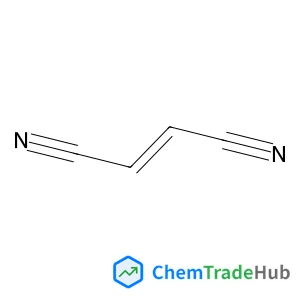
(2E)-2-Butenedinitrile(CAS: 764-42-1)
CAS Number
Related Products

![9-[(2R,5S)-5-(Hydroxymethyl)tetrahydro-2-furanyl]-1,9-dihydro-6H-purin-6-one](https://static.chemtradehub.com/structs/696/69655-05-6-dac4.webp)
![N-[(1R)-1-(Dihydroxyboryl)-3-methylbutyl]-Nalpha-(2-pyrazinylcarbonyl)-L-phenylalaninamide](https://static.chemtradehub.com/structs/179/179324-69-7-701f.webp)

5'-Deoxy-5-fluorocytidine
CAS Number: 66335-38-4
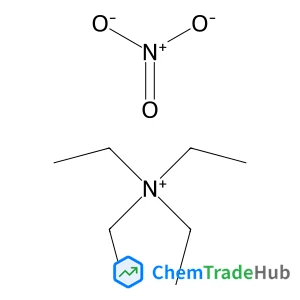
Tetraethylammonium nitrate
CAS Number: 1941-26-0

Lorcaserin Hydrochloride Hemihydrate
CAS Number: 856681-05-5
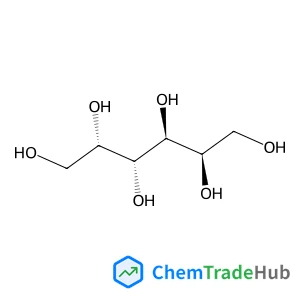
D-Galactitol
CAS Number: 608-66-2
![1-{5-O-[({Hydroxy[2-(trimethylammonio)ethoxy]phosphoryl}oxy)phosphinato]-beta-D-ribofuranosyl}-4-imino-1,4-dihydro-2-pyrimidinol](https://static.chemtradehub.com/structs/987/987-78-0-278a.webp)
Other Suppliers for (2E)-2-Butenedinitrile







Basic Information
Molecular Formula
C4H2N2
Molecular Weight
17.03 g/mol
Physical Properties
Melting Point
95.0 to 99.0 deg-C
Boiling Point
186°C(lit.)
Density
1.249 g/cm3 (20 ºC)
Flash Point
82.6±13.7 ºC,
Chemical Identifiers
SMILES
C(=CC#N)C#N
InChIKey
KYPOHTVBFVELTG-OWOJBTEDSA-N
Database References
MDL Number
MFCD00001928
Beilstein Registry Number
969245
FAQ
The (2E)-2-Butenedinitrile (CAS: 764-42-1) falls under the GHS classification as a flammable liquid and requires proper labeling, handling, and storage as per the Globally Harmonized System of Classification and Labelling of Chemicals (GHS). In the European Union, it is regulated by REACH (Registration, Evaluation, Authorization and Restriction of Chemicals) and must comply with its notification and registration requirements. The Food and Drug Administration (FDA) and Environmental Protection Agency (EPA) in the US may also have specific requirements for its use and disposal, including hazardous waste management.
There are several alternatives to (2E)-2-Butenedinitrile in synthesis, depending on the specific reaction conditions and desired outcome. Common alternatives include other nitriles, such as acrylonitrile, or different functional group reagents that can serve similar purposes, such as carboxylic acids or other unsaturated nitriles. The choice of alternative often depends on factors like availability, cost, reactivity, and environmental impact.
The market for (2E)-2-Butenedinitrile (CAS: 764-42-1) is influenced by its diverse applications in pharmaceuticals, agrochemicals, and polymer synthesis. Current research trends focus on its use as a monomer in the production of speciality plastics and elastomers. Additionally, there is growing interest in its role as a biocide and its potential as an intermediary in the synthesis of other chemicals. The trend suggests a steady demand, with ongoing innovation in its applications and production processes.
Waste containing (2E)-2-Butenedinitrile (CAS: 764-42-1) should be collected in appropriate containers and labeled as hazardous waste. Proper incineration, chemical treatment, or professional waste disposal services should be utilized to ensure safe disposal. Environmental protection measures, such as neutralization of acidic or basic waste, should be implemented to prevent environmental contamination. Compliance with local and national regulations, including the EPA's Resource Conservation and Recovery Act (RCRA), is essential to manage waste safely and responsibly.
Safety Notice
Please verify product specifications and safety data before use. Contact the supplier for detailed safety information.
Always follow proper handling procedures
Contact Information
Contact Person
Wu Jie
3315926660@qq.com