



AD
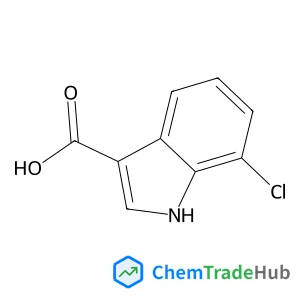
7-Chloro-1H-indole-3-carboxylic acid(CAS: 86153-24-4)
CAS Number
Related Products
![1-(5-bromo-1H-pyrrolo[2,3-b]pyridin-3-yl)ethanone](https://static.chemtradehub.com/structs/866/866545-96-2-418d.webp)
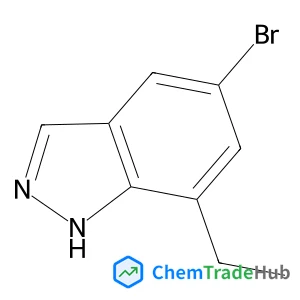
5-Bromo-7-ethyl-1H-indazole
CAS Number: 635712-49-1
![3-Iodo-1H-pyrrolo[3,2-c]pyridine](https://static.chemtradehub.com/structs/877/877060-47-4-eaf5.webp)
3-Iodo-1H-pyrrolo[3,2-c]pyridine
CAS Number: 877060-47-4
![4-Bromo-2-iodo-1-(phenylsulfonyl)-1H-pyrrolo[2,3-B]pyridine](https://static.chemtradehub.com/structs/889/889939-26-8-69e7.webp)
![1H-Pyrrolo[3,2-b]pyridine-5-carboxylic acid](https://static.chemtradehub.com/structs/872/872355-64-1-e3b4.webp)
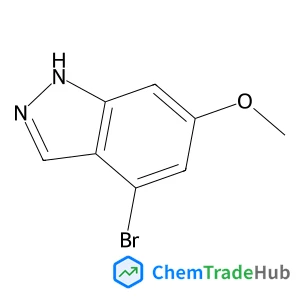
4-Bromo-6-methoxy-1H-indazole
CAS Number: 885520-83-2
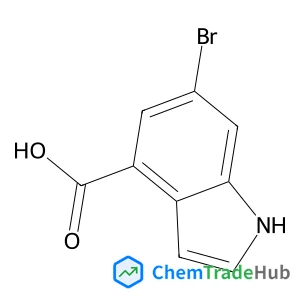
6-Bromo-1H-indole-4-carboxylic acid
CAS Number: 898746-91-3
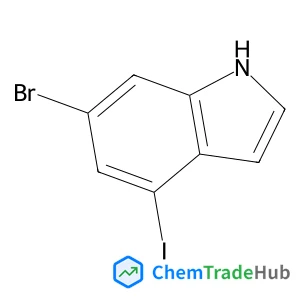
6-Bromo-4-iodo-1H-indole
CAS Number: 885519-17-5
Other Suppliers for 7-Chloro-1H-indole-3-carboxylic acid







Basic Information
Molecular Formula
C9H6ClNO2
Molecular Weight
195.61 g/mol
Physical State
Pale-yellow to Yellow-brown Solid
Physical Properties
Boiling Point
449.7°C at 760 mmHg
Density
1.548
Flash Point
225.8°C
Chemical Identifiers
SMILES
OC(=O)c1c[nH]c2c(Cl)cccc12
InChIKey
DBCJWTBYVXEBJY-UHFFFAOYSA-N
Database References
MDL Number
MFCD07369968
FAQ
7-Chloro-1H-indole-3-carboxylic acid (CAS: 86153-24-4) falls under the purview of several regulatory frameworks. It is classified under the Globally Harmonized System of Classification and Labelling of Chemicals (GHS) as a hazardous chemical. For European Union manufacturers and importers, REACH regulation applies, requiring registration of substances above one tonne per year. In the USA, the Environmental Protection Agency (EPA) and the Food and Drug Administration (FDA) have specific regulations for handling and disposing of hazardous chemicals. It is crucial to consult the latest regulatory guidelines for proper handling and storage.
Alternative reagents to 7-Chloro-1H-indole-3-carboxylic acid (CAS: 86153-24-4) include other substituted indoles or derivatives. For example, 7-bromo-1H-indole-3-carboxylic acid or 7-iodo-1H-indole-3-carboxylic acid can be used as substitutes. Researchers often explore isomers or analogs such as 1H-indole-3-carboxylic acid or 2-chloro-1H-indole-3-carboxylic acid depending on the specific chemical requirements of the synthesis. These alternatives can provide similar functional groups but with different chemical properties, making them useful in various synthetic strategies.
The market for 7-Chloro-1H-indole-3-carboxylic acid (CAS: 86153-24-4) is driven by its application in pharmaceutical and chemical research. Recent research trends indicate increased interest in indole derivatives for drug discovery due to their potential in treating various diseases, including cancer and neurological disorders. Market analysis shows a steady demand for these compounds, particularly in academia and biotechnology companies. However, due to its hazardous nature, there is also a growing emphasis on sustainable and safer synthetic routes.
Waste containing 7-Chloro-1H-indole-3-carboxylic acid (CAS: 86153-24-4) should be collected in appropriate, leak-proof containers and stored under controlled conditions to prevent environmental contamination. Proper disposal methods include incineration, which is a common practice for hazardous organic waste, or professional waste disposal services that adhere to environmental protection standards. It is essential to follow local and international regulations for waste management and to ensure that disposal methods are safe and environmentally friendly. Always consult with environmental and safety experts for guidance on specific disposal needs.
Safety Notice
Please verify product specifications and safety data before use. Contact the supplier for detailed safety information.
Always follow proper handling procedures
Contact Information
hangbingfang@163.com