



AD
(3-Chloropyrazin-2-yl)methanol(CAS: 89283-32-9)
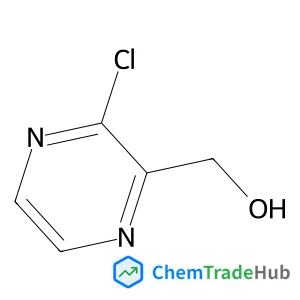
CAS Number
Related Products
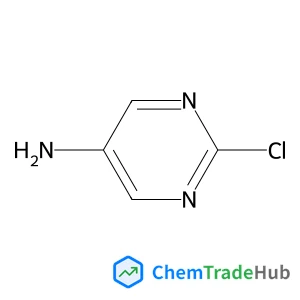
2-Chloro-5-pyrimidinamine
CAS Number: 56621-90-0
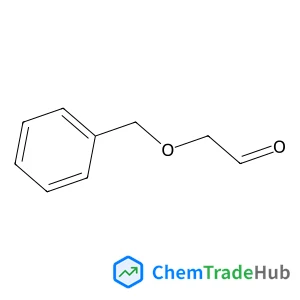
2-(Benzyloxy)acetaldehyde
CAS Number: 60656-87-3
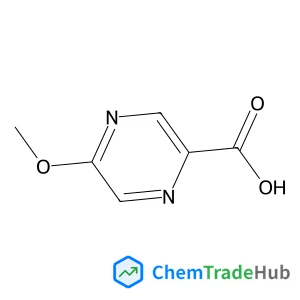
5-Methoxy-2-pyrazinecarboxylic acid
CAS Number: 40155-42-8
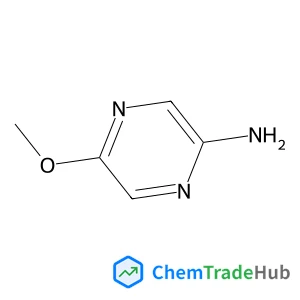
5-Methoxy-2-pyrazinamine
CAS Number: 54013-07-9
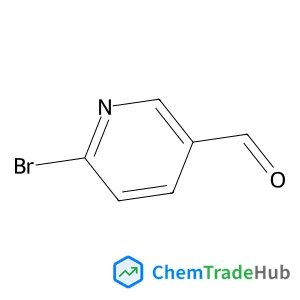
6-Bromonicotinaldehyde
CAS Number: 149806-06-4
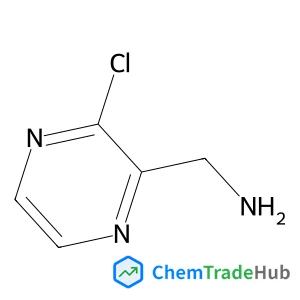
1-(3-Chloro-2-pyrazinyl)methanamine
CAS Number: 771581-15-8
![2-Methyl-2-propanyl 3,9-diazaspiro[5.5]undecane-3-carboxylate](https://static.chemtradehub.com/structs/173/173405-78-2-8a37.webp)
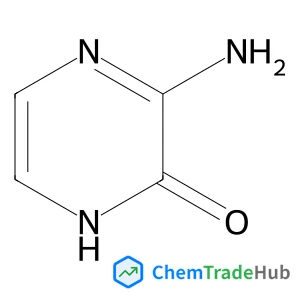
3-Amino-2-pyrazinol
CAS Number: 43029-19-2
![4,6-Dichloro-1H-pyrazolo[3,4-d]pyrimidine](https://static.chemtradehub.com/structs/427/42754-96-1-bfcd.webp)
Other Suppliers for (3-Chloropyrazin-2-yl)methanol





Basic Information
Molecular Formula
C5H5ClN2O
Molecular Weight
144.56 g/mol
Physical Properties
Boiling Point
256 ºC
Density
1.422
Flash Point
108 ºC
Chemical Identifiers
SMILES
C1=CN=C(C(=N1)CO)Cl
InChIKey
NYTVRJQDIXLFAT-UHFFFAOYSA-N
Database References
MDL Number
MFCD11977628
FAQ
(3-Chloropyrazin-2-yl)methanol is a colorless liquid with a molecular weight of approximately 156.02 g/mol. It has a density of about 1.14 g/cm³ and a boiling point of around 200°C. This compound is slightly soluble in water but miscible with common organic solvents. It is known to be reactive towards nucleophiles and can undergo substitution reactions. Proper storage should be at room temperature away from direct sunlight to maintain its stability.
(3-Chloropyrazin-2-yl)methanol can be synthesized via a multistep process involving the preparation of 3-chloropyrazine, followed by its methylation. This is typically achieved through the reaction of 3-chloropyrazine with methyl iodide in the presence of a base like potassium carbonate. The yield and selectivity can be enhanced by optimizing reaction conditions such as temperature and solvent choice. This process requires careful handling of reactive intermediates and should be conducted under a fume hood.
(3-Chloropyrazin-2-yl)methanol finds application in various industries, particularly in pharmaceuticals and research. It is used as a precursor in the synthesis of complex organic compounds and as a reagent in academic and industrial research. Its utility in the pharmaceutical industry is due to its potential as a building block for drug molecules. Additionally, it is explored in the development of new materials and sensors for its unique chemical properties.
When handling (3-Chloropyrazin-2-yl)methanol, it is essential to wear appropriate personal protective equipment (PPE) such as gloves, goggles, and a laboratory coat. Due to its reactivity, this compound should be stored in a cool, dry place away from direct sunlight and flammable materials. Fume hoods should be used during handling to minimize exposure. In case of a spill, it is important to follow standard laboratory safety procedures, including the use of appropriate absorbents and neutralizing agents. Always consult the Safety Data Sheet (SDS) for detailed handling instructions and emergency procedures.
Safety Notice
Please verify product specifications and safety data before use. Contact the supplier for detailed safety information.
Always follow proper handling procedures