



AD
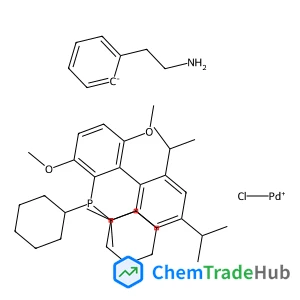
Chloro(2-(dicyclohexylphosphino)-3,6-dimethoxy-2',4',6'-triisopropyl-1,1'-biphenyl)(2-(2-aminoethyl)phenyl)palladium(II)(CAS: 1148148-01-9)
CAS Number
Related Products
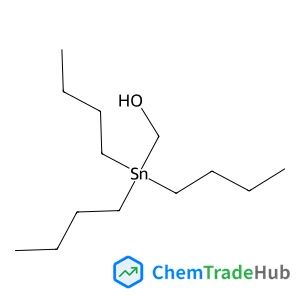
(Tributylstannyl)methanol
CAS Number: 27490-33-1
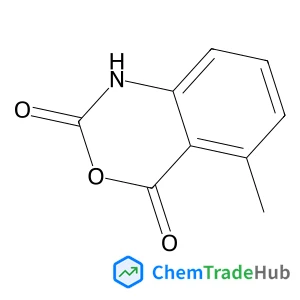
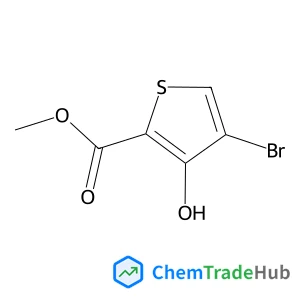
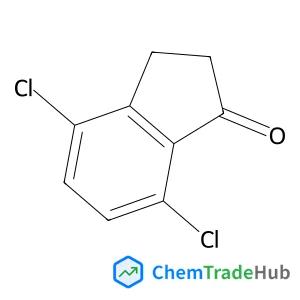
4,7-Dichloro-1-indanone
CAS Number: 52977-63-6
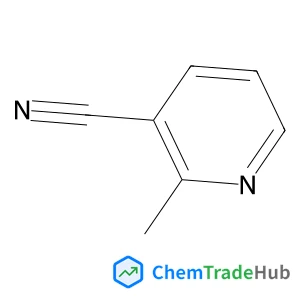
2-Methylnicotinonitrile
CAS Number: 1721-23-9
![Ethyl 5-bromo-2-({[(2-methyl-2-propanyl)oxy]carbonyl}amino)-3-thiophenecarboxylate](https://static.chemtradehub.com/structs/126/1260664-49-0-bc89.webp)
Other Suppliers for Chloro(2-(dicyclohexylphosphino)-3,6-dimethoxy-2',4',6'-triisopropyl-1,1'-biphenyl)(2-(2-aminoethyl)phenyl)palladium(II)








Basic Information
Molecular Formula
C43H62ClNO2PPd
Molecular Weight
797.8 g/mol
Physical Properties
Melting Point
198-204 °C
Chemical Identifiers
SMILES
CC(C)C1=CC(=C(C(=C1)C(C)C)C2=C(C=CC(=C2P(C3CCCCC3)C4CCCCC4)OC)OC)C(C)C.C1=CC=C([C-]=C1)CCN.Cl[Pd+]
InChIKey
IWMMXPNBCHCFCY-UHFFFAOYSA-M
Database References
MDL Number
MFCD12545956
FAQ
The compound is a solid with a crystalline form. It has a high molecular weight due to its complex structure. It is poorly soluble in water but soluble in common organic solvents like ethanol and dichloromethane. Chemically, it is reactive and can undergo various transformations under certain conditions. It is a key ligand in palladium catalysis for cross-coupling reactions.
This compound is synthesized by a multi-step process involving the preparation of the Phosphine ligand, followed by its complexation with palladium(II). Common methods include the use of palladium(II) acetate and various phosphine ligands. The reaction typically has good selectivity and yield under appropriate conditions, making it suitable for use as a catalyst in cross-coupling reactions.
This compound is primarily used in the pharmaceutical and chemical industries, particularly in the synthesis of complex organic molecules. It is also used in the development of new catalysts for cross-coupling reactions, which are vital in the production of polymers and advanced materials. Its applications extend to the production of sensors and semiconductors where precise chemical transformations are required.
When handling this compound, it is essential to wear appropriate personal protective equipment (PPE) such as gloves, goggles, and a lab coat. Ensure that working is done in a well-ventilated area or a fume hood. Spills should be cleaned up immediately with appropriate materials. Always refer to the Safety Data Sheet (SDS) for detailed safety information and follow all laboratory safety protocols.
Safety Notice
Please verify product specifications and safety data before use. Contact the supplier for detailed safety information.
Always follow proper handling procedures
Contact Information
helen@struchem.com