



AD
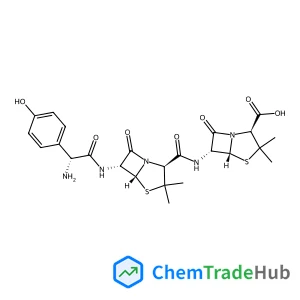
Amoxicillin EP Impurity L(CAS: 1789703-32-7)
CAS Number
Related Products
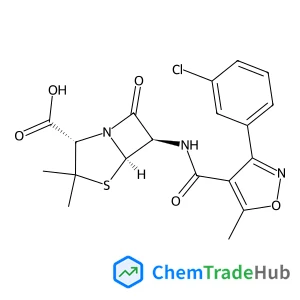
Oxacillin Sodium Impurity G(EP)
CAS Number: 724695-30-1
![Hydrazinecarboxamide, 1-[(1S,2S)-1-ethyl-2-(phenylmethoxy)propyl]-2-formyl-N-[4-[4-(4-hydroxyphenyl)-1-piperazinyl]phenyl]-](https://static.chemtradehub.com/structs/288/2889357-64-4-9f17.webp)
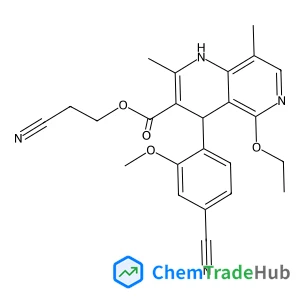
![(5aR,10aR)-Octahydro-5H,10H-dipyrrolo[1,2-a:1',2'-d]pyrazine-5,10-dione](https://static.chemtradehub.com/structs/539/53990-71-9-582b.webp)
Amikacin Impurity 3
CAS Number: 40371-54-8
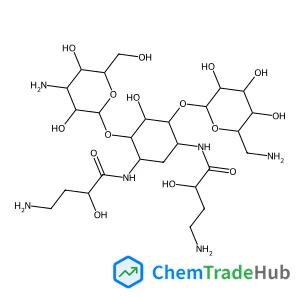
Amikacin EP Impurity B
CAS Number: 927821-99-6
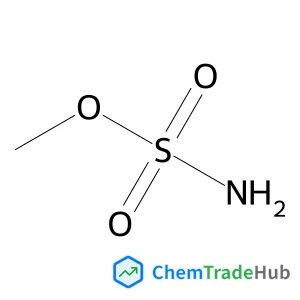
Methyl sulfamate
CAS Number: 55665-95-7
![(6R,7R)-7-{[(2E)-2-(2-Furyl)-2-(methoxyimino)acetyl]amino}-3-(hydroxymethyl)-8-oxo-5-thia-1-azabicyclo[4.2.0]oct-2-ene-2-carboxylic acid](https://static.chemtradehub.com/structs/971/97170-19-9-01c8.webp)
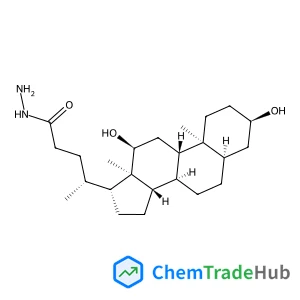
Other Suppliers for Amoxicillin EP Impurity L



Basic Information
Molecular Formula
C24H29N5O7S2
Molecular Weight
563.66 g/mol
Physical State
White to Pale Yellow
Physical Properties
Melting Point
NA
Boiling Point
996.5±65.0 °C(Predicted)
Density
1.60±0.1 g/cm3(Predicted)
Flash Point
556.5±34.3 °C
Chemical Identifiers
SMILES
CC1([C@@H](N2[C@H](S1)[C@@H](C2=O)NC(=O)[C@@H](c3ccc(cc3)O)N)C(=O)N[C@H]4[C@@H]5N(C4=O)[C@H](C(S5)(C)C)C(=O)O)C
InChIKey
VUPFQJZTIWDYHG-SHJTWVOLSA-N
Database References
FAQ
Amoxicillin EP Impurity L (CAS: 1789703-32-7) is subject to various regulatory guidelines, including GHS for hazardous chemicals, REACH for the registration, evaluation, authorization, and restriction of chemicals in the European Union, and FDA/EPA requirements for pharmaceutical and environmental safety. Manufacturers must ensure compliance with these regulations to ensure the safety and efficacy of the product.
In the synthesis of Amoxicillin, alternatives to Amoxicillin EP Impurity L (CAS: 1789703-32-7) include using other amoxicillin-related compounds or optimizing the synthesis process to minimize the formation of this impurity. Common alternative reagents include benzylpenicillin and other β-lactam antibiotics, which can serve as starting materials or intermediates.
The market for Amoxicillin EP Impurity L (CAS: 1789703-32-7) is closely tied to the broader demand for amoxicillin and antibiotics. Research trends focus on improving synthesis methods to reduce this impurity, as well as developing new antibiotics to address increasing antibiotic resistance. The impurity's presence is a concern for regulatory compliance and product quality, driving continuous efforts to minimize its occurrence.
Waste containing Amoxicillin EP Impurity L (CAS: 1789703-32-7) should be collected in appropriate containers and handled according to local regulations. Incineration is a common method for disposal, but professional waste disposal services are recommended to ensure compliance with environmental protection standards. Proper labeling and documentation are essential to prevent environmental contamination and ensure safety during disposal.
Safety Notice
Please verify product specifications and safety data before use. Contact the supplier for detailed safety information.
Always follow proper handling procedures

Contact Information
Contact Person
Ms. Li
liml@topbatt.net
Mobile
13692779590
Visit Website
http://www.biosotop.comAddress
Shenzhen Longhua District Guanlan Street Xinlan Community Guangguang Road 1301-76 Yinxing Excellence World Phase II Building 1 A1706