



AD
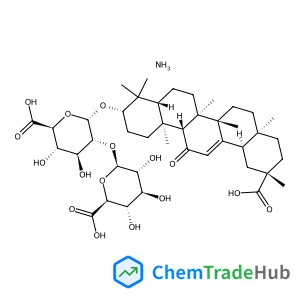
(3beta)-30-Hydroxy-11,30-dioxoolean-12-en-3-yl 2-O-beta-D-glucopyranuronosyl-alpha-D-glucopyranosiduronic acid ammoniate (1:1)(CAS: 1407-03-0)
CAS Number
Related Products
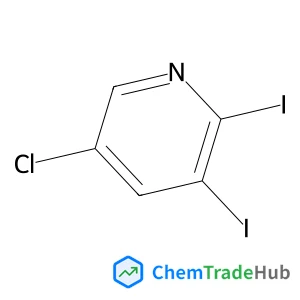
5-Chloro-2,3-diiodopyridine
CAS Number: 1261365-71-2
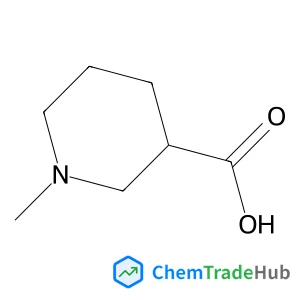
![5-Bromo-6-fluoro-1H-pyrrolo[2,3-b]pyridine](https://static.chemtradehub.com/structs/120/1207625-29-3-38b4.webp)
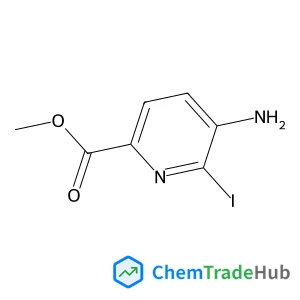
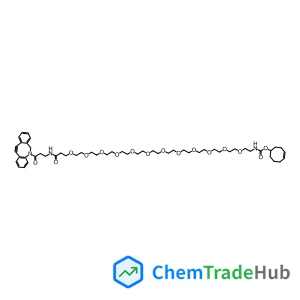
Tco-peg12-dbco
CAS Number: 2055022-06-3
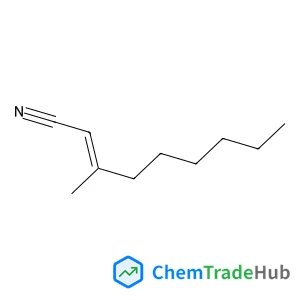
3-Methyl-2-nonenenitrile
CAS Number: 53153-66-5
![Ethyl 2-ethoxy-4-[2-({(1S)-3-methyl-1-[2-(1-piperidinyl)phenyl]butyl}amino)-2-oxoethyl]benzoate](https://static.chemtradehub.com/structs/147/147770-06-7-5fb6.webp)
![2-Methyl[1,3]oxazolo[5,4-d]pyrimidin-7(6H)-one](https://static.chemtradehub.com/structs/274/27433-55-2-83e8.webp)
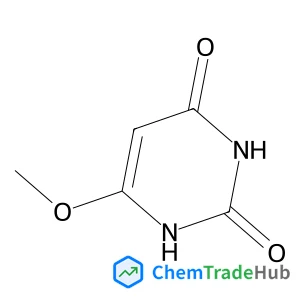
6-Methoxy-2,4(1H,3H)-pyrimidinedione
CAS Number: 29458-38-6
Other Suppliers for (3beta)-30-Hydroxy-11,30-dioxoolean-12-en-3-yl 2-O-beta-D-glucopyranuronosyl-alpha-D-glucopyranosiduronic acid ammoniate (1:1)





Basic Information
Molecular Formula
C42H65NO16
Molecular Weight
839.97 g/mol
EINECS
258-887-7
Physical Properties
Melting Point
>148°C (dec.)
Chemical Identifiers
SMILES
C[C@]1([C@H](CC[C@]2([C@H]1CC[C@@]3([C@@H]2C(=O)C=C4[C@]3(CC[C@@]5([C@H]4C[C@](CC5)(C(=O)O)C)C)C)C)C)O[C@H]6O[C@@H]([C@H]([C@@H]([C@H]6O[C@@H]7O[C@@H]([C@H]([C@@H]([C@H]7O)O)O)C(=O)O)O)O)C(=O)O)C.N
InChIKey
ILRKKHJEINIICQ-OOFFSTKBSA-N
Database References
MDL Number
MFCD21609469
FAQ
This compound falls under various regulatory guidelines such as the Globally Harmonized System of Classification and Labelling of Chemicals (GHS), which may require specific hazard communication and labeling. Additionally, under the Registration, Evaluation, Authorization and Restriction of Chemicals (REACH) regulation in the European Union, it may require registration if used in quantities above threshold values. In the United States, the Environmental Protection Agency (EPA) and the Food and Drug Administration (FDA) may have specific requirements depending on its intended use.
While (3beta)-30-Hydroxy-11,30-dioxoolean-12-en-3-yl 2-O-beta-D-glucopyranuronosyl-alpha-D-glucopyranosiduronic acid ammoniate (1:1) is a specific compound, alternatives such as related triterpenoid saponins or other natural product derivatives can be used in synthesis depending on the desired properties. Common alternative reagents include various glycosyltransferases or synthetic intermediates.
The research trend for this compound is primarily focused on its biological activities, such as potential anti-inflammatory, anti-cancer, and neuroprotective effects. Market trends suggest increasing interest in natural product derivatives with therapeutic potential, leading to more studies on related compounds and their mechanisms of action.
Waste containing this compound should be collected in appropriate containers and disposed of according to local regulations. Incineration or professional waste disposal services are recommended. Environmental protection precautions include minimizing exposure and ensuring containment to prevent environmental contamination. Always consult the safety data sheet (SDS) and local regulations for specific disposal requirements.
Safety Notice
Please verify product specifications and safety data before use. Contact the supplier for detailed safety information.
Always follow proper handling procedures

Contact Information
Contact Person
Manager Yu
710378061@qq.com
Mobile
18605105771
Visit Website
https://www.sanhua-chem.com/Address
No. 688 Jiushuire Lu, Building 1, Jinshanwei Town, Jinshan District, Shanghai