



AD
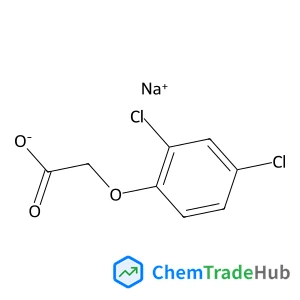
Acetic acid, (2,4-dichlorophenoxy)-, sodium salt(CAS: 2702-72-9)
CAS Number
Related Products
![3-[(3R)-3-{[(4-Fluorophenyl)sulfonyl]amino}-1,2,3,4-tetrahydro-9H-carbazol-9-yl]propanoic acid](https://static.chemtradehub.com/structs/116/116649-85-5-c571.webp)
![Bismuth(3+) tris[oxido(oxo)aluminium]](https://static.chemtradehub.com/structs/122/12284-76-3-031c.webp)
Bismuth(3+) tris[oxido(oxo)aluminium]
CAS Number: 12284-76-3
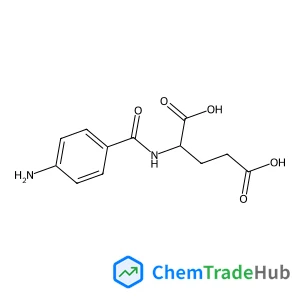
N-(4-Aminobenzoyl)-L-glutamic acid
CAS Number: 4271-30-1
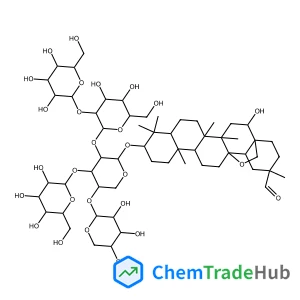
sasanquasaponin
CAS Number: 8047-15-2
![4-[(1S,3aR,4S,6aR)-4-(4-Hydroxy-3,5-dimethoxyphenyl)tetrahydro-1H,3H-furo[3,4-c]furan-1-yl]-2,6-dimethoxyphenyl beta-D-glucopyranoside](https://static.chemtradehub.com/structs/737/7374-79-0-93d6.webp)
![2-(2,2-Difluoroethoxy)-N-(5,8-dimethoxy[1,2,4]triazolo[1,5-c]pyrimidin-2-yl)-6-(trifluoromethyl)benzenesulfonamide](https://static.chemtradehub.com/structs/219/219714-96-2-d2f9.webp)
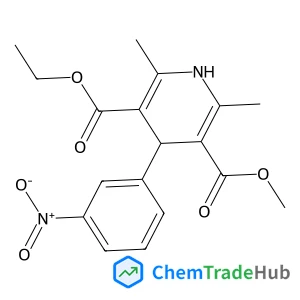
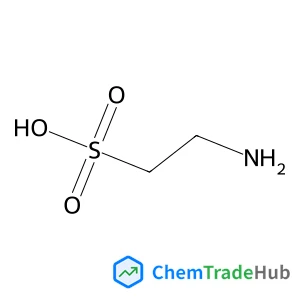
2-Aminoethanesulfonic acid
CAS Number: 107-35-7
Other Suppliers for Acetic acid, (2,4-dichlorophenoxy)-, sodium salt




Basic Information
Molecular Formula
C8H5Cl2NaO3
Molecular Weight
243.02 g/mol
Physical Properties
Melting Point
215 ºC
Boiling Point
345.6 °C at 760 mmHg
Flash Point
162.8 °C
Chemical Identifiers
SMILES
C1=CC(=C(C=C1Cl)Cl)OCC(=O)[O-].[Na+]
InChIKey
RFOHRSIAXQACDB-UHFFFAOYSA-M
Database References
MDL Number
MFCD00068284
FAQ
Acetic acid, (2,4-dichlorophenoxy)-, sodium salt (CAS: 2702-72-9) is classified as a hazardous substance under GHS (Globally Harmonized System of Classification and Labeling of Chemicals) due to its corrosive properties. It falls under REACH regulations in the European Union, requiring manufacturers and importers to register the substance if the annual tonnage exceeds 1 ton. FDA and EPA regulations also govern its use and disposal, ensuring it is handled safely in food and pharmaceutical applications.
In synthesis, alternatives to acetic acid, (2,4-dichlorophenoxy)-, sodium salt (CAS: 2702-72-9) may include other carboxylic acid derivatives such as benzoic acid derivatives or other sodium salts of aromatic acids. These can serve similar functions depending on the specific reaction conditions and desired end products.
The market for acetic acid, (2,4-dichlorophenoxy)-, sodium salt (CAS: 2702-72-9) is primarily driven by its use in the pharmaceutical and agricultural industries. Research trends focus on developing more efficient synthesis methods and exploring its potential in biocides and herbicides. The decreasing availability of traditional raw materials and increasing regulatory pressures are driving innovation in alternative synthetic routes and safer handling practices.
Waste containing acetic acid, (2,4-dichlorophenoxy)-, sodium salt (CAS: 2702-72-9) should be collected in appropriate containers, labeled clearly, and transferred to designated waste collection facilities. Professional incineration or chemical treatment for neutralization is recommended to ensure proper disposal. Strict environmental protection precautions, such as preventing runoff and ensuring the waste is disposed of in compliance with local regulations, are essential to prevent environmental contamination.
Safety Notice
Please verify product specifications and safety data before use. Contact the supplier for detailed safety information.
Always follow proper handling procedures
Contact Information
Contact Person
Manager Chen
2383203267@qq.com