



AD
dioxosilane; oxo-oxoalumanyloxy-alumane(CAS: 1318-02-1)
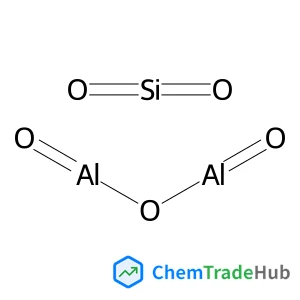
CAS Number
Related Products
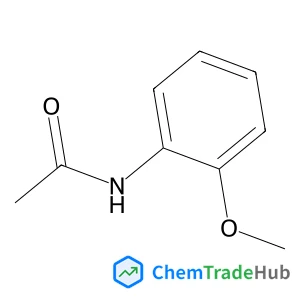
N-(2-Methoxyphenyl)acetamide
CAS Number: 93-26-5
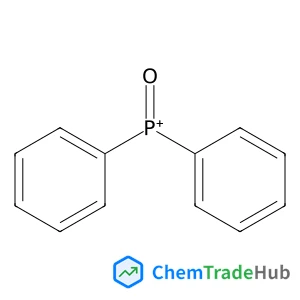
Diphenylphosphine oxide
CAS Number: 4559-70-0
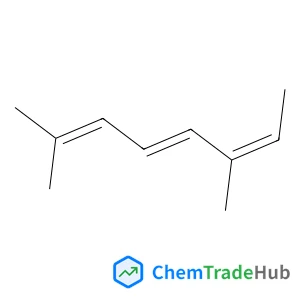
2,6-Dimethyl-2,4,6-octatriene
CAS Number: 673-84-7
![1,2-Dimethoxy-12-methyl[1,3]benzodioxolo[5,6-c]phenanthridin-12-ium 13-methyl[1,3]benzodioxolo[5,6-c][1,3]dioxolo[4,5-i]phenanthridin-13-ium chloride (1:1:2)](https://static.chemtradehub.com/structs/112/112025-60-2-37be.webp)
![(7aS,13aS)-9,10-Dimethoxy-3,3-dimethyl-13,13a-dihydro-3H-chromeno[3,4-b]pyrano[2,3-h]chromen-7(7aH)-one](https://static.chemtradehub.com/structs/522/522-17-8-8dd3.webp)
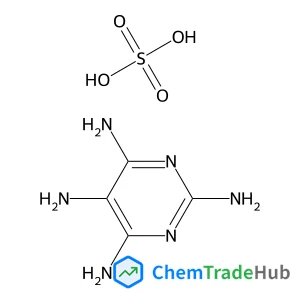
2,4,5,6-Tetraaminopyrimidine Sulfate
CAS Number: 5392-28-9
Other Suppliers for dioxosilane; oxo-oxoalumanyloxy-alumane





Basic Information
Molecular Formula
Al2O5Si
Molecular Weight
162.05 g/mol
Physical Properties
Melting Point
>1600°C
Boiling Point
330°Cat760mmHg
Flash Point
330 °C at 760 mmHg
Water Solubility
Insoluble in water.
Chemical Identifiers
SMILES
O=[Al]O[Al]=O.O=[Si]=O
InChIKey
HNPSIPDUKPIQMN-UHFFFAOYSA-N
Database References
MDL Number
MFCD00077645
FAQ
Dioxosilane (CAS: 1318-02-1) falls under the European Union’s Registration, Evaluation, Authorization, and Restriction of Chemicals (REACH) regulation, which requires manufacturers and importers to register substances. Additionally, it must comply with the Globally Harmonized System of Classification and Labelling of Chemicals (GHS), which covers health, environmental, and physical hazards. In the U.S., the Environmental Protection Agency (EPA) regulates its use and disposal. FDA regulations may also apply if it is used in food-related applications.
Alternatives to dioxosilane (CAS: 1318-02-1) in synthesis include other siloxanes or organosilicon compounds that can serve similar functions. Common alternatives include tetramethyldisiloxane (TMDSO) and hexamethyldisiloxane (HMDSO). These compounds are often used as precursors in organic synthesis due to their stability and reactivity.
The market for dioxosilane (CAS: 1318-02-1) is growing due to its applications in the production of silicones and other polymeric materials. Research trends are focusing on its use in high-performance coatings and adhesives. Market growth is also driven by its application in electronic and semiconductor industries. However, the market dynamics are influenced by the increasing awareness of environmental concerns and regulatory pressures.
Waste containing dioxosilane (CAS: 1318-02-1) should be collected in appropriate containers and stored under inert conditions to prevent degradation. Incineration is a common method for disposal, provided it meets local emissions standards. Professional waste disposal services are recommended to ensure compliance with environmental regulations. Handling should be done with personal protective equipment to avoid inhalation or skin contact. Proper labeling and documentation of waste are also essential.
Safety Notice
Please verify product specifications and safety data before use. Contact the supplier for detailed safety information.
Always follow proper handling procedures

Contact Information
Contact Person
Liu Ziying
1400878822@qq.com
Mobile
13986246535
Visit Website
http://www.hubeidahao.comAddress
Hubei Province Tianmen City Huangtan Town Ximiao Village 1 Group