



AD
2-(3,4-Dihydroxyphenyl)-3,5-dihydroxy-7-methoxy-4H-chromen-4-one(CAS: 90-19-7)

CAS Number
Related Products

![3-Cyclopropyl-1-(2-fluoro-4-iodophenyl)-5-hydroxy-6,8-dimethylpyrido[2,3-d]pyrimidine-2,4,7(1H,3H,8H)-trione](https://static.chemtradehub.com/structs/871/871700-24-2-c5dd.webp)

5-Bromo-2,4(1H,3H)-pyrimidinedione
CAS Number: 51-20-7

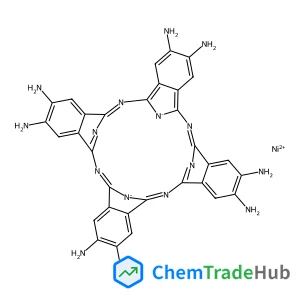
![3-Iodo-1H-pyrrolo[2,3-b]pyridine-4-carbonitrile](https://static.chemtradehub.com/structs/956/956485-59-9-1f04.webp)
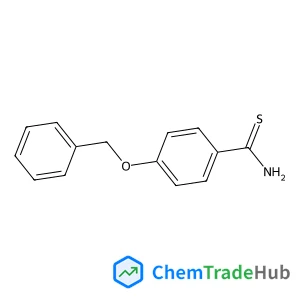
4-Benzyloxy-thiobenzamide
CAS Number: 161975-22-0
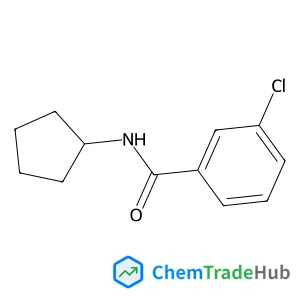
3-Chloro-N-cyclopentylbenzamide
CAS Number: 349128-33-2
Other Suppliers for 2-(3,4-Dihydroxyphenyl)-3,5-dihydroxy-7-methoxy-4H-chromen-4-one







Basic Information
Molecular Formula
C16H12O7
Molecular Weight
316.27 g/mol
Physical State
Yellow powder
Physical Properties
Melting Point
293-296°C (dec.)
Boiling Point
375.7°C (rough estimate)
Density
1.3347 (rough estimate)
Flash Point
238.9°C
Chemical Identifiers
SMILES
COC1=CC(=C2C(=C1)OC(=C(C2=O)O)C3=CC(=C(C=C3)O)O)O
InChIKey
JGUZGNYPMHHYRK-UHFFFAOYSA-N
Database References
MDL Number
MFCD00016931
Beilstein Registry Number
0047741
FAQ
2-(3,4-Dihydroxyphenyl)-3,5-dihydroxy-7-methoxy-4H-chromen-4-one (CAS: 90-19-7) falls under the scope of the United Nations' GHS classification, which categorizes it as a hazardous chemical based on its physical and health hazards. It is also regulated by REACH in the European Union, requiring manufacturers and importers to register the substance if it is manufactured or imported in quantities above one tonne per year. Additionally, the FDA and EPA in the United States may have specific requirements for its use, handling, and disposal due to its potential environmental and health impacts.
In the synthesis of 2-(3,4-Dihydroxyphenyl)-3,5-dihydroxy-7-methoxy-4H-chromen-4-one (CAS: 90-19-7), researchers and chemists often seek alternatives to minimize hazards and improve efficiency. Common alternatives include the use of more stable or easily accessible precursors, such as 2,3,5,7-tetramethoxyflavone, which can be used in a similar reaction pathway. Additionally, green chemistry principles can be employed, such as using catalytic systems, which can reduce the need for toxic solvents and reagents.
The market trend for 2-(3,4-Dihydroxyphenyl)-3,5-dihydroxy-7-methoxy-4H-chromen-4-one (CAS: 90-19-7) is driven by its use in pharmaceuticals and biochemical research. Recent research is focusing on its potential as a bioactive compound, particularly in anti-inflammatory and antioxidant applications. This has led to increased interest in synthesizing and studying its derivatives. Additionally, there is a growing emphasis on developing more sustainable and environmentally friendly synthesis methods to meet regulatory and market demands.
Waste containing 2-(3,4-Dihydroxyphenyl)-3,5-dihydroxy-7-methoxy-4H-chromen-4-one (CAS: 90-19-7) should be managed according to local and national regulations. Proper waste handling involves collection in appropriate containers, labeling, and storage to prevent environmental contamination. For disposal, incineration is a common method, but it should be conducted in specialized facilities to minimize emissions. Alternatively, professional waste disposal services should be utilized, especially for larger quantities, to ensure compliance with environmental protection standards.
Safety Notice
Please verify product specifications and safety data before use. Contact the supplier for detailed safety information.
Always follow proper handling procedures
Contact Information
Contact Person
Fang Rui
wangkang@jskchem.com
Mobile
15221441005
Telephone
15221441005
Visit Website
https://www.jskchem.comAddress
No chemical compound information was provided to translate. Please provide the relevant chemical information for translation.