AD
7-Nitroquinoline(CAS: 613-51-4)
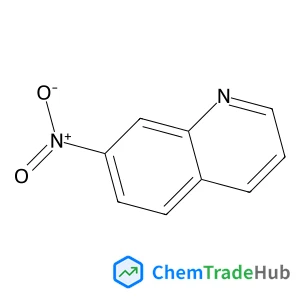
CAS Number
Related Products
![(3S,11aR)-N-(2,4-Difluorobenzyl)-6-hydroxy-3-methyl-5,7-dioxo-2,3,5,7,11,11a-hexahydro[1,3]oxazolo[3,2-a]pyrido[1,2-d]pyrazine-8-carboxamide](https://static.chemtradehub.com/structs/105/1051375-10-0-b048.webp)
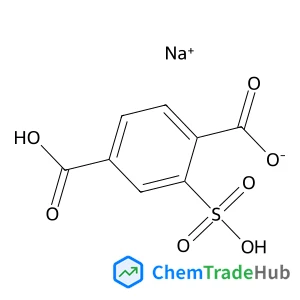
Sodium 2,5-dicarboxybenzenesulfonate
CAS Number: 19089-60-2
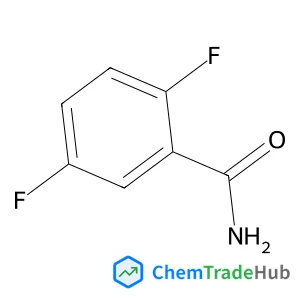
2,5-Difluorobenzamide
CAS Number: 85118-03-2
![2-Methyl-2-propanyl (1R,4S)-3-oxo-2-azabicyclo[2.2.1]hept-5-ene-2-carboxylate](https://static.chemtradehub.com/structs/151/151792-53-9-c3e1.webp)
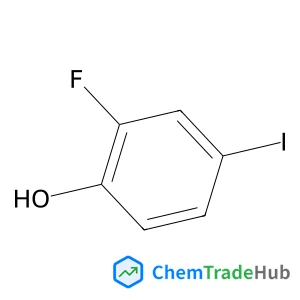
2-Fluoro-4-iodophenol
CAS Number: 2713-28-2
Other Suppliers for 7-Nitroquinoline



Basic Information
Molecular Formula
C9H6N2O2
Molecular Weight
174.16 g/mol
Physical Properties
Melting Point
132.5°C
Boiling Point
305.12°C (rough estimate)
Density
1.2190 (estimate)
Flash Point
156.7℃
Chemical Identifiers
SMILES
[O-][N+](=O)c1ccc2cccnc2c1
InChIKey
MXKZSCXYMSXOAO-UHFFFAOYSA-N
Database References
MDL Number
MFCD00234498
Beilstein Registry Number
0136189
FAQ
7-Nitroquinoline (CAS: 613-51-4) is subject to various regulatory guidelines including the Globally Harmonized System of Classification and Labeling of Chemicals (GHS), which categorizes it as a skin and eye irritant. In Europe, it is regulated under the Registration, Evaluation, Authorisation and Restriction of Chemicals (REACH) framework. Additionally, the U.S. Environmental Protection Agency (EPA) and the Food and Drug Administration (FDA) may have specific requirements for its handling, storage, and disposal due to its potential toxicity and carcinogenic properties.
Yes, there are alternatives to 7-Nitroquinoline (CAS: 613-51-4) in synthesis. Common alternatives include 7-Aminoquinoline and 7-Methylquinoline, which can serve similar functional roles depending on the specific application. These alternatives may offer better safety profiles or different reactivity patterns, making them suitable for various synthetic routes.
The market for 7-Nitroquinoline (CAS: 613-51-4) is primarily driven by its use in research as a mutagen and carcinogen screening tool. Recent trends show a shift towards more environmentally friendly and safer compounds, which may impact the demand for 7-Nitroquinoline. However, due to its established role in mutagenicity testing, it continues to be relevant in pharmaceutical and chemical research, albeit with increasing scrutiny regarding its safety and handling.
Waste containing 7-Nitroquinoline (CAS: 613-51-4) should be handled with caution due to its toxicity and potential carcinogenicity. Collection should be done using appropriate containment methods to prevent spillage. The waste should then be neutralized or treated to reduce its hazard before disposal. Professional waste disposal services should be used to ensure compliance with local regulations. Incineration is a common method for disposing of such hazardous waste, provided it is done in a controlled environment to minimize environmental impact.
Safety Notice
Please verify product specifications and safety data before use. Contact the supplier for detailed safety information.
Always follow proper handling procedures