



AD
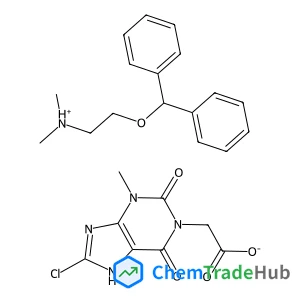
8-Chloro-1,3-dimethyl-3,9-dihydro-1H-purine-2,6-dione - 2-(diphenylmethoxy)-N,N-dimethylethanamine (1:1)(CAS: 523-87-5)
CAS Number
Related Products
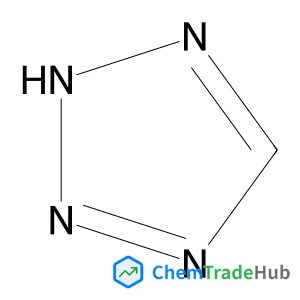
2H-Tetrazole
CAS Number: 288-94-8
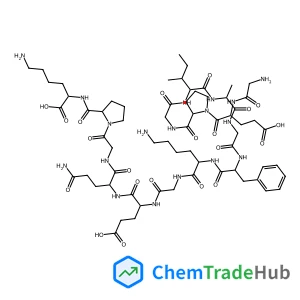
Collagen(cattle skin) (9CI)
CAS Number: 9064-67-9
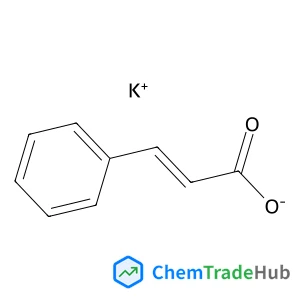
Potassium (2E)-3-phenylacrylate
CAS Number: 16089-48-8
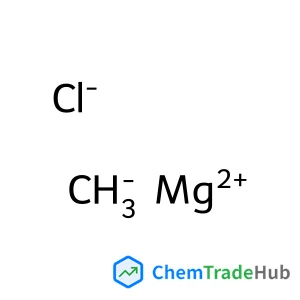
Chloro(methyl)magnesium
CAS Number: 676-58-4
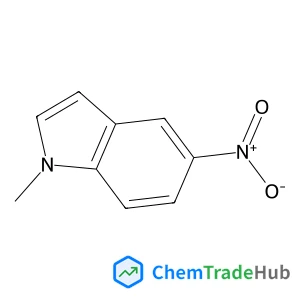
1-Methyl-5-nitro-1H-indole
CAS Number: 29906-67-0
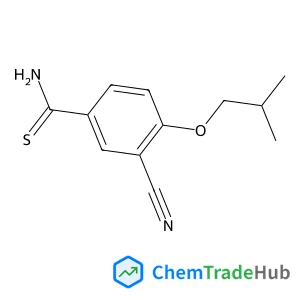
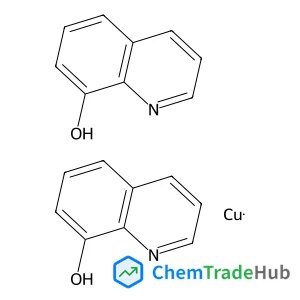
Bis(8-quinolinolato)copper(II)
CAS Number: 10380-28-6
![2-[4-(1-Hydroxy-4-{4-[hydroxy(diphenyl)methyl]-1-piperidinyl}butyl)phenyl]-2-methylpropanoic acid hydrochloride (1:1)](https://static.chemtradehub.com/structs/153/153439-40-8-f2bf.webp)
Other Suppliers for 8-Chloro-1,3-dimethyl-3,9-dihydro-1H-purine-2,6-dione - 2-(diphenylmethoxy)-N,N-dimethylethanamine (1:1)



Basic Information
Molecular Formula
C24H28ClN5O3
Molecular Weight
513.97 g/mol
Physical Properties
Melting Point
102-107 ºC
Boiling Point
343.7 °C at 760 mmHg
Flash Point
101.5 °C
Chemical Identifiers
SMILES
[O-]C(=O)Cn1c(=O)c2[nH]c(nc2n(c1=O)C)Cl.C[NH+](CCOC(c1ccccc1)c1ccccc1)C
InChIKey
NFLLKCVHYJRNRH-UHFFFAOYSA-N
Database References
MDL Number
MFCD00054265
FAQ
This compound is a crystalline solid with a molecular weight of approximately 634.44 g/mol. It has a limited solubility in water, with a solubility of around 0.05 g/100 mL at 25°C. The compound is known to react with bases and is relatively stable under normal conditions. It is not flammable and does not pose a significant risk in terms of reactivity under standard laboratory conditions.
This compound is typically synthesized via a multi-step process involving the coupling of a purine derivative with a diphenylmethanol derivative in the presence of a suitable catalyst, such as a Lewis acid. The reaction involves the formation of a new ester bond, followed by amination to introduce the N,N-dimethylethanamine moiety. The overall yield can be around 70-80%, with good selectivity towards the desired product.
This compound is primarily used in the pharmaceutical industry, where it serves as a precursor in the synthesis of various purine-based drugs. It also has applications in the polymer industry for the development of new materials with specific properties, and in the semiconductor industry for the production of organic electronic devices.
When handling this compound, it is important to wear appropriate personal protective equipment (PPE), including gloves, safety glasses, and a lab coat. Work should be conducted in a well-ventilated environment or under a fume hood to minimize exposure to the compound. Spills should be handled by sweeping into a container, which can then be disposed of according to local regulations. It is advisable to consult the Safety Data Sheet (SDS) for specific handling and disposal instructions.
Safety Notice
Please verify product specifications and safety data before use. Contact the supplier for detailed safety information.
Always follow proper handling procedures